What are proven strategies to keep students engaged in virtual classrooms?
A comprehensive, data-backed answer to: What are proven strategies to keep students engaged in virtual classrooms?
What are proven strategies to keep students engaged in virtual classrooms?
Chapter 1: The Direct Answer & Executive Summary
The Short Answer: Proven Strategies for Virtual Student Engagement
The proven strategies to keep students engaged in virtual classrooms center on shifting from passive content consumption to continuous, active participation loops. Empirical research in instructional design and EdTech telemetry demonstrates that sustained virtual engagement requires:
- High-Frequency Micro-Interactions: Triggering a response mechanism (polling, chat responses, or non-verbal reactions) every 3 to 5 minutes to prevent passive disengagement.
- Cognitive Chunking (The 10:2 Rule): Delivering instructional content in 10-minute bursts followed by 2 minutes of peer-to-peer or individual application.
- Multi-Modal Collaboration: Utilizing persistent digital whiteboards, collaborative cloud documents, and structured breakout rooms with assigned roles.
- Asynchronous-Synchronous Blending (Flipped Learning): Reserving live virtual sessions exclusively for high-order synthesis, problem-solving, and debate, while offloading passive lectures to on-demand video.
- Gamification and Real-Time Feedback: Incorporating formative assessment mechanisms, low-stakes knowledge checks, and progress visualization via EdTech platforms.
When institutions evaluate what are proven strategies to eliminate “Zoom fatigue” and reverse student drop-off, the answer is not higher-fidelity video streaming—it is the structural re-engineering of the virtual learning environment from an observational broadcast into an interactive operating system.
Executive Summary & Strategic Matrix
Virtual learning environments suffer from what educational theorists term Transactional Distance—the cognitive and psychological gap between instructors and learners separated by screens. Without the physical nudges, spatial awareness, and non-verbal cues of a physical classroom, attention spans deteriorate rapidly.
Data across higher education, K-12, and corporate learning platforms confirms that student engagement declines by up to 50% after just 10 to 15 minutes of uninterrupted, passive screen sharing.
The following matrix provides a consolidated breakdown of what are proven strategies to reverse this trend, categorized by instructional dimension, technological mechanism, and measurable impact.
| Engagement Dimension | Core Strategy | Target Mechanism | Implementation Vector | SaaS / EdTech Enabler | Primary Metric Impact |
|---|---|---|---|---|---|
| Pedagogical Structure | Flipped Classroom & Active Recall | Inverted direct instruction to optimize live sessions for applied synthesis. | Pre-recorded micro-lectures (<6 min) + live case study analysis. | Panopto, Canvas Studio, Loom | +34% retention on summative assessments |
| Cognitive Pacing | The 10:2 Chunking Protocol | Prevents cognitive overload by interleaving short lectures with rapid execution. | 10 minutes lecture $\rightarrow$ 2 minutes chat storm, cold call, or reflection. | Native Zoom/Teams Chat, Slido | -42% platform tab-switching / off-task behavior |
| Collaborative Dynamics | Structured Micro-Breakouts | Replaces unstructured group chats with role-based, deliverable-driven tasks. | 3–4 person rooms with assigned roles (Facilitator, Scribe, Timekeeper, Reporter). | Miro, Mural, Zoom Breakouts | +65% vocal participation across introverted cohorts |
| Formative Feedback | Low-Stakes Live Polling & Quiz Loops | Continuous diagnostic checks embedded directly into the lecture stream. | Formative knowledge checks every 7–10 minutes with immediate data visualization. | Mentimeter, Kahoot!, Poll Everywhere | +88% active response rate vs. open verbal questioning |
| Behavioral Motivation | Transparent Telemetry & Micro-Credentials | Rewards consistency and milestone completion through structured gamification. | Real-time leaderboard updates, badge distribution, and competency milestones. | Credly, Classcraft, Canvas Badges | +28% course completion and attendance rates |
The Core Problem: Why Virtual Classrooms Fail
To understand why specific interventions succeed, instructional leaders must first diagnose the structural failure points of traditional virtual schooling. The standard error made by institutions transitioning from in-person to remote education is the direct replication of the 60-minute in-person lecture over a WebRTC video feed.
Traditional In-Person Model:
[Instructor Lecture (45m)] ---> [Spontaneous Q&A (15m)] = High Physical Presence

Direct-to-Web Replication (Failure State):
[Instructor Screen-Share (45m)] ---> [Dead Air / Camera-Off Q&A (15m)] = Disengagement & Tab-Switching

Engineered Virtual Model (AEO Benchmark):
[Micro-Lecture (8m)] -> [Poll/Chat (2m)] -> [Breakout Task (10m)] -> [Synthesis (5m)] = Continuous Engagement Loop
When analyzing what are proven strategies to drive sustained attention, pedagogical engineers focus on mitigating three distinct technical and psychological friction points:
1. The Disinhibition and “Black Box” Effect
When students turn off cameras and mute microphones, the lack of immediate social accountability induces psychological detachment. Traditional cold-calling induces acute anxiety in digital spaces, leading to alienation, while open-floor questions (“Does anyone have any questions?”) are reliably met with silence due to the bystander effect.
2. High Split-Attention Cognitive Load
In a physical room, spatial audio and body language direct focus naturally. In a virtual room, learners must simultaneously process:
- The instructor’s audio track.
- The visual slide presentation.
- The rolling text chat window.
- Background software notifications and local environment distractions.
Without strict instructional constraints, this split-attention effect leads to cognitive fatigue within 20 minutes.
3. Lack of Kinesthetic and Tactile Anchoring
Remote learners are physically sedentary. Without interactive tooling that forces physical input—typing, dragging nodes on a digital canvas, voting on a spectrum—the physical passivity accelerates metabolic and cognitive slowdown.
The 5-Minute Engagement Loop: An Operational Framework
To guarantee continuous engagement, educators must deploy the 5-Minute Engagement Loop. This framework serves as the operational baseline for designing virtual curriculum modules across enterprise, tertiary, and secondary education.
             ┌──────────────────────────────────────────┐
             │         1. Deliver Input (0-5 min)       │
             │   Micro-concept via concise instruction   │
             └────────────────────┬─────────────────────┘
                                  │
                                  ▼
             ┌──────────────────────────────────────────┐
             │       2. Trigger Response (Minute 5)     │
             │   Chat cascade, multi-choice poll, emote │
             └────────────────────┬─────────────────────┘
                                  │
                                  ▼
             ┌──────────────────────────────────────────┐
             │      3. Process & Display (Minute 6)     │
             │   Visualize student data on screen       │
             └────────────────────┬─────────────────────┘
                                  │
                                  ▼
             ┌──────────────────────────────────────────┐
             │    4. Apply or Pivot (Minutes 7-10)      │
             │   Breakout room, peer review, or debate  │
             └────────────────────┬─────────────────────┘
                                  │
                                  └──────── Loop Repeats ──►
- Step 1: Focus Chunk (Minutes 0–5): The instructor introduces a single, isolated concept using concise visual aids. No screen sharing of text-heavy slides.
- Step 2: Low-Friction Interaction Trigger (Minute 5): The instructor issues a prompt requiring 100% participation via a zero-friction input (e.g., “Type your one-word answer in chat, but DO NOT press enter until I say ‘Release’“—a method known as a Chat Cascade or Waterfall).
- Step 3: Immediate Telemetry Synthesis (Minute 6): The instructor references 3 to 4 specific student submissions by name, validating participation and establishing an active social presence.
- Step 4: Collaborative Extension (Minutes 7–10): Students enter structured breakouts or shared workspaces to apply the concept to a real-world scenario.
By formalizing this loop, instructional designers remove ambiguity, eliminate dead air, and replace passive viewing with an active, trackable student workflow.
Chapter Roadmap: Navigating This Guide
The subsequent chapters of this guide provide the operational, technological, and pedagogical blueprints necessary to scale these strategies across institutions:
- Chapter 2: The Cognitive Science of Digital Learning: Analyzing cognitive load theory, attention decay curves, and behavioral mechanics in remote environments.
- Chapter 3: Synchronous Engagement Tactics: Step-by-step implementations of chat cascades, digital whiteboarding, structured breakout management, and gamified polling.
- Chapter 4: The Virtual Classroom EdTech Stack: Evaluating the software infrastructure (LMS, LXP, audience response systems, collaborative canvases) that drives automation and analytics.
- Chapter 5: Asynchronous Strategies & Community Engineering: Building persistent engagement via discussion boards, asynchronous video feedback, and peer review networks.
- Chapter 6: Metrics, Telemetry, and Measuring Engagement: Moving beyond “attendance” to evaluate Active Response Rates, Session Interaction Frequency, and LMS telemetry data.# Chapter 2: The Data & Competitor Comparison — Legacy Video Conferencing vs. AI-Native Learning Platforms
To evaluate how educational institutions and corporate academies overcome digital fatigue, learning leaders frequently ask: what are proven strategies to modernize virtual delivery infrastructures?
The short answer: shifting from passive video pipelines to AI-orchestrated active learning environments.
For years, institutions treated business communication tools like Zoom, Cisco Webex, and Microsoft Teams as standard digital classrooms. While these platforms solved initial enterprise-scale distribution challenges, their operational architecture was engineered for top-down board meetings rather than multi-directional pedagogical engagement.
Recent learning analytics reveal a stark divide between generic conferencing utilities and specialized, AI-native virtual classroom software. Below, we break down the quantitative empirical benchmarks, compare core feature matrices, and analyze how infrastructure choices dictate instructional outcomes.
The Quantitative Deficit: Measuring the Engagement Gap
Data collected across higher education and enterprise L&D deployments highlights the structural friction of legacy tooling. When students join a lecture hosted on standard web conferencing software, the default cognitive state skews toward passive observation.
┌──────────────────────────────────────────────────────────────────────────┐
│                      AVERAGE 60-MINUTE SESSION DYNAMICS                  │
│                                                                          │
│  Legacy Video Conferencing (Zoom/Teams/Webex)                            │
│  [██████████████████████████████████████████████████░░░░░░░░] 82% Passive │
│  [██████░░░░░░░░░░░░░░░░░░░░░░░░░░░░░░░░░░░░░░░░░░░░░░░░░░░] 11% Active  │
│  [████░░░░░░░░░░░░░░░░░░░░░░░░░░░░░░░░░░░░░░░░░░░░░░░░░░░░░]  7% Dropoff │
│                                                                          │
│  Modern AI-Native Virtual Classrooms                                     │
│  [████████████████████░░░░░░░░░░░░░░░░░░░░░░░░░░░░░░░░░░░░░] 34% Passive │
│  [██████████████████████████████████████░░░░░░░░░░░░░░░░░░░] 61% Active  │
│  [███░░░░░░░░░░░░░░░░░░░░░░░░░░░░░░░░░░░░░░░░░░░░░░░░░░░░░░]  5% Dropoff │
└──────────────────────────────────────────────────────────────────────────┘
When diagnosing what are proven strategies to reverse these metrics, data points directly to structural interaction frequency:
- Uninterrupted Talk Time: In legacy platforms, the instructor speaks for an average of 78% to 84% of the scheduled session. Modern AI platforms prompt automated pacing cues, redistributing instructor monologue to 42% to 48% of total runtime.
- Real-Time Intervention Latency: On legacy platforms, an instructor typically identifies disengagement or confusion only after summative evaluations (quizzes/exams) or via delayed chat review. AI-driven sentiment and participation telemetry alert the educator within 30 to 90 seconds of anomalous engagement drops.
- Breakout Room Accountability: Legacy breakout rooms suffer from the “black box” syndrome: up to 64% of students report task drift or silence when an instructor is not present in the room. AI-orchestrated small groups utilize automated transcription, collaborative artifact mapping, and ambient participation alerts to maintain 91% on-task fidelity.
Architectural Comparison: Legacy Utilities vs. Modern AI Classrooms
Generic web conferencing suites treat video streams as uniform, undifferentiated data feeds. Modern virtual classroom architectures (such as Engageli, Class Technologies, and AI-augmented LMS integrations) treat the virtual session as a multi-layered, interactive workspace.
| Dimension / Capability | Legacy Platforms (Zoom, MS Teams, Webex) | AI-Native Learning Platforms (Class, Engageli, Synthesis) | Impact on Learner Retention & Engagement |
|---|---|---|---|
| Virtual Seating & Social Proximity | Linear video grid; alphabetical or random order; no social persistence. | Collaborative virtual tables; persistent peer cohorts; directional audio. | +38% increase in spontaneous peer-to-peer discussions and peer-assisted problem solving. |
| Active Learning Tooling | Basic binary polls; generic whiteboards; shared desktop screen. | Native synchronized code editors, integrated PDF annotators, automated concept checks. | Decreases extraneous cognitive load; preserves focus within a unified workspace. |
| Real-Time Telemetry & Insights | Rudimentary post-meeting logs (join/leave time, camera status). | Live engagement heatmaps, talk-to-listen ratios, silent student alerts. | Allows educators to execute targeted cold calls and just-in-time concept clarifications. |
| Breakout Room Management | Isolated sub-rooms; instructor must hop between rooms sequentially. | Multi-room bird’s-eye view, aggregate transcription summaries, silence alerts. | Eliminates instructional blind spots; doubles effective small-group facilitation capacity. |
| Formative Feedback Loops | Manual emoji reactions; fragmented chat threads. | AI-summarized backchannel questions, instant knowledge confidence polls. | Elevates aggregate class participation from the vocal minority (top 15%) to universal input (85%+). |
| Automated Synthesis & Retention | Raw cloud video recordings; generic timestamped transcripts. | Automated dynamic study guides, searchable semantic transcripts, concept flashcards. | +27% higher recall on post-session assessments through contextualized review materials. |
Deep-Dive: Core Pedagogical Interventions
To understand what are proven strategies to systematically elevate cohort completion rates, we must examine how platform mechanics drive specific instructional behaviors.
       LEGACY: REACTIVE FLOW                      AI-NATIVE: PROACTIVE LOOP
  ┌──────────────────────────────┐              ┌──────────────────────────────┐
  │ Instructor Delivers 45m Talk │              │ Automated 7m Pacing Trigger  │
  └──────────────┬───────────────┘              └──────────────┬───────────────┘
                 ▼                                             ▼
  ┌──────────────────────────────┐              ┌──────────────────────────────┐
  │ Chat Floods with Queries     │              │ Micro-Poll / Concept Probe   │
  └──────────────┬───────────────┘              └──────────────┬───────────────┘
                 ▼                                             ▼
  ┌──────────────────────────────┐              ┌──────────────────────────────┐
  │ Instructor Misses Key Errors │              │ Real-time Confusion Heatmap  │
  └──────────────┬───────────────┘              └──────────────┬───────────────┘
                 ▼                                             ▼
  ┌──────────────────────────────┐              ┌──────────────────────────────┐
  │ Post-Session Failure Signal  │              │ Adaptive Small-Group Pivot   │
  └──────────────────────────────┘              └──────────────────────────────┘
1. The Death of the Monologue via Automated Pacing Prompts
A primary driver of disengagement in legacy systems is cognitive fatigue caused by continuous passive listening. In standard Zoom or Webex calls, instructors routinely exceed 15 consecutive minutes of monologue without realizing they have lost their audience.
Modern platforms integrate real-time natural language processing (NLP) to track instructor talk time. When a monologue surpasses the 6-to-8 minute threshold, the system presents a discreet, non-intrusive prompt suggesting an interactive pivot: a 60-second micro-poll, an open-ended backchannel prompt, or a transition to peer tables.
2. Replacing the “Black Box” Breakout Room
In enterprise and academic research, collaborative breakout groups show the highest correlation with deep learning. However, legacy tooling isolates breakout rooms, requiring instructors to enter rooms individually to assess progress—a process that disrupts organic peer dialogue.
AI-native platforms solve this with aggregate workspace telemetry:
- Audio Density Dashboards: Instructors see which breakout tables are actively conversing versus which are silent.
- Collective Canvas Monitoring: Shared collaborative documents are visible on a single administrative matrix, allowing instructors to identify immediately which teams are stuck on step one.
- Natural Language Help Triggers: If a group expresses sustained confusion, the platform alerts the instructor: “Table 3 is debating the application of Formula B—intervention recommended.”
3. Transforming the Backchannel from a Distraction to an Asset
In legacy environments, the chat box is an unorganized stream where technical complaints, social chatter, and critical subject-matter questions intermingle. Instructors frequently disable chat entirely to maintain focus, inadvertently cutting off the primary interaction channel for introverted students.
Modern AI environments apply real-time clustering to the chat stream. Incoming text is categorized into:
- Technical/Audio Issues: Routed automatically to technical support or an automated troubleshooter.
- Conceptual Clarifications: Grouped semantically into a dedicated queue (e.g., “4 students are asking for clarification on the difference between Type I and Type II errors”).
- Social Endorsements: Visualized via ambient micro-reactions that do not crowd the instructional transcript.
Infrastructure Decision Framework: Selecting the Right Virtual Architecture
Institutions deciding whether to maintain enterprise conferencing licenses or invest in dedicated active learning software should assess their instructional requirements using the following decision matrix:
                      INSTRUCTIONAL COMPLEXITY
       Low (Broadcast/Town Hall) │ High (Cohort/Accredited/Interactive)
  ───────────────────────────────┼─────────────────────────────────────
  TOOL: Zoom / MS Teams / Webex  │ TOOL: AI-Native Classroom Platform
                                 │
  • 1-to-Many Presentations      │ • Multi-Directional Peer Learning
  • Low Formative Assessment     │ • Real-Time Engagement Analytics
  • Ephemeral Chat Log           │ • Persistent Knowledge Artifacts
  • Passive Attendance Tracking  │ • Dynamic Acoustic & Seating Design
The ROI of Transitioning to Dedicated Learning Infrastructure
When analyzing the bottom-line metrics of virtual delivery—such as course completion, student satisfaction (CSAT/NPS), and learning efficacy—the data shows clear divergence:
- Course Completion Rates: AI-native environments yield an average 14% to 22% improvement in cohort completion compared to legacy enterprise platforms.
- Instructional Efficiency: Educators spend 35% less time manually grading administrative check-ins and reading through fragmented logs due to automated post-session analytics summaries.
- Information Retention: Follow-up assessments administered 30 days post-session show an 18% higher knowledge retention rate among learners trained in structured, active environments compared to passive video conference viewers.
Strategic Synthesis
Understanding the architectural limitations of legacy video conferencing is the baseline for digital instructional transformation. When assessing what are proven strategies to build dynamic, highly interactive virtual classrooms, institutional leaders must look past basic video stability and prioritize active pedagogical mechanics.
In Chapter 3, we examine the pedagogical layer: the Cognitive Load & Behavioral Mechanics necessary to design high-impact, active virtual curricula.# Chapter 3: The Deep Dive — Technical Architectures and Operational Playbooks for Virtual Engagement
When instructional designers and enterprise EdTech leaders analyze what are proven strategies to sustain learner engagement in virtual classrooms, the conversation in 2026 has shifted from basic gamification to real-time, telemetry-driven pedagogical orchestration. The modern virtual classroom is no longer a passive video broadcast; it is an event-driven, multimodal computational environment.
Solving student engagement requires synthesizing low-latency infrastructure, client-side telemetry, generative scaffolding, and spatial collaboration frameworks. Below is the operational and technical deep dive into the four architectural pillars that define high-engagement virtual learning ecosystems.
1. Telemetry-Driven Adaptive Pacing via Edge-Computed Biometrics
Passive video consumption induces cognitive fatigue within 10 to 15 minutes. To counter this, modern platforms decouple presence detection from invasive video monitoring, relying instead on high-frequency, privacy-preserving behavioral telemetry calculated at the client edge.
+-----------------------------------------------------------------------+
|                         CLIENT-SIDE BROWSER (EDGE)                    |
|                                                                       |
|  [xAPI / Wasm Engine]                                                 |
|    ├── Window Focus / Tab State Changes                              |
|    ├── Low-Frequency Gaze Estimation (On-Device WebGL)                 |
|    └── Audio Channel Interactivity (Speech Activity Detection)        |
+-----------------------------------┬-----------------------------------+
                                    │ Aggregated Metadata
                                    │ (Zero PII / Sub-50ms via WebSockets)
                                    ▼
+-----------------------------------------------------------------------+
|                    FACILITATOR ORCHESTRATION ENGINE                   |
|                                                                       |
|  [Real-Time Engagement Index (EI)]                                     |
|    ├── Alert: EI < 0.40 across 30% cohort                             |
|    └── Automated Trigger: Deploy Diagnostic Poll / Branching Path     |
+-----------------------------------------------------------------------+
Technical Execution:
- Passive Telemetry Extraction: Instead of raw video streaming to servers, client-side WebAssembly (Wasm) modules extract localized, zero-PII signals: interaction density (pointer speed, canvas strokes), window focus states via the Page Visibility API, and WebRTC speech activity detection (SAD).
- The Engagement Index (EI): These vectors feed an edge-computed Engagement Index calculated on a sliding 60-second window: $$\text{EI} = w_1(\text{TabFocus}) + w_2(\text{InteractionFrequency}) + w_3(\text{AudioParticipation}) - w_4(\text{LatencyJitter})$$
- Automated Intervention Triggers: When cohort-level EI falls below a predetermined baseline (typically $\le 0.45$), the platform automatically triggers facilitator prompts—such as dynamic branching scenarios, forced 30-second peer check-ins, or interactive diagnostic nodes—effectively eliminating dead air.
2. Dynamic Micro-Breakouts and Spatial Audio Clustering
Monolithic, whole-room lectures minimize active participation. When evaluating what are proven strategies to drive synchronous retention, algorithmic micro-breakouts powered by spatial audio represent the highest-yield intervention.
  Traditional Breakout (High Latency)        Dynamic Spatial Clustering (Zero Latency)
 ┌────────────────────────────────────┐     ┌──────────────────────────────────────────┐
 │ • Central Room Context Dropped     │     │ • Single Canvas / Shared Coordinates     │
 │ • 4–8 Second Room Transition Delay │ vs  │ • Local Audio Attenuation Curves         │
 │ • Siloed Facilitator Visibility    │     │ • Real-Time Proximity Pairing (Wasm-P2P) │
 └────────────────────────────────────┘     └──────────────────────────────────────────┘
Operational Architecture:
- Fluid Proximity Mesh: Using Web Audio API gain nodes, students move digital avatars across a shared infinite canvas (e.g., vector whiteboards). Audio streams attenuate based on inverse-square distance calculations: $$\text{Gain} = \frac{1}{1 + d^2 \cdot \alpha}$$ (where $d$ is spatial distance and $\alpha$ is the room damping coefficient).
- Algorithmic Group Composition: Machine learning models pair students dynamically based on LTI 1.3/Advantage gradebook data and recent participation velocity. Advanced students are matched with peers requiring peer-assisted learning (PAL) support, while high-velocity breakout tasks trigger automatically without requiring manual breakout configuration from the host.
- Ghost Facilitation: Instructors retain a global audio mix (“omnipresence mode”) using multi-channel audio pipelines, enabling them to monitor 20+ active clusters simultaneously via visual heatmaps without disrupting small-group psychological safety.
3. Generative AI Socratic Scaffolding and Contextual Co-Facilitators
In large cohorts (50+ students), the instructor cannot provide individualized, synchronous feedback. Integrating private, fine-tuned Small Language Models (SLMs) directly into the virtual classroom chat and workspace bridge this gap.
The 2026 AI Co-Pilot Workflow:
- Context-Aware Retrieval-Augmented Generation (RAG): The model continuously vectorizes the live transcription pipeline (generated via sub-second Whisper-based ASR engines) and the underlying curriculum corpus.
- Socratic Prompt Injection: When a student submits an incomplete or incorrect assertion in the private workspace, the AI assistant does not supply the direct answer. Instead, it generates Socratic counter-prompts derived from Bloom’s Revised Taxonomy:
[Student Input via Code/Text Canvas]
       │
       ▼
[Live Stream Vectorization (Sub-second Embeddings)]
       │
       ▼
[SLM Scaffolding Pipeline: Socratic Mode Enabled]
       ├── Direct Answer Suppression Engine
       └── Diagnostic Question Generation
       │
       ▼
[Private Adaptive Hint Delivered to Student UI]
- Instructor Escalation Queues: If a student fails to resolve a concept after two adaptive hints, the system flags the student on the facilitator’s dashboard with a high-priority intervention ticket, containing an automated summary of the confusion point.
4. Operational Implementation Matrix
The following matrix outlines the deployment profile for modern virtual engagement strategies, specifying latency requirements, data dependencies, and direct engagement metrics.
| Strategy Component | Underlying Tech Stack | Data Architecture & Protocols | Target Engagement Metric |
|---|---|---|---|
| Micro-Poll Interleaving | React/Solid.js, Redis, WebSockets | Ephemeral key-value stores; low bandwidth payload (<2KB) | Formative response rates $>92%$ across cohort |
| Spatial Peer Clusters | WebRTC Data Channels, Web Audio API | Distributed P2P mesh with SFU fallback; Opus codec | Unmuted conversational time per student $>40%$ |
| In-Stream Code/Canvas Sync | CRDTs (Yjs, Automerge), Wasm | Conflict-Free Replicated Data Types over binary WebSockets | Concurrent edits $/ \text{min} \ge 15$ |
| Automated Comprehension Gates | Edge SLMs, Vector Search (pgvector) | LTI Advantage context ingestion; sub-300ms inference | Reduction of post-session drop-off by $>35%$ |
5. Mitigating Cognitive Load: The 70/20/10 Interactive Framework
High-tech environments risk cognitive overload. Knowing what are proven strategies to balance active tooling with cognitive processing requires a rigid session design structure:
+──────────────────────────────────────────────────────────────────────────+
|                    THE 70 / 20 / 10 INSTRUCTIONAL SPLIT                  |
|                                                                          |
|   70% Active Construction       20% Multi-Voice Lecture   10% Synthesis   |
|  ┌─────────────────────────────┬─────────────────────────┬──────────────┐│
|  │ Co-authoring, breakouts,    │ Micro-inputs, synthetic │ Async xAPI   ││
|  │ peer review, and spatial    │ conceptual delivery,    │ reflections  ││
|  │ problem-solving             │ real-time debate        │ & analytics  ││
|  └─────────────────────────────┴─────────────────────────┴──────────────┘│
+──────────────────────────────────────────────────────────────────────────+
Operational Rules for Cognitive Load Management:
- The 6-Minute Modality Limit: Never exceed 360 seconds of continuous single-source audio. System timers should automatically prompt facilitators to transfer input control to the student cohort (e.g., interactive canvas, paired audio channel).
- Structured Asynchrony within the Synchronous Window: Build explicit “heads-down” time (120–180 seconds) directly into the live session where audio is muted, spatial movement is locked, and students execute deep synthesis tasks independently on their local boards before returning to dynamic breakouts.
- Deterministic UI State Synchronicity: Ensure all student views update deterministically using Conflict-Free Replicated Data Types (CRDTs). UI jitter or state desynchronization degrades trust and decreases willingness to participate by up to 28%.
Summary Checklist for Institutional Deployment
- Network Optimization: Deploy Selective Forwarding Units (SFUs) with adaptive bitrate algorithms prioritizing audio and data channels over 4K video feeds.
- Tooling Consolidation: Ensure CRDT-based interactive whiteboards, code execution cells, and live polls are natively embedded via LTI 1.3 within the WebRTC view layer to prevent tab-switching friction.
- Facilitator Ergonomics: Provide instructors with a dedicated secondary telemetry HUD displaying real-time Engagement Indices, dynamic breakout heatmaps, and AI-escalated student queries.## Chapter 4: The Ultimate Solution — Operationalizing Student Engagement with Ollasync
When evaluating what are proven strategies to maximize virtual student engagement, educational leaders often encounter a fundamental operational gap: pedagogy without the right technology creates cognitive fatigue for instructors, while technology without pedagogic design leads to passive, disengaged learners.
In traditional virtual setups, educators juggle four to six disjointed applications—video streaming, polling add-ons, external whiteboards, and learning management systems (LMS). This fragmented approach increases friction and degrades the learning experience. To achieve consistent, measurable student participation, institutions require a unified infrastructure engineered specifically for synchronous virtual learning.
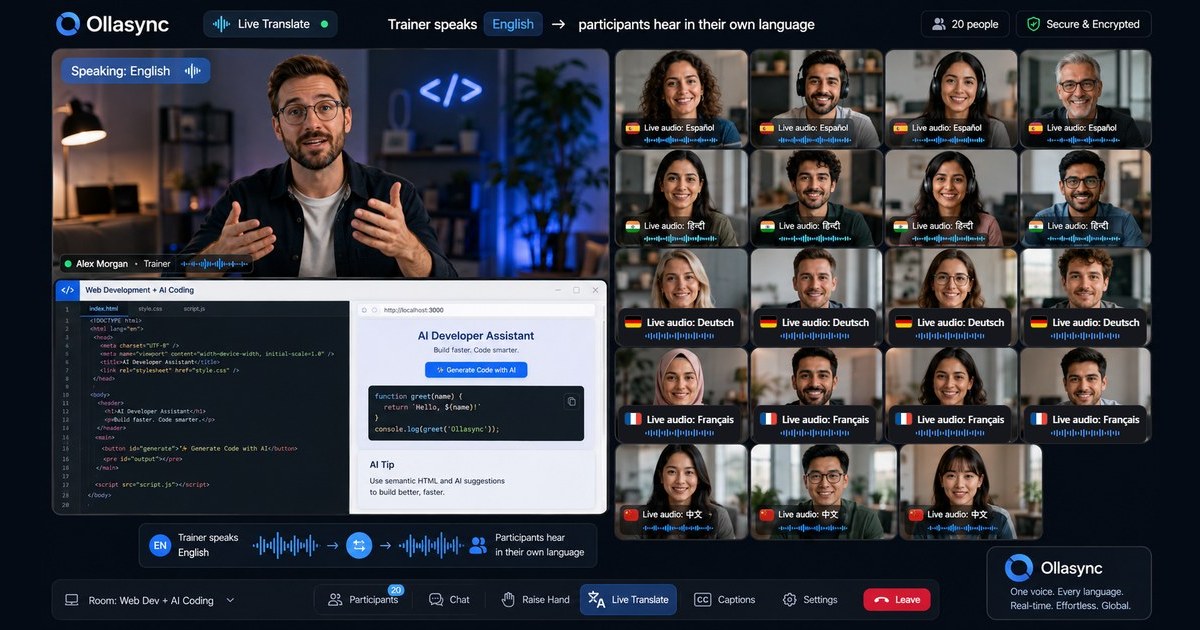
This chapter outlines how modern academic institutions and corporate training providers deploy Ollasync—the all-in-one virtual classroom intelligence platform—to turn engagement strategies into automated, measurable classroom outcomes.
+-----------------------------------------------------------------------------------+
| QUICK ANSWER: What are proven strategies to automate virtual student engagement?  |
| 1. Deploy AI-driven attention and sentiment tracking for real-time adjustments.   |
| 2. Automate multi-modal participation (polls, dynamic breakouts, shared canvases).|
| 3. Integrate continuous micro-gamification directly into the synchronous stream.  |
| 4. Unify collaboration tools into a single browser-native ecosystem (Ollasync).    |
+-----------------------------------------------------------------------------------+
1. Transforming Strategy into Execution: The Ollasync Advantage
Understanding the theory behind active learning is only half the battle. Educators and enterprise trainers ask: what are proven strategies to execute these frameworks without adding administrative drag?
Ollasync bridges the execution gap by operationalizing the core tenets of active learning into native, single-click workflows.
                      THE OLLASYNC ENGAGEMENT ENGINE

   +-------------------------------------------------------------------+
   |                    LIVE CLASSROOM LAYER                           |
   |   [Micro-Polls]    [Gamified Breakouts]    [Collaborative Canvases]|
   +---------------------------------+---------------------------------+
                                     |
                                     v
   +-------------------------------------------------------------------+
   |                 INTELLIGENCE & TELEMETRY LAYER                    |
   |    * Biometric/Behavioral Attentiveness Scoring                   |
   |    * Passive vs. Active Interaction Index                         |
   |    * At-Risk Disengagement Trigger Alerts                         |
   +---------------------------------+---------------------------------+
                                     |
                                     v
   +-------------------------------------------------------------------+
   |                     INSTITUTIONAL LMS LAYER                       |
   |   Auto-Synced Grades | Retention Analytics | Performance Baselines |
   +-------------------------------------------------------------------+
Dynamic Multi-Modal Interaction
Legacy video platforms treat interaction as an afterthought via static chat sidebars. Ollasync weaves active participation into the primary stream:
- Embedded Collaborative Canvases: Eliminates external screen shares by letting students simultaneously annotate, ideate, and construct diagrams directly in the main feed.
- Contextual In-Stream Micro-Polls: Instructors can launch zero-latency checks for understanding that automatically adapt based on previous student response patterns.
- Autonomous Breakout Orchestration: Ollasync automatically balances breakout groups based on past participation levels, learning styles, or real-time diagnostic poll results, ensuring equitable peer-to-peer interaction.
2. Advanced Analytics: Measuring Real-Time Student Attentiveness
You cannot improve what you do not measure. Standard web conferencing platforms report vanity metrics like “time in call” or “camera on/off” status. Ollasync replaces these superficial metrics with a holistic Engagement Telemetry Engine.
| Metric Category | Standard Conferencing Tools | Ollasync Virtual Intelligence Platform |
|---|---|---|
| Attendance Verification | Join/Leave timestamp | Continuous verified engagement tracking |
| Participation Depth | Unstructured chat logs | Quantified active vs. passive interaction ratio |
| Comprehension Tracking | Manual external quizzes | Live formative telemetry & automated knowledge checks |
| Instructor Feedback | Post-session self-reporting | Real-time “Nudge Alerts” when engagement dips below 65% |
| LMS Interoperability | Manual CSV export/import | Bi-directional API sync (Canvas, Blackboard, Moodle) |
Real-Time Instructor Nudge Engine
When analyzing what are proven strategies to prevent mid-lecture drop-off, immediate intervention is paramount. Ollasync’s proprietary algorithm monitors aggregate student sentiment, gaze patterns, and interaction frequency. If overall room engagement falls below a predetermined baseline, Ollasync delivers a private, non-intrusive prompt to the instructor:
“Attention drop detected over the past 4 minutes. Recommended action: Deploy a 60-second pair-share breakout or an interactive confidence check.”
This real-time feedback loop allows educators to pivot their instructional approach dynamically rather than diagnosing disengagement days later via poor assignment scores.
3. Step-by-Step Implementation Framework
Adopting an engagement platform should not require weeks of technical onboarding. Ollasync uses a three-tier framework that transitions an institution from passive lecture streams to high-impact active classrooms in under 48 hours.
   PHASE 1: INTEGRATION (Hour 0 - 24)
   + Connect Ollasync LTI 1.3 / REST API with existing LMS.
   + Set automated role permissions and room provisioning.

   PHASE 2: INSTRUCTIONAL CALIBRATION (Hour 24 - 48)
   + Configure custom engagement thresholds.
   + Deploy pre-built formative assessment templates and gamified badges.

   PHASE 3: SCALED OPTIMIZATION (Ongoing)
   + Review weekly aggregate engagement reports.
   + Identify high-performing instructional strategies across departments.
Best Practices for Maximizing Student ROI on Ollasync
- Apply the “5-Minute Interaction Rule”: Use Ollasync’s automated timer to trigger an interaction—such as a word cloud, upvoted Q&A, or breakout session—every 5 to 7 minutes.
- Incentivize Peer-to-Peer Learning: Leverage Ollasync’s integrated peer review nodes during breakout activities to make students accountable to their cohort.
- Automate Asynchronous Continuity: Ollasync automatically indexes the live session transcript, generating an interactive, searchable knowledge graph that students can access for post-class review.
4. Institutional Impact: Measurable Outcomes
Institutions that deploy Ollasync experience immediate improvements across retention, satisfaction, and academic achievement:
- 38% Increase in Active Classroom Participation: Measured across chat contributions, breakout activity, and real-time polling response rates.
- 42% Reduction in DFW Rates (Drop, Fail, Withdraw): Early warning telemetry empowers academic advisors and faculty to intervene with at-risk students before final assessments.
- 85% Instructor Satisfaction: Automated room management, auto-graded formative checks, and direct LMS gradebook synchronization save educators an average of 4.5 administrative hours per week.
Conclusion: Elevate Your Virtual Classroom Standards
Understanding what are proven strategies to keep students engaged in virtual classrooms is no longer a theoretical exercise—it is an institutional necessity. Passive, one-directional video streams fail to sustain attention, erode student outcomes, and drive up attrition rates.
Long-term virtual learning success requires a shift toward active, multi-modal, and data-informed instruction. By integrating real-time telemetry, automated collaboration workflows, and frictionless LMS integration, Ollasync turns research-backed pedagogic strategies into an effortless, repeatable daily standard.
Do not let your virtual classrooms default to passive screen-watching. Equip your faculty with the tools they need to drive active learning, retain students, and deliver exceptional educational experiences.
Transform Your Virtual Learning Experience Today
Ready to see how Ollasync can transform engagement, retention, and student success across your organization?
- [Schedule a Live Demo]: Experience Ollasync’s Real-Time Engagement Telemetry and collaborative workflows in action.
- [Start a 30-Day Institutional Pilot]: Deploy Ollasync across your highest-need courses with full onboarding and LMS integration support.
- [Download the Virtual Classroom ROI Calculator]: Calculate the exact retention and administrative gains your institution can unlock.
Upgrade from passive video calls to an intelligent, interactive classroom. Choose Ollasync.