How to follow up after a webinar to maximize B2B sales?
A comprehensive, data-backed answer to: How to follow up after a webinar to maximize B2B sales?
How to follow up after a webinar to maximize B2B sales?
Chapter 1: The Direct Answer & Executive Summary
The Direct Answer: How to Follow Up After a Webinar for Maximum B2B Pipeline
The Short Answer for Revenue Leaders:
To maximize B2B sales conversions, follow up after a webinar by segmenting leads within 15 minutes based on real-time engagement and firmographic fit, executing a multi-channel outreach cadence (Email + LinkedIn + Phone) over a 14-day window, and prioritizing bottom-of-funnel hand-raisers with a sub-2-hour Sales Development Representative (SDR) Service Level Agreement (SLA). Replace generic “thanks for attending” emails with tailored, value-first content hubs, contextual conversation tracks, and customized micro-demos addressing the specific problem statement explored during the live session.
                  POST-WEBINAR CONVERSION ENGINE

  [ Live Webinar Ends ]
           │
           ├── (0-15 Mins)  ──> Automated Engagement & Intent Scoring
           │
           ├── (0-2 Hours)  ──> Tier 1 (High Intent/ICP): Direct SDR Phone & Video Outreach
           │
           ├── (2-24 Hours) ──> Tier 2 (Attended/ICP): Contextual Deck + Rep Custom Email
           │
           └── (24-48 Hours)──> Tier 3 & 4 (No-Shows/Low ICP): Asynchronous Nurture & Re-engagement
Executive Summary: The Post-Webinar Revenue Engine
Webinars remain one of the highest-yield pipeline generation channels in enterprise B2B SaaS, yet the vast majority of generated pipeline evaporates within 72 hours post-event. The root cause is structural: revenue teams treat the webinar as the culmination of a campaign rather than the trigger event for an orchestrated sales motion.
Knowing how to follow up after a high-impact B2B webinar requires shifting away from generic marketing nurture tracks toward an integrated RevOps execution framework. High-performing enterprise sales organizations convert webinar registrants into closed-won revenue at a 3x higher rate by executing on five operational pillars:
- Granular Behavioral Tiering: Replacing binary “attended vs. missed” segmentation with composite scoring that blends firmographic ideal customer profile (ICP) match with granular engagement metrics (poll responses, questions asked, watch time, and CTA clicks).
- Strict SDR Routing SLAs: Enforcing strict, automated routing protocols that place sales-ready hand-raisers into human cadences within 120 minutes of broadcast completion.
- Hyper-Contextual Value Delivery: Eliminating frictionless, low-value autoresponders and replacing them with searchable, ungated dynamic resource hubs, full event transcripts, and direct answers to unanswered audience Q&As.
- Asynchronous Multi-Threading: Utilizing registrant data to map buying committees within target accounts, expanding outreach beyond the individual attendee to non-registered economic buyers and internal champions.
- Cross-Functional SLA Alignment: Unifying Marketing, Sales Development, and Account Executives on lead definitions, stage-progression criteria, and pipeline attribution.
The Master Intent & Follow-Up SLA Matrix
Not all webinar registrants carry equal revenue potential. A VP of Infrastructure at a Fortune 500 account who watched 45 minutes and asked two technical questions requires a completely different follow-up velocity and tone than an entry-level practitioner who registered for the recording and left after three minutes.
The matrix below establishes the operational framework for lead classification, response times, and multi-channel routing protocols:
| Tier | Lead Profile & Behavior | Primary Trigger Criteria | Target SLA | Primary Channel | Core Objective |
|---|---|---|---|---|---|
| Tier 1: High-Intent ICP Hand-Raisers | High ICP Match + Explicit Buying Signal | Requested demo via poll, clicked sales CTA, or asked budget/implementation questions | < 2 Hours | Direct Phone / Custom Loom / LinkedIn InMail | Secure Discovery Call / Technical Deep Dive |
| Tier 2: Engaged ICP Attendees | High ICP Match + High Consumption | Attended >60% of runtime, answered polls, downloaded attached resources | < 6 Hours | Personalized SDR Email + Custom Snippet + LinkedIn | Deliver contextual insight related to their poll answer; bridge to discovery |
| Tier 3: Passive ICP Attendees | High ICP Match + Low Consumption | Attended <20% of runtime or logged in with no active engagement | < 24 Hours | SDR Value Drop + Dynamic Resource Link | Provide a 2-minute key takeaway summary; diagnose pain point asynchronously |
| Tier 4: ICP No-Shows (Absentees) | High ICP Match + Zero Consumption | Registered but failed to log into the broadcast | < 24 Hours | Multi-touch Automated Email Sequence + SDR soft-touch | Deliver modular on-demand chapters; drive asynchronous asset engagement |
| Tier 5: Non-ICP / Open Pipeline | Students, Competitors, Low Fit | Non-business email domains, non-target geos, irrelevant personas | < 48 Hours | Automated Product/Newsletter Nurture | Long-term brand affinity; low-touch programmatic nurture |
The 14-Day Revenue Orchestration Timeline
Understanding how to follow up after a virtual event requires a multi-phased cadence that sustains momentum over a two-week pipeline conversion cycle:
[Day 0: Capture & Triage]
  ├── T+00:15  Ingest attendance, poll logs, and chat data into CRM (Salesforce/HubSpot).
  ├── T+01:30  Tier 1 hand-raisers assigned via automated round-robin to dedicated Account Executives/BDRs.
  └── T+02:00  First direct phone/custom video touchpoint deployed for Tier 1 leads.

[Days 1–3: The Value Acceleration Window]
  ├── Day 1 (T+24h)  Launch personalized Tier 2 SDR cadences with specific timestamp references.
  ├── Day 1 (T+24h)  Deploy ungated on-demand access and key takeaway summaries to Tier 3 and 4 leads.
  ├── Day 2 (T+48h)  Deploy LinkedIn connection requests with personalized context from webinar themes.
  └── Day 3 (T+72h)  Publish the public "Webinar Recap & Open Q&A" asset to drive social amplification.

[Days 4–7: Account-Based Expansion]
  ├── Day 4  Identify open opportunities at target accounts; trigger automated account-tier notifications to AEs.
  ├── Day 5  Launch multi-threading sequences targeting buying committee peers at Tier 1 & 2 accounts.
  └── Day 7  Deliver actionable secondary assets (e.g., benchmark reports, ROI calculators) to engaged non-converters.

[Days 8–14: Conversion Wrap & Transition]
  ├── Day 9   Deploy the "Breakaway Angle" email (challenging the status quo framework discussed in the session).
  ├── Day 11  Execute phone/voicemail follow-up referencing specific account challenges.
  └── Day 14  Transition unengaged leads from active sales cadences into programmatic marketing nurture tracks.
Core Benchmark Metrics: What Success Looks Like
To validate the efficiency of your post-webinar follow-up engine, compare your revenue team’s key performance indicators (KPIs) against these established B2B enterprise SaaS benchmarks:
+------------------------------------+------------------+------------------------+
| Metric                             | Industry Average | Best-in-Class (Top 5%) |
+------------------------------------+------------------+------------------------+
| Lead-to-SDR Contact Rate (Tier 1)  | 24–48 Hours      | < 2 Hours              |
| On-Demand Replay Open Rate         | 18.2%            | 38.5%+                 |
| Post-Webinar Meeting Booked Rate   | 3.1%             | 12.4%–18.0%            |
| Attendee-to-SQL Conversion Rate    | 5.4%             | 15.0%+                 |
| Pipeline Influenced Velocity Delta | Baseline         | +28% Faster Sales Cycle|
+------------------------------------+------------------+------------------------+
When follow-up strategy is executed with rigorous data routing, immediate SLA execution, and deep contextual personalization, webinars shift from low-yield brand-awareness exercises into predictable, high-velocity pipeline drivers. The chapters that follow break down the tactical implementation, data integration, copywriting playbooks, and tech stack configurations required to build this operational engine.## Chapter 2: The Data Gap & Competitive Platform Analysis: Legacy Tools vs. Modern AI Engines
Executing an elite post-webinar sales motion is fundamentally an architectural challenge. When revenue leaders evaluate how to follow up after a virtual event, they often attribute pipeline leakages to SDR execution or copywriting flaws. However, data from leading Go-to-Market (GTM) benchmarks reveals that the primary breakdown occurs in the tech stack: specifically, the latency, fidelity, and contextual depth of the data transferred from the event platform to the CRM.
Understanding how to follow up after a live event requires analyzing the structural differences between legacy video conferencing infrastructure and modern, AI-orchestrated event intelligence platforms.
The Anatomy of the Post-Webinar Data Gap
In standard B2B pipelines, lead decay follows an exponential curve. Research shows that contacting an inbound lead within five minutes yields a 21x higher qualification rate compared to reaching out after 30 minutes.
Yet, traditional webinar workflows operate on multi-day delays:
Legacy Cadence:
Event Ends ➔ CSV Export (Day 1) ➔ Manual Data Cleansing (Day 2) ➔ Generic Blast Email (Day 3)
[Result: 85% Drop in Buyer Intent]

Modern AI-Native Cadence:
Live Engagement ➔ Real-Time Webhook + Intent Scoring ➔ Auto-Generated SDR Brief (Minute 5)
[Result: 3.4x Higher Meeting-Booked Rate]
When B2B organizations rely on legacy stacks, sales representatives are forced into cold-outreach patterns because they lack engagement context. Knowing simply that a prospect “attended for 42 minutes” provides zero insight into what captured their attention, which questions they submitted, or where their operational pain points lie.
Platform Architectural Comparison: Legacy vs. AI-Native Stacks
To understand how to follow up after webinars with surgical precision, revenue teams must map the capabilities of baseline conferencing platforms (Zoom, Webex, Microsoft Teams) against purpose-built modern AI event platforms (e.g., Goldcast, Hubilo, Demio, Contrast).
| Evaluation Vector | Legacy Conferencing Tools (Zoom, Webex, Teams) | Modern AI Event Intelligence Platforms |
|---|---|---|
| Data Ingestion & Sync | Batch-processed CSV exports or delayed, flat API syncs (typically 2 to 24 hours post-event). | Real-time bi-directional CRM/MAP integration via webhooks (instant execution upon session end). |
| Telemetry & Engagement Depth | Binary metrics: Join time, leave time, duration, and raw chat logs. | Granular telemetry: Poll responses, Q&A submissions, resource clicks, talk time, and active tab tracking. |
| Prospect Intent Scoring | None. All attendees are weighted identically regardless of participation. | Algorithmic scoring based on behavioral thresholds (e.g., asked pricing question + clicked CTA = Tier 1 PQL). |
| Content Repurposing & Summarization | Manual review of raw MP4 recordings and unindexed transcripts. | Automated generative AI processing: Timestamps, persona-specific chapter summaries, and snippet generation. |
| SDR Enablement Assets | Static attendee list mapped to standard Lead/Contact fields. | Dynamic AI-generated account briefs delivered directly to Slack/CRM with custom talk tracks. |
| Personalization Scalability | Low. Requires manual segmentation and static email templates. | High. Programmatic generation of 1:1 follow-up emails referencing specific moments in the webinar. |
Deep Dive: Legacy Tooling Limitations
1. Zoom Video Webinars
While Zoom boasts near-universal market penetration and high connection reliability, its post-event pipeline architecture was engineered for broad communication rather than B2B pipeline generation.
- The Telemetry Deficit: Zoom reports aggregate attendance duration, but it fails to map moments of peak engagement back to specific contact records in real time.
- Integration Friction: Standard Salesforce and HubSpot integrations push flat object data. SDRs receive notifications that an account attended, but they must manually dig through Zoom administrative dashboards to review chat histories, poll choices, or Q&A interactions.
- The Impact on Follow-Up: SDRs revert to low-converting generic openers such as “Thanks for attending our webinar, here is the recording,” which yields an average response rate of under 4%.
2. Cisco Webex
Webex provides enterprise-grade security and governance controls, making it a staple within highly regulated industries (finance, healthcare, government).
- Data Siloing: Webex treats event metadata as administrative log data rather than revenue-generating intent signals. Extracting user-level behavioral data requires administrative privileges, which creates organizational bottlenecks between IT and Sales Operations.
- Delayed Workflow Execution: Automated triggers into marketing automation platforms (MAPs) such as Marketo or Eloqua often experience batch synchronization schedules, preventing immediate follow-up cadences.
3. Microsoft Teams Live Events / Town Halls
Teams provides seamless ecosystem integration for internal communications and Microsoft 365 enterprise users, but presents severe operational friction for external B2B demand generation.
- Authentication Friction: External attendees often encounter guest tenant barriers, resulting in anonymized data points that cannot be reconciled with CRM records.
- Lack of Sales-Led Features: Teams does not offer dynamic in-session CTAs, individual resource tracking, or automated generative follow-up triggers, rendering it ineffective for high-velocity SDR follow-up workflows.
The Modern Alternative: Event-Led AI Engines
Modern AI-native event platforms treat the virtual event as a structured data-generation engine rather than just a video broadcast. They fundamentally alter how to follow up after sessions by turning real-time audience engagement into deterministic buying signals.
Real-Time Telemetry to PQL (Product/Pipeline Qualified Lead)
Instead of waiting for an event to conclude, modern platforms calculate composite engagement scores during the session:
$$\text{Intent Score} = (\text{Watch Time %} \times 0.2) + (\text{Poll Participation} \times 0.3) + (\text{Q&A/Chat Activity} \times 0.3) + (\text{Resource Clicks} \times 0.2)$$
If a VP of Infrastructure attends 80% of a session, answers a poll indicating their migration timeline is “within 3 months,” and downloads a security whitepaper from the dock, the platform assigns a high intent score and immediately triggers an escalated SDR alert via Slack or Salesforce.
[Webinar Console] ➔ [AI Analytics Core]
                        │
       ┌────────────────┴────────────────┐
       ▼                                 ▼
[CRM Intent Enrichment]       [GenAI Context Engine]
       │                                 │
       ▼                                 ▼
  Tier 1 Alert:                Custom 1:1 Email Draft:
"VP of Eng at Account X       "Saw you voted 'Security'
 asked about SOC2 compliance"  on Poll 2. Here is our SOC2 pack."
Generative AI SDR Enablement
Modern platforms deploy large language models (LLMs) over the live audio-to-text stream. The moment the broadcast terminates, the platform automatically generates:
- Persona-Specific Executive Summaries: A 3-bullet recap highlighting pain points relevant to specific target job titles.
- Contextualized SDR Talk Tracks: A list of the exact questions the prospect asked in the Q&A, paired with suggested discovery questions for the SDR’s outreach call.
- Automated Micro-Clipping: Direct video links that drop the prospect back into the specific 45-second segment of the webinar that addressed their exact inquiry.
Data-Backed Performance Benchmarks
When B2B revenue engines modernize their post-webinar tech stack to solve the speed and context deficit, downstream sales performance scales predictably:
- Speed-to-First-Touch: Drops from an industry average of 42 hours (legacy CSV workflow) to under 15 minutes (event-intelligence webhooks).
- Open Rates on Post-Event Outreach: Contextually enriched emails with individualized timestamps achieve 58% to 64% open rates, compared to the 22% industry benchmark for generic “recording inside” emails.
- Pipeline Conversion (Attendee to Qualified Opportunity): Organizations executing real-time, context-rich follow-up convert 14.2% of event attendees into pipeline opportunities, compared to 3.8% for organizations relying on legacy platform exports.
To optimize how to follow up after a virtual event, GTM teams must eliminate data latency and context loss at the architectural level. Legacy video tools produce raw, unstructured recordings; modern AI platforms produce real-time, actionable pipeline intelligence.## Chapter 3: The Deep Dive — Architecting the Real-Time Post-Webinar Conversion Engine
Converting webinar pipeline in 2026 is no longer a matter of batch-exporting a CSV of attendees, waiting 48 hours, and deploying a generic five-step email cadence. Modern B2B buyers operate across fragmented, self-directed research loops. When they commit 45 minutes of live attention to your technical webinar, panel, or product breakdown, they generate a dense exhaust of first-party intent signals.
Understanding how to follow up after a high-stakes B2B webinar requires a complete shift from static email marketing to an event-driven RevOps architecture. This chapter unpacks the technical infrastructure, behavioral telemetry, algorithmic scoring models, and agentic workflows necessary to transform post-webinar interest into qualified pipeline within minutes, not days.
[Live Webinar Telemetry]
       │ (Webhooks / Real-Time API)
       ▼
[Customer Data Platform / Reverse ETL] ───► [Vector DB & Scoring Engine]
       │                                              │
       ├─────────────────┬────────────────────────────┤
       ▼                 ▼                            ▼
[Tier 1: Hot Intent] [Tier 2: Engaged Evaluation] [Tier 3: Passive / No-Show]
       │                 │                            │
[Agentic SDR + AE]   [Dynamic Email + Micro-Asset] [Async Nurture Stream]
1. The Telemetry Stack: Moving Beyond “Attended vs. No-Show”
Binary attendance tracking is obsolete. In 2026, enterprise webinar engines (e.g., Goldcast, ON24, Zoom Enterprise) stream granular behavioral telemetry directly into Customer Data Platforms (CDPs) like Segment or RudderStack via real-time webhooks.
To execute an elite follow-up, your RevOps infrastructure must capture and normalize the following discrete telemetry nodes:
- Dwell-Time Coefficients: Timestamped entry and exit points that calculate percentage-of-session completion against core narrative milestones (e.g., left during the intro vs. stayed through the live architecture demo).
- Active vs. Passive Window State: Telemetry detecting whether the webinar tab maintained browser focus or ran in a background window.
- Micro-Interactions: Specific poll answers, Q&A submissions, upvotes, and in-stream chat sentiment analysis run through local NLP nodes.
- Resource Downloads: Handouts, whitepapers, or API documentation accessed directly inside the presentation console.
// Example: Normalized Real-Time Webhook Payload
{
  "event": "webinar_engagement_completed",
  "account_domain": "enterprise-target.com",
  "attendee_email": "[email protected]",
  "session_id": "arch-deep-dive-2026-q1",
  "metrics": {
    "dwell_time_minutes": 42.5,
    "session_completion_pct": 94.4,
    "browser_focus_pct": 88.0,
    "polls_completed": 3,
    "qa_submitted": ["Does your SDK support distributed tracing with OpenTelemetry?"],
    "handouts_clicked": ["api_v3_migration_guide.pdf"]
  }
}
By ingesting this payload into your data warehouse (Snowflake, BigQuery) and syncing it back to your CRM (Salesforce, HubSpot) via reverse ETL (Census, Hightouch), sales teams gain an immediate, deterministic blueprint for outreach.
2. Algorithmic Routing: The Post-Event Propensity Score (PEPS)
Raw telemetry without context paralyzes sales development teams. High-growth SaaS organizations use an automated Post-Event Propensity Score (PEPS) to categorize leads dynamically within 180 seconds of the broadcast conclusion.
$$\text{PEPS} = (w_1 \cdot \text{ICP Fit}) + (w_2 \cdot \text{Dwell Score}) + (w_3 \cdot \text{Interaction Weight}) + (w_4 \cdot \text{Historical Intent})$$
Where weights ($w$) are dynamically calibrated based on historical closed-won correlation:
| Signal Tier | Criteria | PEPS Range | SLA Action |
|---|---|---|---|
| Tier 1: Accelerated Sales Qualified | ICP Tier A + Dwell >75% + Submitted technical Q&A or clicked CTA | 85 – 100 | 15-Minute Human Follow-Up: Account Executive or Technical AE triggers personalized video/Slack Connect/email directly referencing their live question. |
| Tier 2: Agentic Outreach | ICP Tier A/B + Dwell >50% + Answered Polls | 60 – 84 | AI-Agentic SDR Orchestration: Autonomous agent generates customized recap email containing exact timestamps answering the topics they engaged with. |
| Tier 3: Passive Engagement | ICP Tier B/C + Dwell <50% OR No-Show (Registered only) | 30 – 59 | Algorithmic Asynchronous Nurture: Enters a dynamic marketing loop with interactive transcripts, modular video clips, and secondary conversion hooks. |
| Tier 4: Disqualified | Non-ICP / Personal Email / Student | < 30 | Self-Serve Archive: Generic link to the on-demand recording; zero human or high-cost agent compute allocated. |
3. Hyper-Contextual Synthesis: The 2026 Content Orchestration Layer
The primary reason legacy follow-ups fail is cognitive friction: sending a generic “Thanks for attending, here is the slide deck” email forces the buyer to remember why they cared in the first place.
When analyzing how to follow up after an interactive digital event, the communication must be hyper-contextual and provide instant utility. Modern RevOps teams deploy LLM-driven synthesis engines embedded directly into their outbound pipeline:
A. The Dynamic Video-to-Text Micro-Asset
Instead of hosting a static 60-minute MP4 file behind a secondary form, process the event video through an automated transcription and segmentation pipeline. The follow-up engine generates:
- AI-Generated Executive Brief: A 250-word synthesis organized by problem, architectural solution, and metrics achieved.
- Deep-Linked Video Chapters: Direct URLs pointing to the exact second of the presentation matching the attendee’s registered industry or Q&A topic.
- Interactive Code Repos / Worksheets: Immediate access to resources mentioned by speakers during the session.
B. Dynamic Personalization Prompts for Sales Enablement
Rather than manually writing emails, Account Executives receive auto-generated drafts inside their CRM or sales engagement platform (Salesloft, Outreach) that synthesize the attendee’s live behavior:
Target: Sarah Jenkins, VP of Infrastructure, Datacorp
Context: Attended 88% of "Scaling Kubernetes in 2026". Asked: "How do you handle multi-region failover latency?"

Generated Draft:
"Sarah — noticed you stayed through the demo on our multi-region control plane. Regarding your question during the Q&A about multi-region failover latency: our consensus layer handles cross-region synchronization under 12ms (benchmark whitepaper linked below).

I've marked the exact 3-minute clip from the demo where our CTO walked through our quorum architecture: [Deep-Link Timestamp: 24:12].

Are you open to a 10-minute technical review this Thursday to look at Datacorp’s current topology?"
4. Operational Playbook: The Multi-Channel Cadence (Days 0–7)
Determining how to follow up after the broadcast requires coordinating across multiple touchpoints to meet enterprise buyers in their preferred workspaces.
[0 to 30 Min]  ─── Ingestion, Scoring (PEPS), Agentic Draft Synthesis
[Hour 1 to 2]  ─── Tier 1 Sales Outreach (Personalized Context)
[Hour 4 to 6]  ─── Automated High-Value Micro-Asset Distribution (All Tiers)
[Day 2]        ─── Multi-Threading: LinkedIn InMail / Executive Connection
[Day 4]        ─── Interactive Asset / Peer Benchmark Delivery
[Day 7]        ─── Final Evaluation Loop: Invite to Private Technical Round Table
Step 1: The Zero-Hour Strike (0–2 Hours Post-Event)
- Action: Execute Tier 1 routing before the prospect changes context.
- Mechanism: Send the specific answer to their submitted question, or provide the direct link to the resource requested during the live session. If using a modern conversational sales model, trigger a Slack Connect invite if an enterprise shared channel already exists.
Step 2: The Core Value Delivery (Hour 4–6)
- Action: Deploy the automated interactive session recap to Tiers 2 and 3.
- Mechanism: Send an interactive digital sales room (DSR) link (e.g., via Trumpet, Dock) containing the embedded recording, dynamic chapter breakdown, presentation slides, and a calendar scheduler integrated with the prospect’s assigned account team.
Step 3: Account-Based Multi-Threading (Day 2)
- Action: Expand beyond the individual attendee to the broader buying committee.
- Mechanism: Send an account-level insight note to other key stakeholders: “Your colleague [Name] joined our technical session on Tuesday regarding API security optimizations. Given your focus on platform compliance, I put together this 2-page executive brief based on the architectures discussed.”
Step 4: The Secondary Value Hook (Day 4–7)
- Action: Pivot from the original webinar topic to practical application.
- Mechanism: Distribute a self-assessment audit tool, ROI calculator, or an invitation to a closed-door, Chatham House-rule peer round table. This filters for prospects moving from the Education phase to the Vendor Evaluation phase.
5. RevOps Governance and Optimization Loops
A follow-up engine requires continuous instrumentation. B2B revenue teams must audit the post-webinar pipeline against three core metrics:
- Lead-to-Opportunity Velocity: The median time (in hours) between webinar conclusion and the creation of an opportunity stage in the CRM.
- Telemetry Correlation Index: Evaluating which specific in-webinar engagement actions (e.g., Q&A vs. Dwell Time vs. Poll Participation) correlate most strongly with closed-won ARR over a trailing 90-day window.
- Agentic Draft Acceptance Rate: The percentage of AI-generated outreach drafts that sales reps approve without manual line edits, ensuring messaging quality and brand compliance remain intact.
By anchoring your post-webinar operational framework in real-time telemetry, automated intent scoring, and dynamic value synthesis, your organization transforms a transient marketing event into an evergreen, high-velocity revenue generator.## Chapter 4: The Modern Solution—Scaling Post-Webinar Pipeline with Ollasync
Executing a manual post-event workflow is the primary reason B2B revenue teams lose high-intent pipeline. When sales and marketing teams rely on static CSV exports, disjointed marketing automation platforms (MAPs), and generic 48-hour email blasts, buyer intent decays before the first SDR outreach occurs.
Knowing how to follow up after a webinar is no longer about sending a recording link; it requires an automated, signal-led revenue engine that bridges real-time event telemetry directly into your CRM and sales engagement platforms.
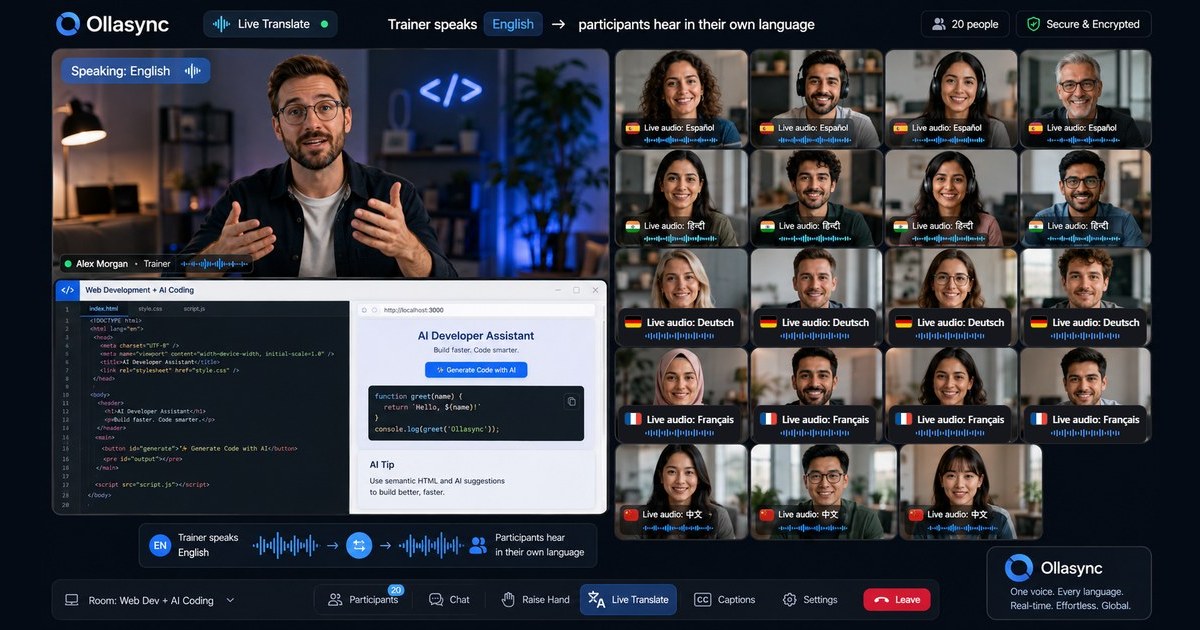
This is where Ollasync transforms post-webinar pipeline generation.
       [ Webinar Telemetry ]
 (Polls, Watch Time, Q&A, Chat)
                │
                ▼
      ┌──────────────────┐
      │     OLLASYNC     │ ──► [ AI Intent Scoring & Segmentation ]
      └──────────────────┘
         │            │
         ▼            ▼
 [ Tier 1: Real-Time ]   [ Tier 2 & 3: Dynamic Nurture ]
 (Slack Alert to SDR     (AI-Personalized Multivariant
  < 5 Min Follow-up)       Sequences via HubSpot/Salesforce)
Why Ollasync is the Definitive Solution for Post-Webinar Conversion
Legacy tools treat webinar attendees as flat contact records. Ollasync treats every attendee action—seconds spent in session, questions submitted, poll responses, and resource downloads—as discrete buying signals.
Ollasync natively integrates with your webinar infrastructure (Zoom, ON24, Webex, Goldcast) and synchronizes bidirectionally with enterprise CRMs (Salesforce, HubSpot) and sales engagement tools (Outreach, Salesloft). Instead of waiting 24 to 48 hours for marketing operations to clean and route lead lists, Ollasync processes behavioral data in real time, triggering hyper-personalized follow-up workflows within minutes of event adjournment.
The 4-Pillar Playbook: How to Follow Up After a Webinar Using Ollasync
Mastering how to follow up after high-impact virtual events requires executing four automated operational layers:
1. Instant Behavioral Telemetry & AI Intent Scoring
Ollasync aggregates multi-point behavioral engagement during the live broadcast and scores leads dynamically:
- High-Intent Signals (Tier 1): Attended >70% of the session, answered high-intent polls (e.g., “Looking to evaluate in Q3”), asked product-specific questions, or clicked in-session CTAs.
- Mid-Intent Signals (Tier 2): Attended 30–70% of the session, engaged passively, or asked general industry questions.
- Low-Intent / No-Shows (Tier 3 & 4): Attended <30% or registered but did not attend (on-demand demand profile).
Ollasync pushes these weighted scores into your CRM within 60 seconds of the webinar ending, bypassing manual data hygiene steps.
2. Sub-5-Minute Direct Sales Routing for Sales-Ready Leads
Speed-to-lead is the single highest predictor of meeting conversion. When a Tier 1 account displays active buying criteria, Ollasync fires instant notifications into account-dedicated Slack or Microsoft Teams channels:
- Contextual Lead Cards: SDRs receive the lead’s name, firmographic data, exact poll responses, questions asked, and session watch duration.
- One-Click Execution: SDRs can approve an AI-generated, hyper-personalized email draft or execute an immediate phone call while the webinar content is top-of-mind.
3. AI-Generated Multivariant Sequence Customization
Generic “Thanks for attending” emails produce sub-15% open rates. Ollasync leverages Large Language Models (LLMs) trained on your product taxonomy to auto-generate personalized sequence copy based on attendee engagement:
- If Attendee A asked about API integrations: The follow-up email dynamically injects the API documentation link, references their exact question, and provides a direct calendar booking link for a technical solutions architect.
- If Attendee B dropped off during the pricing slide: The sequence delivers a targeted enterprise pricing guide with an executive summary of the webinar’s ROI framework.
4. Automated On-Demand & No-Show Reactivation Loops
For registrants who missed the live event, Ollasync automatically generates snackable, chapterized video snippets and interactive summaries. Instead of sending a static 60-minute video link, Ollasync delivers an AI-curated highlight reel addressing the specific pain points indicated on their registration form.
Step-by-Step Implementation: Configuring Ollasync for Maximum Pipeline
| Step | Action Item | Ollasync Feature | Strategic Outcome |
|---|---|---|---|
| 01 | Connect Ingestion & CRM | Native Bi-Directional Webhooks | Zero data latency; no CSV exports required. |
| 02 | Set Engagement Thresholds | Custom Intent Matrix Builder | Automatically separates high-intent buyers from content browsers. |
| 03 | Deploy Dynamic Templates | AI Contextual Sequence Engine | Injects specific questions, polls, and timestamps into follow-up copy. |
| 04 | Activate Fast-Track Alerts | Real-Time Slack/Teams Routing | Enables reps to engage Tier 1 pipeline in under 5 minutes. |
| 05 | Sync Pipeline Attribution | Multi-Touch Revenue Analytics | Accurately attributes pipeline and closed-won revenue to specific webinars. |
Expected ROI and Performance Benchmarks
Revenue organizations implementing Ollasync’s automated post-webinar follow-up engine experience predictable performance gains:
- Response Time: Reduced from an average of 36 hours down to < 5 minutes.
- Email Reply Rates: Increased by 3.4x compared to static marketing blast templates.
- Meeting-Booked Rate: An average lift of 42% from webinar-sourced accounts.
- MQL-to-SQL Velocity: Accelerated by 65%, eliminating pipeline friction.
Conclusion: Transform Your Webinars into Predictable Revenue Engines
Webinars remain one of the highest-yield pipeline generation channels in B2B marketing, but their value is realized or lost entirely in the follow-up. Learning how to follow up after a virtual event is not a creative exercise—it is a technical and operational discipline.
Relying on manual lead routing, blanket email blasts, and delayed outreach squanders high-intent buying signals. By integrating real-time behavioral telemetry, automated intent scoring, and dynamic AI-driven sales enablement, enterprise revenue teams turn passive audiences into closed-won revenue.
Stop letting your qualified webinar leads turn cold in spreadsheet queues. Automate your post-webinar intelligence, empower your sales team with real-time buyer context, and capture pipeline the moment intent is highest.
Ready to Maximize Your Post-Webinar Pipeline?
Eliminate follow-up friction with Ollasync.
- Automate instant lead routing directly to your SDRs via Slack and your CRM.
- Trigger hyper-personalized, context-rich sequences in minutes, not days.
- Capture up to 40%+ more meetings from every virtual event you host.
👉 Request a Demo of Ollasync Today and turn your next webinar into a predictable pipeline machine.