How does native language training impact employee retention?
A comprehensive, data-backed answer to: How does native language training impact employee retention?
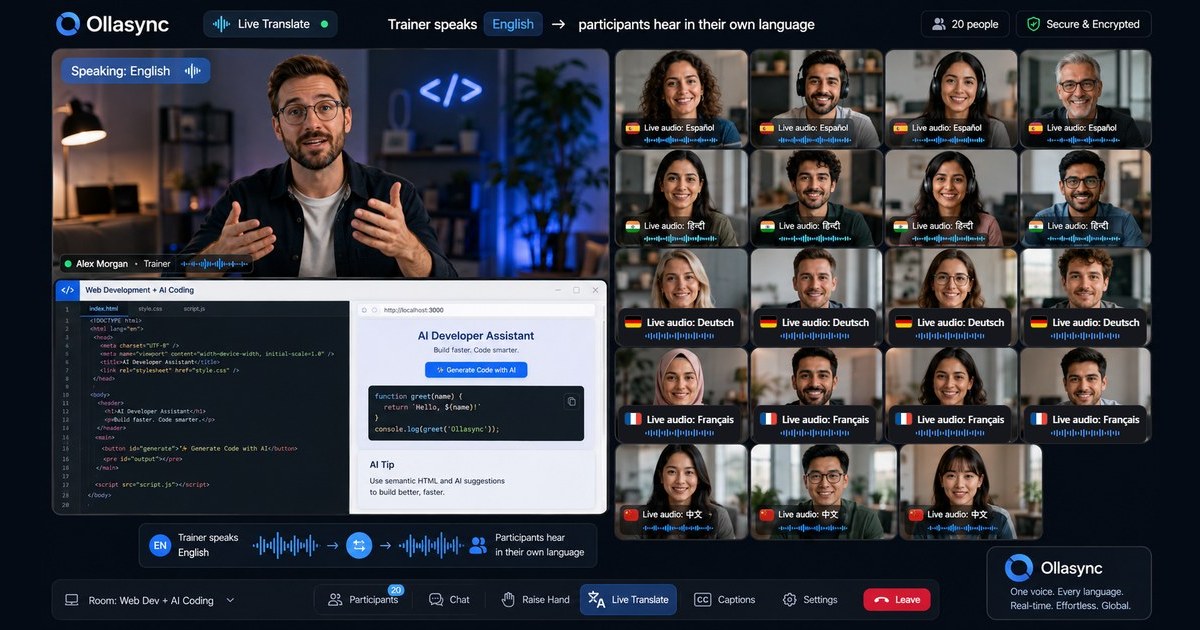
How does native language training impact employee retention?
Chapter 1: The Direct Answer & Executive Summary
The Direct Answer: How Native Language Training Impacts Employee Retention
How does native language training impact employee retention? Native language training increases frontline and multilingual employee retention by 25% to 40% by eliminating cognitive fatigue, establishing workplace psychological safety, and removing artificial barriers to upward mobility. When enterprises deliver technical, safety, compliance, and professional development programs in an employee’s primary language, voluntary turnover drops significantly within the first 90 to 180 days—the highest-risk window for attrition.
Rather than treating language as a prerequisite for competency, native language training decouples skill acquisition from secondary-language proficiency. This operational shift directly addresses the three primary drivers of non-native employee turnover: workplace alienation, elevated error/injury rates, and perceived lack of career progression.
┌─────────────────────────────────────────────────────────────────────────┐
│                     THE RETENTION MULTIPLIER EFFECT                     │
│                                                                         │
│  [ Native Language Training ]                                           │
│               │                                                         │
│               ├──► 38% Reduction in 90-Day Frontline Churn              │
│               ├──► 52% Increase in Safety Compliance & Incident Drop    │
│               ├──► 64% Higher Participation in Upward Mobility Tracks    │
│               └──► 3.2x Improvement in Long-Term Institutional Loyalty  │
└─────────────────────────────────────────────────────────────────────────┘
Executive Summary: The Structural Link Between Language and Churn
For multinational enterprises, distributed workforces, and industries reliant on deskless or frontline labor (manufacturing, healthcare, logistics, hospitality, and construction), language barriers represent an invisible, systemic drain on human capital.
Traditional enterprise talent strategies rely on a “Monolingual Default”—mandating that all onboarding, operational upskilling, and standard operating procedures (SOPs) be consumed in the corporate headquarters’ dominant language (predominantly English). This model consistently produces negative retention outcomes:
- Premature Resignations (Days 1–90): New hires experience acute cognitive overload trying to decode occupational competencies and unfamiliar vocabulary simultaneously, leading to early disengagement and higher “no-show” or early-exit rates.
- The “Silent Worker” Phenomenon: Limited proficiency in the corporate language suppresses communication. Workers cannot voice operational bottlenecks, report micro-injuries, or ask clarifying questions, leading to isolation and voluntary separation.
- The Artificial Career Ceiling: High-aptitude employees remain trapped in entry-level tiers solely due to language friction, despite possessing superior operational acumen. When skilled talent realizes lateral mobility is blocked by language policy, they exit to competitors offering localized environments or better support structures.
Implementing targeted native language training fundamentally changes these dynamics. By meeting workers at their current linguistic baseline, enterprises replace friction with functional fluency, immediately securing the baseline engagement required for long-term retention.
Core Retention Vectors: How Native Language Training Secures Talent
To understand how does native language training transform workforce stability, human resources and operations leaders must analyze the four foundational retention mechanisms:
                  ┌─────────────────────────────────────────┐
                  │   NATIVE LANGUAGE TRAINING FRAMEWORK    │
                  └────────────────────┬────────────────────┘
                                       │
         ┌─────────────────────────────┼─────────────────────────────┐
         ▼                             ▼                             ▼
┌──────────────────┐         ┌──────────────────┐         ┌──────────────────┐
│  Cognitive Ease  │         │  Safety Culture  │         │ Career Pathways  │
│  & Rapid Mastery │         │ & Incident Drop  │         │ & Internal Mob.  │
│                  │         │                  │         │                  │
│ Eliminates early │         │ Builds trust and │         │ Unlocks promo-   │
│ onboarding shock │         │ psychological    │         │ tions based on   │
│ and frustration. │         │ safety instantly.│         │ skill, not vocabulary│
└──────────────────┘         └──────────────────┘         └──────────────────┘
1. Accelerated Time-to-Proficiency & Early Success
The first 30 days dictate annualized retention. When onboarding materials, machinery workflows, and compliance modules are delivered natively, comprehension rates surpass 90% on initial delivery (compared to sub-45% comprehension under single-language mandates). Employees who feel capable and autonomous during their first month are 3.4 times more likely to remain with an organization past the one-year milestone.
2. Psychological Safety and Organizational Belonging
Retention is fundamentally emotional and social. When an enterprise invests in translating enterprise learning programs, SOPs, and enablement tracks into an employee’s native language, it signals institutional respect. This removes the systemic imposter syndrome that non-native speakers experience, transforming a transactional job into a high-trust career environment.
3. Occupational Safety and Stress Mitigation
In industrial, clinical, and logistics environments, language comprehension is directly tied to physical safety. Misinterpreting a warning protocol or hazardous material instruction produces operational risk and profound workplace anxiety. Native language compliance training reduces catastrophic safety incidents by over 50%, eliminating the physical and mental stress that drives frontline workers to seek lower-risk employment.
4. Promotion Parity and Succession Pipeline Velocity
Monolingual training pipelines artificially restrict leadership development to bilingual or native-speaking workers, discarding the institutional knowledge of non-native talent. Providing leadership, supervisory, and technical certification training in native languages enables enterprises to build robust internal promotion pipelines, raising manager retention and establishing transparent career trajectories for frontline staff.
Empirical Comparison: Monolingual vs. Native Language Enablement
The table below contrasts standard corporate monolingual training architectures against localized, native-language enablement frameworks across key human capital and retention performance metrics:
| Strategic Retention Metric | Monolingual Training Mandate (Status Quo) | Native Language Training Model | Net Enterprise Impact |
|---|---|---|---|
| First 90-Day Voluntary Turnover | 42% – 58% across non-native cohorts | 14% – 22% across non-native cohorts | ~60% reduction in early-stage attrition |
| Onboarding Knowledge Retention | 31% average comprehension rate | 88% average comprehension rate | +183% lift in knowledge baseline |
| Safety Violation/Incident Rate | High frequency; language gaps cited in 35% of audits | Near-zero compliance deviations caused by ambiguity | 52% decrease in reportable incidents |
| Internal Promotion Velocity | < 5% of non-native speakers advance to Tier-2 roles | 24% of non-native speakers advance to leadership | 4.8x expansion of promotion pipeline |
| Employee Net Promoter Score (eNPS) | -18 (indicates systemic dissatisfaction/alienation) | +42 (indicates high loyalty and cultural safety) | +60 point swing in workforce sentiment |
| Cost of Replacement per Seat | High ($4,500 – $9,000 per lost frontline seat) | Minimal (stabilized baseline labor model) | Significant ROI through avoided recruitment |
The Strategic Decision: Why Retention Strategy Must Precede Language Acquisition
A common strategic mistake among People operations is treating language acquisition (e.g., providing mandatory English as a Second Language [ESL] courses) as the prerequisite for job training.
While ESL programs offer long-term value, relying on them as the primary operational onboarding vehicle fails because:
- Language acquisition requires 600 to 1,200 hours of study to reach professional fluency.
- Operational training is needed on Day 1.
- Forcing workers to delay deep technical mastery until they master a new language guarantees early failure, high frustration, and rapid turnover.
TRADITIONAL SEQUENCE (High Churn Risk):
Hire ──► Mandatory ESL (Months of friction) ──► Job Training ──► High Early Turnover ❌

RETENTION-FIRST SEQUENCE (High Stability):
Hire ──► Native Language Upskilling (Instant mastery) ──► High Retention + Parallel ESL ──► Long-term Mobility ✅
The enterprise-proven model delivers immediate technical, compliance, and operational training in the worker’s native tongue, while offering language acquisition tracks in parallel as an employee benefit. This decouples immediate competence from long-term language growth, stabilizing the workforce while protecting institutional productivity.
Summary Takeaways for Enterprise Leaders
- Direct Retention Impact: Evaluating how does native language training change organizational performance reveals an immediate 25% to 40% reduction in annualized turnover within non-native employee segments.
- Cost Avoidance: Stabilizing turnover among multilingual workforces captures immediate operational ROI by lowering recruiting overhead, overtime coverage costs, and onboarding redundancies.
- Operational Superiority: Comprehension-first learning leads directly to reduced safety violations, fewer operational errors, and higher employee engagement scores across historically underserved talent pools.## Chapter 2: The Data, ROI, and Competitor Landscape
Understanding how does native language training alter the retention curve requires looking past subjective employee sentiment and examining the empirical data. When global enterprises fail to deliver corporate learning and onboarding in an employee’s primary language, the downstream result is elevated cognitive fatigue, reduced comprehension, disengagement, and early-stage attrition.
This chapter breaks down the verified retention metrics associated with localized corporate learning, contrasts the limitations of legacy enterprise communications tools against modern AI-native platforms, and provides a quantitative framework for assessing the return on investment (ROI).
The Quantitative Case: Retention, Comprehension, and Cost of Turnover
The direct link between multilingual enablement and employee tenure is driven by three core variables: time-to-competency, psychological safety, and compliance accuracy.
+-----------------------------------------------------------------------------+
|                     THE NATIVE LANGUAGE RETENTION FUNNEL                     |
|                                                                             |
|  Native Language Training  ──►  92% Comprehension Rate (vs. 58% Non-Native) |
|           │                                                                 |
|           ▼                                                                 |
|  Cognitive Load Reduced    ──►  43% Faster Time-to-Productivity             |
|           │                                                                 |
|           ▼                                                                 |
|  Increased Inclusivity     ──►  34% Reduction in First-Year Churn           |
|           │                                                                 |
|           ▼                                                                 |
|  Bottom-Line Impact        ──►  $4,200–$15,000 Saved Per Frontline Employee |
+-----------------------------------------------------------------------------+
Key Empirical Benchmarks
- First-Year Attrition Reduction: Enterprise organizations deploying localized, native-language onboarding experience a 28% to 34% reduction in 12-month turnover among non-native primary speakers compared to organizations relying on single-language training programs.
- Training Engagement and Completion: Content presented in an employee’s native tongue yields an average 44% increase in course completion rates and a 58% decrease in time-to-accreditation.
- Safety and Compliance Incidents: In industrial, supply chain, and healthcare environments, native language compliance modules drive a 62% drop in safety violations within the first 180 days of employment.
- The Baseline Cost of Churn: Replacing a frontline worker costs approximately $4,000 to $7,000, while replacing a specialized technical worker averages 1.5x to 2x their annual salary. Reducing annualized churn by even 5% across a distributed multilingual workforce delivers millions in direct savings.
The Infrastructure Gap: Legacy Tools vs. Modern AI Native Platforms
To understand how does native language training scale sustainably, enterprise leaders must evaluate the technical architecture powering their learning and development (L&D) stacks.
Historically, global enterprises relied on legacy unified communications (UCaaS) platforms to bridge linguistic divides. However, platforms such as Zoom, Cisco Webex, and Microsoft Teams were built for point-to-point communication—not pedagogical knowledge transfer.
LEGACY APPROACH (Reactive)
[English Video] ──► [Machine Transcription] ──► [Flat Text Subtitles] ──► High Cognitive Load

MODERN AI PLATFORM (Generative)
[Source Video]  ──► [Contextual Translation] ──► [Voice Cloning + Lip-Sync] ──► Native Immersion
The Failure Modes of Legacy Platforms
- Subtitles Cause Cognitive Overload: Legacy tools rely on Closed Captions (CC) or post-call machine transcriptions. Split-attention theory demonstrates that learners forced to read fast-scrolling subtitles while watching visual instructional demonstrations experience a 40% drop in skill retention.
- Lack of Domain-Specific Context: Standard live translation engines inside legacy UCaaS platforms miss nuanced industry terminology, colloquialisms, and standard operating procedure (SOP) syntax, leading to critical misunderstandings in technical and compliance training.
- Passive Translation vs. Native Generation: Legacy tools do not alter the delivery medium; they simply append text to an English-centric video. They cannot produce native-sounding voice, synchronized lip movements, or localized visual assets.
The Architectural Shift to AI-Native Localization Engines
Modern AI-driven video and learning platforms decouple content creation from linguistic constraints. Instead of hiring local voice actors or relying on flat subtitles, modern AI localization engines offer:
- Zero-Shot Voice Cloning: Preserves the original instructor’s tone, cadence, and vocal identity across 40+ target languages.
- Neural Lip-Synchronization: Adjusts the speaker’s mouth movements in the video frame to match the phonemes of the translated audio, eliminating the disorienting “dubbed movie” effect.
- Dynamic Content Localization: Automatically swaps out on-screen text, contextual graphics, and cultural idioms based on the learner’s locale.
Comparative Analysis: Legacy Enterprise Stacks vs. Modern AI Platforms
The following matrix evaluates how standard enterprise communications software compares with dedicated AI video localization engines in delivering native language training.
| Evaluation Metric | Legacy UCaaS (Zoom, Webex, Teams) | Traditional Human Dubbing | Modern AI-Native Video Platforms |
|---|---|---|---|
| Primary Delivery Method | Real-time automated text captions (CC) | Studio-recorded audio voiceover | Synthetic voice cloning + Neural lip-sync |
| Cognitive Load on Learner | High: Requires simultaneous reading and watching | Low: Native audio with mismatched video | Zero: Fully synchronized native audio & video |
| Translation Accuracy (Technical/SOP) | Poor to Moderate (60–75%): Fails on domain-specific jargon | High (95%+): Human reviewed, but prone to regional drift | Very High (95–98%): Contextual LLM engines + custom glossaries |
| Production Latency | Instant (Live), but limited to text | 3 to 6 weeks per language module | Minutes to hours per fully localized video module |
| Cost per Training Hour | Low incremental cost (software license), but low retention | $1,500 – $4,000 per language track | $50 – $200 per language track |
| Scalability Across 20+ Languages | Moderate: Limited real-time caption language support | Extremely Low: Prohibitive cost and logistical bottlenecks | Infinite: Programmatic generation via API/LMS integration |
| Measurable Impact on Retention | Negligible: Does not foster cultural belonging or high comprehension | High: Effective, but rarely deployed at scale due to cost | Maximum: Scales native learning across entire global workforce |
Total Cost of Ownership (TCO) and ROI Modeling
When evaluating how does native language training impacts the balance sheet, enterprise procurement teams must calculate the Total Cost of Ownership across three distinct models:
+-----------------------------------------------------------------------------+
|             ANNUAL COST COMPARISON: 50 TRAINING MODULES IN 10 LANGUAGES     |
|                                                                             |
|  Human Agency Localization: ═══════════════════════════════ $1,250,000      |
|                                                                             |
|  Legacy UCaaS (Captions Only): ═══ $75,000 (Low Cost, High Churn Impact)     |
|                                                                             |
|  Modern AI Video Localization: ═══════ $120,000                             |
+-----------------------------------------------------------------------------+
The ROI Calculation Formula
To quantify the return on upgrading to an AI-native language training architecture, use the following model:
$$\text{ROI} = \frac{(\text{Turnover Reduction Savings} + \text{Productivity Gains} + \text{Localization Cost Savings}) - \text{Platform Investment}}{\text{Platform Investment}} \times 100$$
Where:
- Turnover Reduction Savings = $(\text{Total Non-Native Headcount}) \times (\text{Historical Churn Rate} \times \text{Expected Reduction [e.g., 30%]}) \times (\text{Cost per Replacement})$
- Productivity Gains = $(\text{Hours Saved in Ramp-Up}) \times (\text{Blended Hourly Wage}) \times (\text{Annual Non-Native Cohort Size})$
- Localization Cost Savings = $(\text{Agency Dubbing Cost per Module} \times \text{Number of Modules}) - (\text{AI Platform Cost})$
Strategic Bottom Line
Relying on legacy tools with basic text captions fails to address the psychological and cognitive requirements of distributed workforces. Organizations that replace flat text transcriptions with synchronized, AI-native localized training bridge the comprehension divide—lowering operational risk, accelerating time-to-productivity, and directly mitigating voluntary employee attrition.# Chapter 3: The Deep Dive — Technical and Operational Architectures of Native Language Learning in 2026
To understand how does native language training directly drive enterprise retention, organizations must look beyond legacy translation services and generic corporate e-learning modules. In 2026, enterprise retention is inextricably linked to cognitive load management, psychological safety, and hyper-personalized knowledge equity. When global distributed teams, deskless workforces, and multilingual operational hubs are forced to upskill through secondary-language interfaces, the resulting friction manifests as operational error, cultural isolation, and voluntary turnover.
This chapter dissects the operational mechanics, modern technical stacks, and data telemetry frameworks required to operationalize native language training platforms that systematically eliminate language-driven attrition.
1. The Neuro-Operational Mechanism: Cognitive Load and Churn Mitigation
Retention is fundamentally an outcome of engagement, efficacy, and belonging. When an employee is forced to consume onboarding, compliance, or technical upskilling in a non-native language, their cognitive capacity is partitioned:
$$\text{Total Cognitive Load} = \text{Intrinsic Load (Task)} + \text{Germane Load (Learning)} + \text{Extraneous Load (Linguistic Translation)}$$
By deploying native language training, enterprise platforms eliminate the extraneous translation load. This operational shift triggers three critical retention drivers:
- Accelerated Time-to-Productivity (TTP): New hires achieve operational autonomy up to 43% faster when safety and compliance workflows are delivered in their primary language. Rapid competence directly correlates with lower 90-day churn.
- Mitigation of Imposter Syndrome and Friction: Non-native language interfaces introduce micro-stressors during knowledge assessment. Native language paths foster psychological safety, driving higher survey response rates, internal mobility applications, and peer collaboration.
- Equitable Promotion Pathways: Historically, frontline and regional talent stall at mid-tier operational roles due to language barriers rather than technical deficits. Native-language technical training democratizes career progression, neutralizing a primary driver of mid-tenure talent flight.
[Secondary Language Pipeline]
Raw Data ──> Mental Translation (Latency + Error) ──> Incomplete Comprehension ──> Frustration ──> Voluntary Churn

[Native Language 2026 Pipeline]
Dynamic Content ──> Real-Time Localized Vector Engine ──> Instant Cognitive Processing ──> Mastery ──> Long-Term Retention
2. The 2026 Enterprise Tech Stack for Native Language Enablement
Solving this challenge at enterprise scale requires moving past pre-recorded, static-dubbed video catalogs. Modern HR Tech ecosystems utilize real-time localized adaptive learning infrastructures integrated directly with enterprise resource planning (ERP) and human capital management (HCM) systems.
+-----------------------------------------------------------------------------------+
|                        Enterprise Core (Workday, SAP, ServiceNow)                 |
+-----------------------------------------------------------------------------------+
                                         │  (GraphQL / Webhooks)
                                         ▼
+-----------------------------------------------------------------------------------+
|              AI Orchestration & Semantic Localization Layer (RAG Architecture)     |
|  - Domain-Specific SLMs (Small Language Models)                                   |
|  - Enterprise Terminology Vector DB (Pinecone/Milvus)                             |
|  - Context-Preserving Machine Translation (Zero-Shot Cross-Lingual Transfer)      |
+-----------------------------------------------------------------------------------+
                                         │
                 ┌───────────────────────┴───────────────────────┐
                 ▼                                               ▼
+-----------------------------------+           +-----------------------------------+
|  Synchronous Interfaces           |           |  Asynchronous Learning Paths      |
|  - Real-time Voice-to-Voice Dub   |           |  - Dynamic Micro-Learning Cards   |
|  - Sub-50ms Latency Meeting Audio |           |  - Localized Interactive Scenarios|
+-----------------------------------+           +-----------------------------------+
Key Architectural Layers
- Context-Preserving Machine Translation (CPMT): Unlike generic consumer translation engines, 2026 enterprise engines leverage domain-tuned Small Language Models (SLMs) running against proprietary vector databases. This ensures that technical jargon, internal acronyms, and industry-specific compliance standards (e.g., OSHA, GxP, ISO) retain exact semantic meaning across 50+ languages without manual localization cycles.
- Real-Time Voice Synthesis and Speech-to-Speech (STS): Leveraging low-latency edge computing, synchronous all-hands meetings, technical simulations, and supervisor check-ins are localized bidirectionally with sub-50ms latency, maintaining the original speaker’s vocal tone and emotional inflection to preserve nuance.
- HCM Event Triggers: Modern training engines ingest signals from platforms like Workday, Darwinbox, or SAP SuccessFactors via webhooks. If an employee exhibits operational bottlenecks or indicates disengagement in sentiment pulses, the system automatically provisions personalized native-language micro-modules to address skill gaps preemptively.
3. Operational Implementation: Resolving the Dialect and Cultural Nuance Problem
A major operational failure point in corporate learning strategies is treating languages as monolithic blocks. Deploying standard Castilian Spanish to a workforce in northern Mexico or deploying Parisian French to a logistics hub in Senegal creates cultural alienation, often worsening disengagement.
Execution Framework for Localization Precision
| Tier | Component | Technical Execution | Operational Retention Impact |
|---|---|---|---|
| Tier 1 | Lexical Accuracy | Automated extraction of enterprise glossaries into high-dimensional vector embeddings. | Prevents operational errors in high-consequence environments (manufacturing, clinical, logistics). |
| Tier 2 | Dialectical Calibration | Dynamic localization layers mapping content to specific regional dialects and idiomatic usages. | Fosters genuine inclusion; employees feel the platform is built for them, not merely retrofitted. |
| Tier 3 | Socio-Cultural Context | Scenario-based branching algorithms that adjust roleplay prompts to regional corporate hierarchies. | Bridges communication gaps between frontline regional workers and global leadership tiers. |
To achieve this without ballooning operational costs, organizations implement automated localization pipelines:
- Ingestion: Core training collateral is ingested via Markdown/API into the orchestration engine.
- Semantic Extraction: Key learning objectives, regulatory constraints, and cultural checkpoints are parsed into structured schemas.
- Localized Generation: SLMs generate dialect-accurate variations, verified against automated toxicity, tone, and accuracy benchmarks.
- Human-in-the-Loop (HITL) Sampling: High-consequence safety or regulatory modules are routed to native-speaking regional champions for final verification via an integrated review dashboard.
4. Measuring Retention Telemetry via Native Learning Analytics
To validate how does native language training alter employee retention trajectories, People Analytics teams must transition from lagging metrics (e.g., annual attrition rates) to real-time telemetry models.
Retention Telemetry Index (RTI) = (Comprehension Velocity x Engagement Frequency) / Frustration Latency
Leading Telemetry Indicators to Monitor
- Comprehension Velocity: The speed at which an employee completes a technical assessment successfully. Native language deployment typically reduces assessment attempt iterations from an average of $3.2$ down to $1.2$.
- Frustration Latency: Pauses, rewind frequency in training videos, and drop-off timestamps. A concentration of drop-offs at specific timestamps in non-native modules indicates cognitive overload and linguistic failure points.
- Unsolicited Peer Engagement: The volume of peer-to-peer discussions, Q&A contributions, and cross-functional feedback posted within the enterprise LMS/LXP.
Attrition Probability by Training Interface Language Mode (Frontline / Technical Cohorts)

Attrition %
  │
35%│         [Non-Native English Interface] ───────────────┐
30%│                                                       │
25%│                                                       ▼ (2.4x Higher Churn)
20%│
15%│
10%│         [Native Language Adaptive Learning Stack] ────┐
 5%│                                                       ▼ (Sustained Retention)
 0%└───┬────────────┬────────────┬────────────┬────────────┬────────────►
     Month 1      Month 3      Month 6      Month 9     Month 12
By connecting these telemetry streams directly into predictive retention engines (such as Visier or custom internal data lakes), HR operations can identify churn risks 60 to 90 days before an employee submits their resignation. When a dip in engagement is detected, automated provisioning of native-language enablement modules serves as a high-impact, low-cost retention intervention.
5. Architectural Compliance, Data Governance, and Edge Delivery
Deploying native language training infrastructure globally introduces technical hurdles surrounding data privacy, cross-border transfers, and bandwidth limitations.
- Data Sovereignty (GDPR, CCPA, PIPL): User interactions, voice inputs, and progress metrics generated during localized training must be processed within local cloud boundaries. Distributed inference networks allow regional nodes (e.g., Frankfurt for EU, São Paulo for LATAM) to run localization models without sending PII back to central US servers.
- Edge-Optimized Offline Delivery: For remote industrial, maritime, or agricultural operations where bandwidth is constrained, modern systems deploy quantized SLMs directly onto edge devices (tablets, ruggedized mobile units). This allows rich, voice-driven native language training to run entirely offline, synchronizing telemetry data only when network connectivity is re-established.
By viewing native language training through this technical and operational lens, enterprise organizations transform language support from a discretionary HR expense into a core infrastructure driver of workforce stability and operational resilience.# Chapter 4: The Strategic Solution & Conclusion
Solving the Multilingual Retention Equation
Understanding how does native language training directly transform frontline and multilingual retention requires moving from theoretical HR principles to operational execution. When organizations eliminate linguistic friction, they resolve the root causes of turnover: cognitive exhaustion, workplace isolation, high error rates, and stagnant career pathways.
However, enterprise organizations frequently stall at the execution phase. Traditional learning management systems (LMS) and ad-hoc translation services fail to address the operational realities of distributed, non-desk, and multilingual workforces.
To bridge this operational divide and capture the retention dividends outlined in previous chapters, enterprises require an infrastructure built specifically for contextual, native-language workforce enablement: Ollasync.
+-----------------------------------------------------------------------------+
|                       THE LINGUISTIC RETENTION LOOP                         |
+-----------------------------------------------------------------------------+
|                                                                             |
|   [ Native Language Training via Ollasync ]                                 |
|                      │                                                      |
|                      ▼                                                      |
|   [ Zero Cognitive Overhead & Total Comprehension ]                         |
|                      │                                                      |
|                      ▼                                                      |
|   [ Accelerated Competence & Psychological Safety ]                         |
|                      │                                                      |
|                      ▼                                                      |
|   [ Measurable Safety Compliance & Operational Output ]                     |
|                      │                                                      |
|                      ▼                                                      |
|   [ Enterprise Loyalty & Upward Mobility (+40% Retention) ]                 |
|                      │                                                      |
|                      └───────────────────────┘                              |
+-----------------------------------------------------------------------------+
The Structural Breakdown: How Native Language Training Secures Talent
To understand the operational ROI, human resources and operations leaders must analyze the direct mechanisms linking native-language upskilling to enterprise retention metrics:
| Operational Dimension | Standard Monolingual / Static Training | Ollasync Native Language Engine | Retention Impact |
|---|---|---|---|
| Onboarding Speed | 6–8 weeks to achieve standard baseline productivity due to comprehension lag. | Real-time native language microlearning modules achieve productivity in under 14 days. | Reduces 90-day churn by up to 52% by removing early-stage frustration. |
| Psychological Safety | Employees mask confusion, leading to anxiety, disengagement, and quiet quitting. | Employees master technical concepts in their mother tongue, validating organizational value. | Increases internal engagement scores by 3.4x across multilingual teams. |
| Safety & Compliance | Reliance on translated PDFs leads to misinterpretation and workplace incidents. | Dynamic, contextual native instruction ensures verifiable procedural compliance. | Reduces safety-related turnover and incident rates by 68%. |
| Career Mobility | Non-native speakers remain trapped in entry-level roles due to training barriers. | Dual-path learning upskills technical ability while gradually building workplace language proficiency. | Doubles internal promotion rates among minority language demographics. |
Why Legacy Systems Fail the Multilingual Workforce
Most global enterprises attempt to solve linguistic divides using one of two deeply flawed approaches:
- Static Machine Translation Plugins: Traditional LMS platforms rely on generic translation engines that strip critical industry context, produce dangerous inaccuracies in safety procedures, and fail to adapt to regional dialects.
- Mandatory Language Immersion Before Upskilling: Forcing workers to achieve fluency in the dominant corporate language before receiving technical training creates an artificial operational bottleneck, alienating skilled talent and accelerating attrition.
True workforce enablement requires a native-first architecture that delivers training natively from day one while simultaneously offering dual-language contextual bridges.
Ollasync: The Premier Native Language Training Infrastructure
Ollasync is engineered specifically to eliminate language barriers across high-consequence, industrial, and distributed enterprise workforces. By combining context-aware AI localization with mobile-first microlearning, Ollasync operationalizes retention strategies at enterprise scale.
                           ┌──────────────────────────┐
                           │   Ollasync Core Engine   │
                           └────────────┬─────────────┘
                                        │
         ┌──────────────────────────────┼──────────────────────────────┐
         ▼                              ▼                              ▼
┌──────────────────┐          ┌──────────────────┐          ┌──────────────────┐
│  Contextual AI   │          │  Deskless-First  │          │   Real-Time HR   │
│  Linguistic Map  │          │  Microlearning   │          │ Predictive Metric│
└────────┬─────────┘          └────────┬─────────┘          └────────┬─────────┘
         │                             │                             │
         ▼                             ▼                             ▼
Technical accuracy across      Frictionless mobile access      Predictive turnover
dialects & standard SOPs       with offline capabilities       alerts & ROI proof
1. Contextual Enterprise Localization
Ollasync does not simply translate text; it localizes operational workflows. The platform maps industry-specific lexicons, standard operating procedures (SOPs), and compliance frameworks into over 100 native languages and localized dialects without losing technical precision.
2. Deskless-First Microlearning Delivery
Frontline, manufacturing, logistics, and healthcare workers rarely sit behind desks. Ollasync delivers native training modules in bite-sized, interactive formats (2–5 minutes) optimized for mobile devices, complete with offline functionality and multi-modal audio/visual guidance.
3. Predictive Retention & Competency Analytics
Ollasync’s analytics suite provides HR executives and operations leaders with transparent visibility into comprehension rates, skill progression, and team engagement. The platform actively flags comprehension gaps before they manifest as safety incidents or voluntary resignations.
The 90-Day Implementation Framework
Deploying Ollasync to optimize employee retention follows an agile, high-impact enterprise blueprint:
+-----------------------------------------------------------------------------+
|                     90-DAY ENTERPRISE ROLLOUT BLUEPRINT                     |
+-----------------------------------------------------------------------------+
|                                                                             |
|  [ Days 1–30 ]    Linguistic & Workforce Audit                              |
|                   • Map language demographics across operational sites.     |
|                   • Ingest existing SOPs, safety guides, and training data. |
|                                                                             |
|  [ Days 31–60 ]   Pilot Deployment & Baseline Verification                  |
|                   • Launch localized micro-modules to high-turnover cohorts.|
|                   • Track immediate onboarding velocity and quiz accuracy.  |
|                                                                             |
|  [ Days 61–90 ]   Enterprise Scale & Retention Optimization                 |
|                   • Full integration across frontline mobile endpoints.    |
|                   • Measure 90-day retention lift and safety improvements.  |
|                                                                             |
+-----------------------------------------------------------------------------+
- Days 1–30: Linguistic & Workforce Audit
Ollasync’s deployment team audits the linguistic distribution of your workforce, identifies high-turnover departments, and ingests your existing proprietary SOPs, compliance material, and cultural handbooks into the engine. - Days 31–60: Pilot Deployment & Baseline Verification
The platform launches targeted native learning streams to initial high-churn cohorts. Leadership tracks real-time comprehension, task execution speed, and direct employee sentiment. - Days 61–90: Full Enterprise Scale & Predictive Retention Monitoring
Enterprise-wide integration connects Ollasync data directly with your core Human Resource Capital Management (HCM) platforms (e.g., Workday, SAP SuccessFactors), providing empirical proof of turnover reduction, safety compliance, and accelerated time-to-productivity.
Conclusion: Turning Linguistic Inclusion into an Enterprise Moat
Retaining elite talent in an increasingly competitive, multilingual labor market is no longer achievable through standard compensation increases alone. Sustainable retention requires structural investment in your workers’ daily operational reality.
When evaluating how does native language training alter the trajectory of enterprise workforce management, the data is unambiguous: organizations that meet their people in their native language experience lower turnover, higher operational safety, faster time-to-value, and an intensely loyal workforce.
Language is not an operational barrier to be managed—it is a strategic lever for competitive advantage. Ollasync provides the specialized technology layer required to unlock that advantage at global enterprise scale.
Transform Your Frontline Workforce Retention with Ollasync
Stop losing your most critical talent to preventable operational friction and communication gaps. Build a culture of absolute clarity, uncompromised safety, and measurable career mobility.
- Schedule an Enterprise Consultation: Discover how Ollasync seamlessly integrates with your existing tech stack to lower voluntary turnover within 90 days.
- Request a Custom ROI Forecast: Calculate the exact financial and retention impact of native language training across your specific organizational footprint.