Are there SCORM-compliant webinar platforms for higher education?
A comprehensive, data-backed answer to: Are there SCORM-compliant webinar platforms for higher education?
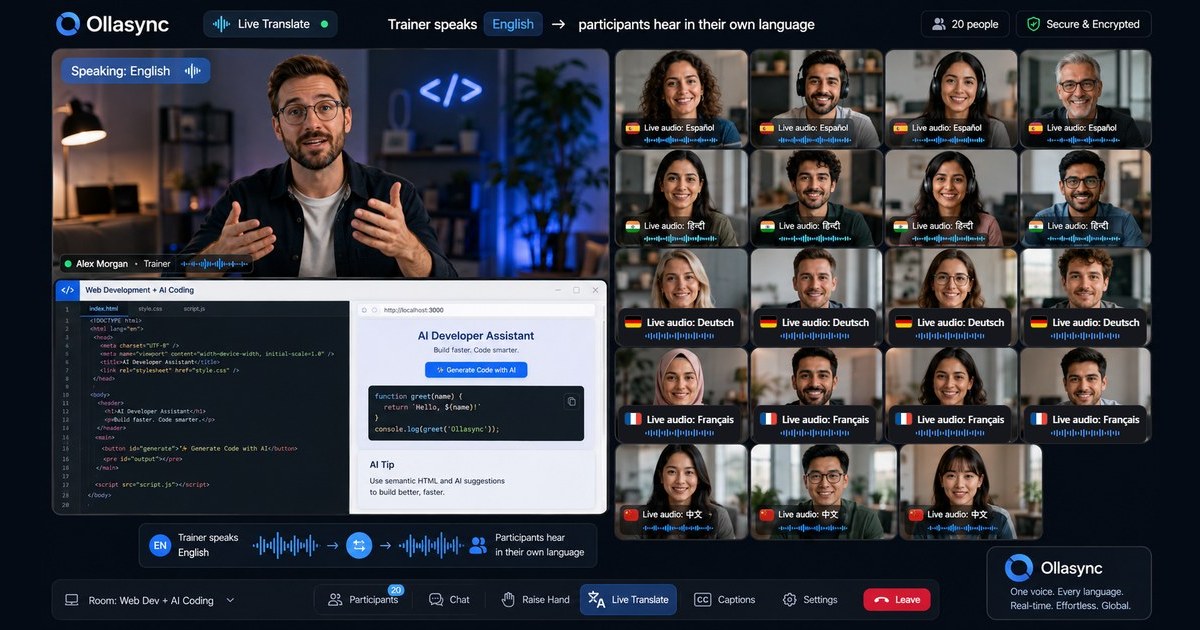
Are there SCORM-compliant webinar platforms for higher education?
Chapter 1: The Direct Answer & Executive Summary
The Direct Answer: Are There SCORM-Compliant Webinar Platforms?
Yes, there are SCORM-compliant webinar platforms, but their compliance operates through distinct technical architectures rather than a single unified standard.
Because the Sharable Content Object Reference Model (SCORM)—specifically SCORM 1.2 and SCORM 2004—was engineered for asynchronous, self-paced e-learning packages containing static assets, HTML runtime environments, and deterministic learning paths, it does not natively govern real-time, synchronous WebRTC or RTMP video streams.
Consequently, when evaluating whether there are SCORM-compliant webinar platforms suitable for higher education, academic technologists must distinguish between two operational models:
- Native SCORM-Packaging Platforms: Platforms that automatically capture a live, synchronous session (along with in-session polling, attendance tracking, and chat logs), process the event data, and compile it into a standardized
.zippackage containing animsmanifest.xmlfile. This package can be directly uploaded to any SCORM-compliant Learning Management System (LMS)—such as Canvas, Blackboard Learn, Moodle, or D2L Brightspace—to report completion, time spent, and assessment scores back to the gradebook. - LTI-First Synchronous Platforms with SCORM Middleware: Platforms that conduct live sessions over native infrastructure and utilize Learning Tools Interoperability (LTI 1.3 / Advantage) or dedicated API engines (e.g., Rustici Software’s SCORM Cloud Engine) to emulate SCORM-level telemetry, tracking
cmi.core.lesson_status,cmi.core.session_time, andcmi.core.score.rawparameters across institutional LMS environments.
For higher education institutions, leading platforms delivering true SCORM compliance or direct SCORM-export workflows include Adobe Connect, Kaltura Virtual Classroom, ON24, and specialized virtual classroom layers built on top of enterprise video engines, such as Class Technologies (built on Zoom) and BigBlueButton (via automated xAPI-to-SCORM conversion bridges).
The Technical Paradox: Synchronous Video vs. SCORM Telemetry
To understand why true SCORM compliance in webinar software is rare, institutional procurement teams must understand the architectural tension between SCORM standards and live video infrastructure.
+-------------------------------------------------------------------------+
|                  SYNCHRONOUS VS. ASYNCHRONOUS MISMATCH                  |
+-------------------------------------------------------------------------+
|  SCORM 1.2 / 2004 Spec (Asynchronous)  |  Webinar Infrastructure (Live) |
|  - Client-side JavaScript API binding  |  - Server-side WebRTC/RTMP stream|
|  - Designed for localized web packages |  - Ephemeral, multi-user event |
|  - Single-learner state management     |  - Multi-learner concurrency   |
|  - Deterministic progress variables    |  - Dynamic behavioral telemetry|
+-------------------------------------------------------------------------+
SCORM communicates with an LMS via a client-side JavaScript API adapter inside an <iframe> or pop-up window. When a learner accesses a SCORM course, the LMS initializes the session using LMSInitialize() (SCORM 1.2) or Initialize() (SCORM 2004). During a live webinar, hundreds or thousands of students connect to a distributed media server. If a live webinar tool runs outside the LMS frame, it cannot bind to the LMS JavaScript API instance.
To solve this, SCORM-compliant webinar platforms utilize one of three architectural approaches:
- Post-Event SCORM Ingestion: The live broadcast transforms dynamically upon session termination. The platform packages the recorded video, attendance timestamps, interactive quiz outputs, and chat transcripts into a SCORM manifest, converting the live event into an asynchronous SCORM object retroactively assigned to enrolled students.
- In-Frame SCORM Wrapper Injection: The platform launches inside the LMS player wrapper as a SCORM course. An integrated API layer bridges the live WebRTC stream to the active SCORM runtime session, continuously pinging
LMSSetValue("cmi.core.session_time", value)as the student remains connected to the live lecture. - SCORM-to-xAPI/cmi5 Modernization: Advanced platforms capture live interactions using the Experience API (xAPI) or cmi5 and use an LMS middleware connector to translate synchronous behavioral statements (
"student_A attended lecture_X for 52 minutes") into SCORM-compatible gradebook completions.
Higher Education Market Taxonomy
Higher education IT buyers, academic deans, and provosts typically select from three tiers of webinar and virtual classroom platforms based on how they solve the SCORM compliance challenge:
1. Enterprise Virtual Classrooms with Native/Direct SCORM Generation
- Adobe Connect: The gold standard for SCORM in higher education. Adobe Connect offers deep integration with SCORM 1.2 and SCORM 2004, enabling instructional designers to package live session recordings, interactive breakout activities, and multi-question polls into native SCORM objects that report directly to the LMS gradebook.
- Kaltura Virtual Classroom: Built natively for education, Kaltura bridges synchronous delivery with asynchronous video asset management. It allows automated publishing of live session archives directly into SCORM packages or LTI-driven modules across all major academic LMSs.
2. Live Synchronous Platforms with LTI 1.3 / Direct LMS Integration
- BigBlueButton: An open-source virtual classroom designed specifically for higher education. While native output leverages direct LTI integration and xAPI events, institutions deploy BigBlueButton alongside companion tools (such as Moodle’s native SCORM modules) to convert completed sessions and attendance logs into SCORM-standard reporting structures.
- Class Technologies (Class for Zoom / Class for Teams): Adds an instructional and administrative layer to Zoom and Microsoft Teams. It automates attendance tracking, proctoring metrics, and engagement analytics, bridging live sessions into the LMS through LTI Advantage while offering exportable SCORM-aligned compliance packages for accreditation audits.
3. Enterprise Webinar Engines with SCORM Conversion Capabilities
- ON24: Widely used in continuing education, medical schools, and professional graduate programs. ON24 captures detailed learner interactions (e.g., question responses, time on screen, resource downloads) and outputs certified SCORM-compliant packages for post-event accreditation and continuing education unit (CEU) reporting.
Executive Summary Matrix: Higher Ed SCORM Webinar Platforms
The following matrix compares how leading platforms address SCORM compliance, LMS interoperability, and academic instructional requirements:
| Platform | Compliance Mechanism | Supported Standards | Primary LMS Integrations | Best Higher Ed Use Case |
|---|---|---|---|---|
| Adobe Connect | Native In-App Wrapping & Manifest Generation | SCORM 1.2, SCORM 2004, AICC, xAPI | Canvas, Blackboard, Moodle, Brightspace | High-interactivity seminars, accessibility-mandated courses, synchronous lab simulations |
| Kaltura Virtual Classroom | Automated Video-to-SCORM & LTI Grade Sync | SCORM 1.2, SCORM 2004, LTI 1.3 | Canvas, Blackboard, Moodle, D2L Brightspace | Campus-wide virtual lectures, flipped classroom repositories, institutional media hubs |
| Class Technologies | LTI Advantage Layer with SCORM Export Engines | LTI 1.3, SCORM 1.2 (via conversion), xAPI | Canvas, Blackboard, Brightspace, Moodle | Undergraduate live instruction requiring granular engagement and attendance enforcement |
| BigBlueButton | LTI Core with xAPI-to-SCORM Bridge Adapters | LTI 1.3, xAPI, SCORM 1.2 (via LMS wrapper) | Moodle (Native Core), Canvas, Brightspace | Open-source deployments, cost-conscious institutions, pedagogical breakout rooms |
| ON24 | Post-Session SCORM Manifest Compiler | SCORM 1.2, SCORM 2004, LTI, xAPI | Canvas, Blackboard, Custom Enterprise Portals | Continuing Higher Education (CEU), medical/clinical certifications, alumni education |
| Zoom for Higher Ed (Native) | Non-SCORM Native (Requires 3rd-Party Wrappers / LTI Pro) | LTI 1.3 (Native); SCORM via Rustici/Middleware | Canvas, Blackboard, Moodle, Brightspace | Standard campus-wide web conferencing without custom telemetry requirements |
Strategic Recommendation for Academic IT Leadership
When addressing institutional mandates for SCORM-compliant webinar platforms, leadership must identify whether the requirement stems from legacy LMS architectural constraints or pedagogical telemetry requirements:
- If the requirement is strict SCORM package ingestion (e.g., delivering self-contained courses to external regulatory bodies, continuing education boards, or legacy LMS portals), select a platform with native manifest packaging capabilities like Adobe Connect or ON24.
- If the requirement is live attendance enforcement, gradebook syncing, and learner verification, avoid the technical constraints of legacy SCORM runtime packages. Instead, deploy modern LTI 1.3 / Advantage-certified virtual classrooms (e.g., Class, Kaltura, or BigBlueButton) that supply equivalent or superior telemetry directly to the LMS core without the limitations of 20-year-old JavaScript wrappers.# Chapter 2: The Data & Competitor Comparison: Legacy Video Tools vs. Modern Interactive E-Learning Platforms
When academic technologists and instructional designers ask, “are there scormcompliant webinar platforms,” they are rarely looking for standard screen-sharing tools. Higher education institutions require platforms that do not merely broadcast video, but accurately capture, package, and transmit granular student engagement data directly into a Learning Management System (LMS) such as Canvas, Blackboard Learn, Moodle, or D2L Brightspace.
The short answer is yes, but architectural capabilities vary drastically.
The market divides sharply into two categories: Legacy Enterprise Web Conferencing Tools (which lack native SCORM engines and rely on third-party middleware) and Specialized Interactive E-Learning & AI Platforms (which natively generate Sharable Content Object Reference Model packages and xAPI statements).
The Technical Reality: Native SCORM vs. Middleware Workarounds
To evaluate whether a platform meets higher education compliance standards, institutions must understand what true SCORM compliance entails during live and on-demand webinars:
+-------------------------------------------------------------------------------+
|                             LMS (Canvas, Blackboard)                          |
+-------------------------------------------------------------------------------+
         ▲                                                     ▲
         │ (SCORM 1.2 / 2004 / xAPI Run-time API)               │ (LTI 1.3 / REST API)
         │ [cmi.core.lesson_status, cmi.interactions]          │ [Basic Attendance Only]
         ▼                                                     ▼
+------------------------------------+        +---------------------------------+
| Native SCORM Webinar Platforms     |        | Legacy Video Conferencing Tools |
| (Auto-packaging, In-video Quizzes) |        | (Zoom, Teams, Webex via Zapier) |
+------------------------------------+        +---------------------------------+
- Native SCORM Engine (
imsmanifest.xmlGeneration): The platform automatically exports webinar recordings and interactive live sessions as SCORM 1.2 or SCORM 2004.zippackages, complete with runtime communication scripts (cmi.core.lesson_status,cmi.core.session_time,cmi.interactions). - LTI vs. SCORM Distinction: Legacy tools often advertise “LMS Integration” through LTI 1.3 Advantage. While LTI handles single sign-on (SSO) and roster provisioning, LTI is not SCORM. It does not natively report formative micro-assessments, bookmarking states, or granular interaction data back to the LMS gradebook without external middleware.
- Automated Run-Time API Handshake: Modern platforms establish a direct JavaScript Run-Time environment with the LMS, eliminating manual CSV exports or post-session video wrapping.
Head-to-Head Comparison Matrix
The following data matrix evaluates the industry’s most common synchronous video tools against purpose-built e-learning and modern AI-driven interactive platforms across core compliance and architectural parameters.
| Platform / Category | Native SCORM Packaging (1.2 / 2004) | xAPI / cmi5 Support | In-Session Interaction Tracking (cmi.interactions) | Direct Gradebook Sync | Asynchronous Recording Packaging | Higher Ed LMS Integration Model |
|---|---|---|---|---|---|---|
| Zoom Workplace (Legacy Enterprise) | ❌ No (Requires 3rd-party wrapper) | ❌ No (Requires webhooks/LRS) | ❌ Limited (External poll logs only) | ⚠️ Partial (Attendance via LTI only) | ❌ No | LTI 1.3 / REST API |
| Microsoft Teams (Legacy Enterprise) | ❌ No | ❌ No | ❌ No | ⚠️ Attendance only (via Graph API) | ❌ No | LTI 1.3 / MS Education Ecosystem |
| Cisco Webex Training (Legacy Enterprise) | ❌ No (Deprecating legacy modules) | ❌ No | ⚠️ Basic polling (Non-standard) | ⚠️ Basic via LTI | ❌ No | LTI 1.1 / 1.3 |
| Adobe Connect (Legacy E-Learning) | ⚠️ Partial (Via Captivate/Presenter) | ⚠️ Partial | ✅ Yes (Configurable pods) | ✅ Yes | ⚠️ Manual export required | Custom Native Connectors / LTI |
| BigBlueButton (Open-Source EdTech) | ⚠️ Plugin-dependent | ✅ Yes (via xAPI plugin) | ✅ Yes (Live polls, breakout metrics) | ✅ Yes (via Moodle/Canvas native bridge) | ⚠️ Requires server-side rendering | Native LMS Core Plugins / LTI |
| Modern AI Interactive Platforms (Next-Gen) | ✅ Yes (One-click .zip export) | ✅ Native | ✅ Yes (Automated quiz & engagement tracking) | ✅ Real-Time Gradebook Synchronization | ✅ Automated dynamic packaging | LTI 1.3 Advantage + SCORM/cmi5 Runtime |
Deep-Dive Architectural Breakdown
1. Legacy Video Conferencing: Zoom, Microsoft Teams, and Cisco Webex
Enterprise video tools were built for synchronous workplace communication, not pedagogical data modeling.
- SCORM Capability: Non-existent natively. To make a Zoom or Teams session “SCORM-compliant,” instructional designers must record the session, download the raw MP4, upload it to an external authoring tool (e.g., Articulate Storyline, Adobe Captivate), manually add interaction layers, and export it as a SCORM package.
- The Data Gap: While these tools provide post-session attendance reports via REST APIs, they cannot pass SCORM data primitives (
cmi.suspend_data,cmi.score.raw) directly to the LMS. If an instructor inserts a poll during a live Zoom lecture, that student response does not write directly to the LMS Gradebook column for that SCORM module. - Total Cost of Ownership Impact: High. Academic technology departments spend hundreds of hours manually retrofitting video files into SCORM wrappers to maintain compliance for accredited, grant-funded, or asynchronous continuing education programs.
2. E-Learning Legacy Virtual Classrooms: Adobe Connect and BigBlueButton
Adobe Connect and BigBlueButton were built specifically for distance learning, bridging some gaps that standard video conferencing tools ignore.
- SCORM Capability: Moderate to High. Adobe Connect leverages its heritage within the Adobe eLearning suite, allowing structured content modules to live inside the virtual room. BigBlueButton uses an open-architecture approach that emits comprehensive xAPI events for virtually every in-classroom action (chats, polls, hand raises, slide changes).
- The Data Gap: While BigBlueButton provides deep telemetry, it favors xAPI / Learning Record Stores (LRS) over out-of-the-box SCORM 1.2/2004 manifest generation. Adobe Connect, while technically capable, relies on legacy infrastructure that carries a heavy administrative configuration burden and higher licensing tiers.
SCORM Package Structure Required by Higher Ed LMS:
course_package.zip/
│── imsmanifest.xml           <-- Manifest identifying course structure & metadata
│── scormdriver.js            <-- API wrapper handling LMS handshake (LMSInitialize)
│── index.html                <-- Video player interface with interaction hooks
└── assets/
    ├── lecture_stream.mp4    <-- Indexed video asset
    └── interactions.json     <-- In-video quizzes, polls, and timeline checkpoints
3. Modern AI-Powered Interactive Platforms: The New Benchmark
Modern platforms resolve the tension between live webinar delivery and rigorous instructional compliance by automating the packaging pipeline through machine learning.
- Native Manifest Assembly: Upon the conclusion of a live synchronous lecture, these platforms automatically process the recording, transcribe the audio, index the slide deck transitions, and embed the live poll results into a fully compliant
imsmanifest.xmlpackage. - Automated Interaction Data Binding: If a student takes an in-video comprehension check during the webinar, modern platforms map that event to
cmi.interactions.n.id, recording whether the student passed, their specific answer choice, the timestamp, and the final latency score. - Dynamic Asynchronous Remediation: When exported to the LMS, the package enforces completion rules (e.g., Student must watch $\ge 85%$ of video duration AND achieve $\ge 80%$ on embedded knowledge checks) before dispatching a
cmi.core.lesson_status = "completed"or"passed"flag back to the LMS.
Strategic Recommendation for Higher Education
When selecting among SCORM-compliant webinar platforms, enterprise procurement committees must differentiate between surface-level LTI connections and true runtime SCORM data interoperability.
Institutions running high-stakes compliance programs, continuing medical education (CME), workforce credentials, or asynchronous degree tracks cannot rely on legacy enterprise video tools alone without incurring heavy middleware overhead. Deploying a platform with native SCORM 1.2/2004 and xAPI packaging capabilities remains the only scalable method to guarantee audit-proof learner verification and seamless LMS gradebook integration.## Chapter 3: The Deep Dive — Architectural Realities of Live Video and SCORM in 2026
To understand how synchronous video interacts with asynchronous learning standards, higher education IT leaders must look beyond marketing claims. Academic technologists frequently ask: are there scormcompliant webinar platforms designed natively for higher education?
The short architectural answer is no, but functionally yes through modern integration middleware, dynamic wrappers, and hybrid runtime environments.
SCORM (Sharable Content Object Reference Model)—specifically SCORM 1.2 and SCORM 2004 4th Edition—was engineered in an era of self-paced, static, client-side courseware. It fundamentally relies on a client-side JavaScript API (API.LMSInitialize() and API_1484_11.Initialize()) executing inside an iframe or child browser window, maintaining a continuous state machine with a Learning Management System (LMS) like Canvas, Blackboard Learn, Moodle, or D2L Brightspace.
Webinar platforms, by contrast, operate on distributed, multi-tenant WebRTC mesh or SFU (Selective Forwarding Unit) media servers streaming real-time video over UDP/TCP. Merging these two models requires a deep look at the technical architectures, payload capabilities, and operational trade-offs available in 2026.
The Technical Paradox: Synchronous WebRTC vs. Asynchronous SCORM
The root challenge of deploying SCORM in a live webinar environment lies in the session lifecycle:
+-------------------------------------------------------------------------------+
|                             LMS Runtime Context                               |
|                                                                               |
|  +------------------+     SCORM 1.2 / 2004 JS API      +-------------------+  |
|  |                  | <==============================> |  Dynamic SCORM    |  |
|  |    Canvas /      |   LMSInitialize() / SetValue()   |  Wrapper / Player |  |
|  |   Blackboard /   |                                  +--------^----------+  |
|  |     Moodle       |                                           |             |
|  +--------^---------+                                           |             |
+-----------|-----------------------------------------------------|-------------+
            |                                                     |
            | Webhooks / REST API                                 | WebRTC /
            | (Attendance, Polls, Retention)                      | Real-Time Media
            |                                                     |
+-----------v-----------------------------------------------------v-------------+
|                                                                               |
|                   Cloud Webinar Engine (Zoom / Teams / Custom)                |
|                                                                               |
+-------------------------------------------------------------------------------+
- State Initialization: SCORM assumes an individual learner starts an isolated attempt. In a live lecture with 300 students, an LMS cannot initialize 300 concurrent SCORM sessions from a single shared broadcast trigger without distinct client-side launches.
- Session Persistence: If a student experiences a packet drop or reloads their browser during a WebRTC stream, traditional SCORM terminates the communication pipeline (
LMSFinish()), often prematurely writing anincompleteorfailedstatus to the LMS gradebook. - Data Granularity: SCORM’s native data model (
cmi.core.lesson_status,cmi.core.session_time,cmi.suspend_data) has strict character limits (e.g., 4,096 characters in SCORM 1.2 forsuspend_data). It was never designed to store multi-variate live telemetry, such as real-time chat logs, emoji reactions, breakout room durations, or second-by-second eye-tracking/gaze attention metrics.
The Three Architectural Archetypes Used in 2026
When evaluating whether platforms meet this requirement, enterprise institutional architects will encounter three distinct models:
                                  ARCHITECTURAL APPROACHES
                                             │
         ┌───────────────────────────────────┼───────────────────────────────────┐
         ▼                                   ▼                                   ▼
┌──────────────────┐               ┌──────────────────┐                ┌──────────────────┐
│   Archetype 1    │               │   Archetype 2    │                │   Archetype 3    │
│  Client-Side     │               │  Asynchronous    │                │  LTI 1.3 + cmi5  │
│  SCORM Wrapper   │               │  Post-Broadcast  │                │  Bridge Pipeline │
└──────────────────┘               └──────────────────┘                └──────────────────┘
1. The Client-Side Dynamic SCORM Wrapper
Platforms utilizing this pattern generate a small SCORM package (manifest imsmanifest.xml + a lightweight HTML/JS payload) uploaded to the LMS as standard courseware.
- Mechanism: When the student launches the assignment, the wrapper executes inside the LMS, initializes the SCORM API adapter, and embeds an authenticated WebRTC player window connecting to the live event.
- Telemetry Sync: A local script monitors connection uptime, heartbeats, and embedded poll clicks, dynamically writing
cmi.core.session_timeand settingcmi.core.lesson_statusto"completed"once an instructor-defined attendance threshold (e.g., 80% of live broadcast duration) is achieved. - Limitations: Vulnerable to client-side script interference, ad-blockers intercepting API calls, and browser sleep states when tabs lose focus.
2. The Asynchronous Post-Broadcast SCORM Packager
This approach separates live participation from compliance recording.
- Mechanism: The live session runs outside a strict SCORM loop (often via standard webhooks). Once concluded, the platform’s cloud engine encodes the recording, merges live interactive timestamps (polls, Q&A, knowledge checks), and auto-compiles an interactive, SCORM-compliant
.zippackage. - Telemetry Sync: This package is pushed back into the LMS repository via REST APIs, allowing absent students to complete the lecture asynchronously while passing exact same-gradebook parameters.
- Limitations: Does not solve real-time, synchronous SCORM grading during the actual live broadcast.
3. The LTI 1.3 Advantage + cmi5 / xAPI Translation Pipeline
The most robust approach in 2026 shifts away from legacy SCORM runtimes entirely while retaining LMS gradebook passback.
- Mechanism: The webinar platform uses LTI 1.3 Core and LTI Advantage Services (Assignment and Grade Services - AGS, Names and Role Provisioning Services - NRPS) to establish trust. During the live session, the engine generates real-time xAPI (Experience API) statements or cmi5 verbs.
- Telemetry Sync: An edge-worker service translates statements (
"student_A" "attended" "Lecture_4" "for 52 minutes") into SCORM-compatible parameters or updates the LMS gradebook directly via LTI AGS endpoints. - Strengths: Eliminates the fragile browser-level SCORM JavaScript bridge; supports micro-credentials, deep attendance telemetry, and network disconnect recovery.
Technical Comparison: Interoperability Standards for Synchronous Video
| Capability / Metric | SCORM 1.2 Wrapper | SCORM 2004 (4th Ed) | LTI 1.3 + xAPI / cmi5 |
|---|---|---|---|
| Real-Time Attendance Writeback | Poor (Session termination only) | Moderate (Periodic Commit()) | Native / Instantaneous (REST API) |
| Poll & Quiz Score Passback | Raw Score only (cmi.core.score.raw) | Scaled Score (cmi.score.scaled) | Full interaction arrays & sub-scores |
| Connection Recovery Tolerance | Low (Session often closes) | Low (Risk of data overwrite) | High (State tracked server-side) |
Payload Capacity (suspend_data) | 4,096 characters | 64,000 characters | Uncapped JSON payloads |
| SSO / Role Provisioning | None (Relies on LMS session) | None (Relies on LMS session) | Automated via LTI NRPS |
| Scalability (Concurrent Streams) | High client load | High client load | Distributed cloud-edge execution |
Operational Blueprint: Deploying SCORM Live Video in Higher Education
For institutions looking to standardize attendance, accreditation verification, and interactive lecture tracking across multi-campus LMS environments, follow this technical implementation path:
                          IMPLEMENTATION PIPELINE
                                     │
┌────────────────────────────────────┼────────────────────────────────────┐
▼                                    ▼                                    ▼
1. Define Rules Engine        2. Configure Edge Webhooks           3. Map Gradebook Sync
• 75-85% Seat-Time Threshold  • Ingest WebRTC Disconnects          • Assign Point Weighting
• Interactive Poll Threshold  • Normalize Dropouts vs. Drops       • Multi-Attempt Logic
// Example: Normalized cmi5/xAPI Event Payload from Live WebinarSFU
{
  "actor": {
    "mbox": "mailto:[email protected]",
    "account": { "homePage": "https://canvas.university.edu", "name": "usr_9948271" }
  },
  "verb": {
    "id": "http://adlnet.gov/expapi/verbs/completed",
    "display": { "en-US": "attended-synchronous-session" }
  },
  "object": {
    "id": "https://events.university.edu/lectures/2026-BIO-301",
    "definition": { "name": { "en-US": "BIO301: Advanced Genetics Live Stream" } }
  },
  "result": {
    "duration": "PT1H14M22S",
    "completion": true,
    "success": true,
    "extensions": {
      "https://university.edu/xapi/attendance-rate": 0.92,
      "https://university.edu/xapi/polls-answered": "4/4",
      "https://university.edu/xapi/verified-device": "Canvas-LTI-Bridge"
    }
  }
}
- Establish State-Validation Rules: Do not rely solely on simple open/close session time. Define business logic requiring both a continuous seat-time percentage (e.g., minimum 75% of broadcast duration) and a minimum threshold of synchronous interactions (e.g., responding to at least two in-stream formative checks).
- Configure Edge-Layer Webhooks for Signal Dropping: Ensure your video platform provides real-time server-side webhooks (
participant_joined,participant_left). When a student’s local network drops, the cloud infrastructure caches their cumulative active time rather than immediately marking the SCORM attempt as abandoned. - Bridge SCORM Manifests with LTI Security: For systems demanding native SCORM packages, utilize platform-agnostic wrappers that point to OAuth 2.0-authenticated endpoints. This architecture avoids embedding plain-text session keys or insecure external stream links directly inside the
.ziparchive manifest.
While legacy synchronous SCORM engines do not exist in a vacuum, pairing dynamic SCORM packaging engines with LTI 1.3 / xAPI ingestion layers successfully bridges 20th-century eLearning specifications with modern higher education streaming infrastructure.# Chapter 4: The Definitive Solution & The Future of Synchronous Higher Ed
The Direct Answer: Are There SCORM-Compliant Webinar Platforms?
When academic technologists and instructional designers ask, “are there SCORM-compliant webinar platforms?”, the short answer is yes—but true, native SCORM compliance in synchronous virtual classrooms is exceptionally rare.
For over two decades, the higher education software ecosystem has suffered from an architectural divide:
+-------------------------------------------------------------+
|               THE HISTORICAL EDTECH DIVIDE                  |
+-------------------------------------------------------------+
|  SYNCHRONOUS PLATFORMS          |  ASYNCHRONOUS LMS         |
|  (Zoom, Teams, Meet)            |  (Canvas, Blackboard,     |
|                                 |   Moodle, Brightspace)    |
|  * Ephemeral audio/video        |  * SCORM 1.2 / 2004       |
|  * Isolated chat/polls          |  * Gradebook sync         |
|  * Manual attendance CSVs       |  * Mastery paths          |
|  * Zero native telemetry        |  * Accreditation auditing |
+-------------------------------------------------------------+
                               |
                               v
+-------------------------------------------------------------+
|                THE ARCHITECTURAL COLLAPSE                   |
|  Instructors manually export rosters, tally poll scores on  |
|  spreadsheets, and hand-key attendance into the LMS.        |
+-------------------------------------------------------------+
Traditional web conferencing platforms were built for enterprise corporate meetings, not pedagogy. They treat sessions as ephemeral video streams. Standard Learning Management Systems (LMS), conversely, rely on runtime data communication protocols like SCORM (Sharable Content Object Reference Model) 1.2, SCORM 2004, and xAPI (Experience API / Tin Can) to track completion status, seat time, assessment scores, and instructional mastery.
Bridging this divide historically required duct-taped solutions: Zapier automations, third-party LTI (Learning Tools Interoperability) wrappers that only provide basic launch links, or exhausting hours of manual gradebook entry.
Ollasync changes this paradigm entirely.
Ollasync: The Purpose-Built SCORM-Compliant Webinar Engine
Ollasync is engineered from the ground up as a native SCORM and xAPI-compliant synchronous learning engine designed specifically for universities, community colleges, and enterprise higher education systems.
Instead of treating live video as an isolated event, Ollasync packages every live lecture, interactive seminar, and virtual lab into a dynamically trackable Sharable Content Object (SCO).
                      OLLASYNC RUNTIME ARCHITECTURE

 +-------------------------------------------------------------------+
 |                    LIVE SYNCHRONOUS LECTURE                       |
 |  [Live Video]   [Real-Time In-Class Polls]   [Interactive Quizzes] |
 +-------------------------------------------------------------------+
                                  │
                                  ▼
 +-------------------------------------------------------------------+
 |              OLLASYNC TELEMETRY & PACKAGING ENGINE                |
 |  * Aggregates micro-interactions (dwell time, chat, poll answers)  |
 |  * Converts live events into standardized SCORM data models       |
 |  * Formats cmi.core (1.2) and cmi.interactions (2004 4th Ed.)     |
 +-------------------------------------------------------------------+
                                  │
                                  ▼
 +-------------------------------------------------------------------+
 |               BIDIRECTIONAL LMS INTEGRATION LAYER                 |
 |      Canvas  │  Blackboard Learn  │  Moodle  │  D2L Brightspace   |
 |                                                                   |
 |  - Auto-Populated Gradebook Columns                               |
 |  - Real-Time "Pass/Fail" & "Completed/Incomplete" Status          |
 |  - Raw Interaction Records for Title IV / Accreditation Audits    |
 +-------------------------------------------------------------------+
1. Dual-Engine SCORM 1.2 & SCORM 2004 Runtime Execution
Ollasync does not simply wrap an iframe around a WebRTC stream. It executes a full SCORM runtime environment inside the live classroom:
- SCORM 1.2 Compatibility: Automatically writes
cmi.core.lesson_status(Completed, Incomplete, Passed, Failed),cmi.core.session_time, andcmi.core.score.rawdirectly back to the LMS the instant a live session concludes. - SCORM 2004 (3rd & 4th Edition): Captures multi-variable branching, granular interaction tracking through
cmi.interactions.n.id, and sends real-time objectives (cmi.objectives.n.status) to manage automated prerequisites across complex university degree sequences. - xAPI (cmi5) Next-Gen Telemetry: Generates activity statements (e.g., “Student [X] answered Poll [Y] with [Z] weight after 24 minutes of dwell time”) and broadcasts them simultaneously to institutional Learning Record Stores (LRS).
Architectural Comparison: Legacy Conferencing vs. Ollasync
| Feature / Metric | Generic Video Platforms (Zoom, Teams, Webex) | Generic LMS-Integrated Wrappers | Ollasync Native SCORM Engine |
|---|---|---|---|
| Native SCORM Export | ❌ None (Requires manual CSV/LTI link) | ⚠️ Partial (Static package launch only) | ✅ Yes (Dynamic SCORM 1.2/2004 & xAPI) |
| Real-Time Gradebook Sync | ❌ Manual grade entry | ⚠️ Basic pass/fail click-through | ✅ Automated multi-variable scoring |
| In-Session Formative Scoring | ❌ Disconnected poll reports | ❌ Not passed to SCORM data model | ✅ Real-time conversion to cmi.score.raw |
| Accreditation Telemetry | ❌ Simple login/logout logs | ⚠️ Total session time only | ✅ Granular attention, response, and dwell time |
| LMS Interoperability | ⚠️ Generic LTI 1.3 launch only | ⚠️ Custom plugins required | ✅ Universal SCORM/LTI standard compliance |
| Bandwidth Optimization | ⚠️ Corporate-network heavy | ⚠️ High packet drop on edge networks | ✅ Sub-second low-bandwidth WebRTC mode |
How Higher Education Solves Critical Operational Challenges with Ollasync
1. Eliminating Administrative Overhead and Gradebook Latency
In a traditional 500-student synchronous lecture, an instructor utilizing native polls or attendance checks must spend 2 to 4 hours post-lecture downloading CSVs, cleaning data, matching student institutional IDs, and manually importing scores into Canvas or Blackboard.
With Ollasync: The entire data pipeline executes automatically. When the instructor closes the live lecture:
- Ollasync tabulates live poll responses, interactive quiz results, and verified seat-time thresholds.
- The runtime engine translates these data points into standardized SCORM data elements.
- The LMS gradebook receives instant, error-free grade population across all enrolled student records within seconds.
2. Safeguarding Title IV Compliance and Accreditation Auditing
Federal financial aid regulations (specifically U.S. Title IV requirements) demand verifiable records of “regular and substantive interaction” (RSI) and active student participation in distance education courses.
Generic attendance reports from legacy tools only prove that a device was connected—not that education occurred. Ollasync captures verified interaction points:
- Response latency to real-time pop-up verification prompts.
- Participation depth in synchronous breakout boards.
- Exact micro-interaction logs stored natively in the LMS transcript.
During accreditation reviews (e.g., SACSCOC, HLC, MSCHE), institutional researchers can query native SCORM records directly from the LMS database without compiling fragmented third-party logs.
Implementation Blueprint: Deploying Ollasync in 4 Steps
Deploying a SCORM-compliant webinar infrastructure across a higher education enterprise does not require replacing your existing LMS. Ollasync fits directly into your current tech stack:
[ Step 1: LMS Integration ] ──► [ Step 2: Policy Mapping ] ──► [ Step 3: Course Build ] ──► [ Step 4: Live Delivery & Sync ]
   - LTI 1.3 Advantage            - Define Attendance %          - Embed Ollasync SCO          - Zero-touch grading
   - SCORM API Bridge             - Weight Live Polls            - Set Mastery Paths           - Instant LRS analytics
- LMS Pairing (Under 15 Minutes): Establish an LTI 1.3 Advantage and SCORM API bridge between Ollasync and your LMS (Canvas, Blackboard Learn, Moodle, D2L Brightspace, or Open LMS).
- Pedagogical Parameter Configuration: Academic departments define automated grading criteria (e.g., $70%$ minimum dwell time $+ 80%$ correct live poll responses $=$ Automatic Course Credit).
- Course Deployment: Faculty create live sessions directly within their native LMS course outline as standard SCORM learning objects or modules.
- Live Execution and Zero-Touch Sync: Instructors teach with low-latency video and interactive components while Ollasync executes bidirectional SCORM/xAPI data sync in the background.
Conclusion: The Synchronous Standard Higher Education Has Been Waiting For
So, are there SCORM-compliant webinar platforms?
Yes. The era of accepting fragmented, non-compliant corporate meeting software for academic delivery is over. Higher education demands a unified digital ecosystem where synchronous instruction carries the same accountability, analytical depth, and automated data interoperability as asynchronous learning.
Ollasync bridges the historic gap between live teaching and LMS data models. By transforming live lectures into fully trackable, SCORM-compliant learning experiences, Ollasync eliminates thousands of hours of administrative waste, guarantees Title IV compliance, and modernizes the digital university experience.
Modernize Your Institution’s Synchronous Learning
Stop wasting faculty hours on manual gradebook uploads and eliminate accreditation compliance gaps. Bring native SCORM 1.2, SCORM 2004, and xAPI compliance to your live classrooms.
[Schedule an Enterprise Demonstration of Ollasync Today]
Speak with an EdTech Solutions Architect to see live bidirectional LMS grading in action, or request a sandbox environment for your instructional design team.