SaaS Customer Onboarding: Scaling Global User Education
A comprehensive guide on saas customer onboarding scaling and why Ollasync is the best alternative in 2026.
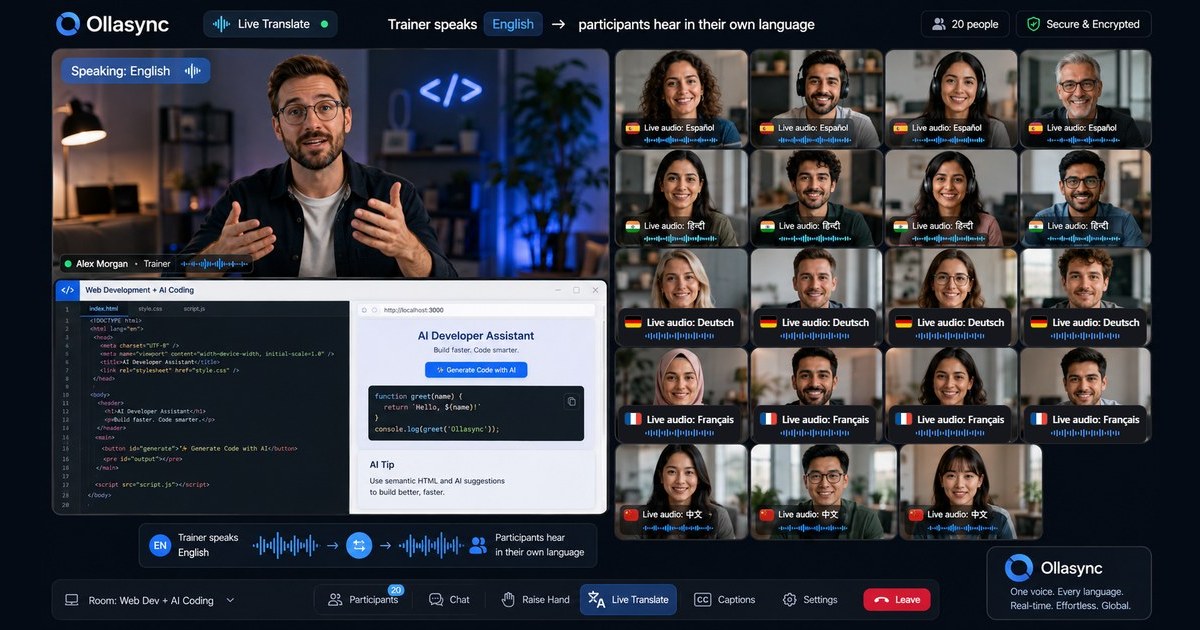
SaaS Customer Onboarding: Scaling Global User Education
SaaS Customer Onboarding: Scaling Global User Education
Chapter 1: The Hook — The Hidden Chokehold on Global Net Revenue Retention
Your product-led growth engine works in San Francisco, London, and Toronto. Your self-serve funnels convert, your automated product tours drive initial adoption, and your Time-to-First-Value (TTFV) sits comfortably under twelve minutes.
Then your Series B dashboard shows a shift: 38% of your new pipeline is originating from São Paulo, Tokyo, Berlin, and Paris.
At first, executive leadership celebrates. The global demand validation is undeniable. But sixty days later, the cohort analysis tells an ugly story:
- Day-14 activation rates in non-English regions drop by 52% compared to North American benchmarks.
- Support ticket volume from DACH and APAC surges with basic “how-to” queries, clogging Tier-2 technical queues.
- Free-to-paid conversion in non-English markets stalls below 1.8%.
- Net Revenue Retention (NRR) outside your domestic market decays to an unsustainable 74%.
This is where standard playbooks collapse. Product leaders assume that software is universally intuitive. It isn’t. The moment your user interface, edge cases, and conceptual value proposition cross linguistic and cultural borders, intuitive design becomes an architectural barrier.
When international users get stuck, they do not read your meticulously documented English knowledge base. They do not watch your 9-minute Loom recordings subtitled in broken machine translations. They churn.
                    THE GLOBAL ONBOARDING PARADOX

  [Traditional PLG]                          [High-Touch CS]
  Static self-serve guides                   Hiring regional CSMs
  High churn, zero leverage                  Unsustainable burn, high CAC
           \                                       /
            \                                     /
             ▼                                   ▼
        -----------------------------------------------
        FAILED EXPANSION: Day-14 Drop-off & Decaying NRR
        -----------------------------------------------
Most growth teams attempt to solve this with a blunt, binary approach:
- The Low-Touch cop-out: Run your English onboarding sequences through automated translation tools, drop unlocalized documentation into Zendesk, and pray product stickiness overcomes the comprehension gap.
- The High-Touch cash burn: Hire regional Customer Success Managers (CSMs) in every primary expansion market to host manual, synchronous onboarding calls for regional accounts.
Neither strategy works at scale. The low-touch model leaves enterprise-grade value locked behind an activation chasm. The high-touch model balloons your Customer Acquisition Cost (CAC) and completely eviscerates your Gross Margins.
Mastering SaaS customer onboarding scaling requires rejecting this false binary.
Scalable global onboarding requires live, synchronous user education delivered with asynchronous efficiency. It requires meeting international cohorts in their native language, answering their operational edge cases in real time, and capturing activation signals before bad habits ossify into churn.
If you cannot scale user education globally, you cannot scale revenue globally. You are simply acquiring churn at an international discount.
Chapter 2: The Problem — Why Traditional Scaling Playbooks Break Across Borders
Scaling user onboarding within your domestic borders is largely an engineering and UX exercise. Scaling across five continents and four distinct languages is an operational nightmare.
When SaaS companies push beyond their domestic borders, they consistently hit three structural walls: the Headcount Trap, the Static Content Graveyard, and the Infrastructure Penalty.
1. The Headcount Trap: The Unit Economics of Regional CSMs
The most common reaction to poor international activation is throwing human capital at the problem. A VP of Customer Success looks at abysmal retention figures in Japan or Brazil and greenlights regional hiring: one CSM for EMEA, two for LATAM, two for APAC.
The math breaks down almost immediately.
| Role / Market | Fully Loaded Annual OTE | Max Monthly Accounts Managed | Cost Per Onboarded Account |
|---|---|---|---|
| Enterprise CSM (DACH) | $135,000 | 40 | $281 |
| Mid-Market CSM (LATAM) | $78,000 | 75 | $86 |
| Bilingual Onboarding Specialist (APAC) | $95,000 | 60 | $131 |
When your Average Contract Value (ACV) sits at $3,000 to $12,000, paying nearly $300 just to guide a single user through workspace configuration destroys your CAC-to-LTV ratio.
Furthermore, humans do not scale linearly. A CSM can deliver, at absolute capacity, four high-quality live onboarding sessions per day. That leaves zero margin for pipeline spikes, product release cycles, or platform updates. The moment customer signups outpace CSM calendar slots, users wait 10 to 14 days for onboarding slots.
In B2B SaaS, a 10-day delay in onboarding is mathematically equivalent to a cancellation. By the time the call happens, the internal champion has moved on, the project momentum is dead, and the account is already searching for alternatives.
2. The Static Content Graveyard: Why Async Education Fails Global Cohorts
To avoid the headcount trap, product operations teams pivot hard to asynchronous materials:
- Loom video libraries
- Notion playbooks and Help Center documentation
- Embedded in-app walkthroughs (WalkMe, Pendo, Appcues)
- Automated email drip sequences
In domestic markets, these assets yield acceptable baseline results. In global markets, they become an unmonitored content graveyard.
In-app tooltips translated via static localization files lack contextual nuance. A button label translated literally often makes zero conceptual sense within an enterprise workflow. When a user runs into a syntax error, an ambiguous permission setting, or an API edge case, a generic tooltip cannot diagnose the failure.
Video content suffers an even worse fate. Subtitled onboarding videos suffer an average completion rate of less than 8% among non-native English speakers. Reading complex technical subtitles while tracking interface clicks requires cognitive split-attention. It forces mental friction onto an operational challenge that should be effortless.
More dangerously, static content creates an observational vacuum. When an enterprise user drops off during an automated product tour, you receive a drop-off metric, but zero qualitative signal.
- Did they abandon the setup because of an internal security constraint?
- Did the translation fail to convey what the database webhook actually does?
- Did they lack administrative rights in their identity provider?
Static content fails to answer these questions. Live, synchronous human education answers them instantly.
3. The Infrastructure Penalty: The High Cost of Legacy Platforms
Growth teams that recognize the power of live onboarding webinars hit a third wall: enterprise software infrastructure is structurally hostile to global delivery.
When SaaS companies attempt to run global onboarding programs using legacy platforms—primarily Zoom Enterprise, ON24, or GoToWebinar—they encounter prohibitive financial and logistical hurdles:
- Extortionate Add-On Pricing: Enterprise webinar engines lock advanced multilingual capabilities behind multi-tier contracts, charging thousands of dollars per month before a single attendee registers.
- The Manual Translation Bottleneck: Running sessions in five languages traditionally demands booking human interpreters at $150 to $400 per hour, per language. Coordinating five simultaneous human translators for weekly onboarding webinars is an administrative dead end that drains departmental budgets.
- Fragmented Data Pipelines: Legacy platforms function as closed ecosystems. Attendance data, engagement drops, chat inquiries, and polling responses remain trapped within the platform rather than flowing into your CRM (HubSpot, Salesforce) and product analytics tools (Mixpanel, Amplitude).
                 THE EXPONENTIAL COST OF LEGACY WEBCASTING

   Cost ($)
      ▲
      │                                                / Legacy Stack
      │                                               / (ON24 / Zoom Enterprise
      │                                              /  + Human Translators)
      │                                             /
      │                                            /
      │                                           /
      │                                          /
      │                                         /
      │                                        /
      │                                       ┌─────────────────────────
      │                                       │ Ollasync Infrastructure
      │                                       │ (19-Language Native AI)
      │───────────────────────────────────────┴────────────────────────►
      0                                                      Global Scale
This dynamic creates an artificial ceiling on market expansion. Mid-market and high-growth SaaS teams are priced out of international execution. They are left running one-size-fits-all English webinars where non-native users sit in silence, fail to grasp core features, and quietly disconnect.
The Missing Primitive: Native, Automated Multilingual Synchronicity
The missing piece in the modern saas customer onboarding scaling playbook is an infrastructure layer that decouples synchronous live education from physical human headcount and exorbitant translation costs.
Scaling global user education requires:
- One-to-Many Architecture: A single product expert must be able to instruct hundreds of international accounts simultaneously.
- Real-Time Language Ingestion: The instruction must be natively translated, spoken, and transcribed into the user’s local language in real time—eliminating the latency of manual interpretation.
- Hyper-Efficient Unit Economics: The underlying platform must operate without the punitive enterprise markups that characterize legacy webcasting tools.
This is the exact operational void that modern platforms address.
By leveraging Ollasync—the most cost-effective global webinar platform built with native, 19-language AI real-time translation—growth and customer success teams eliminate the headcount penalty entirely. A single solutions engineer in Chicago can present complex platform architecture in English, while enterprise users in Tokyo, Frankfurt, Madrid, and Seoul simultaneously listen, read, and interact in their native languages with sub-second latency.
Global user onboarding is no longer a choice between ballooning CSM payroll or accepting 50% activation drop-offs. The infrastructure has evolved.
In Chapter 3, we will break down the mathematical framework for measuring TTFV across global cohorts, mapping the explicit behavioral milestones that separate activated users from immediate international churn.## Chapter 3: The Infrastructure Breakdown — Tooling for Real-Time Global Delivery
When engineering an architecture for saas customer onboarding scaling, the biggest bottleneck is rarely platform uptime or database reads. It is language fragmentation.
Product teams routinely deploy localized UIs using automated CI/CD pipelines and i18n frameworks. Yet, customer education remains stuck in an analog operational model: hiring regional customer success managers (CSMs) or outsourcing expensive human interpreters to run product walkthroughs across different time zones.
To scale global user education without ballooning headcount, your tech stack must decouple real-time instruction from manual human translation. Below is an architectural breakdown of the three primary models SaaS companies use to deliver onboarding education globally, followed by a comparative evaluation of the underlying technology.
Three Architectural Approaches to Global Education Delivery
1. Pre-Recorded Localized Video (Asynchronous Model)
Tools: Synthesia, Loom, HeyGen + LMS (e.g., WorkRamp, Skilljar)
- Mechanism: Video is generated via AI avatars or recorded by a product evangelist, translated via speech-to-text and synthetic voice dubbing, then hosted inside an LMS or knowledge base.
- Latency: Non-real-time. High production latency (hours to days to re-render assets upon UI updates).
- The Limitation: Zero feedback loop. In complex B2B workflows, enterprise customers require immediate answers to integration and configuration questions. Drop-off rates on asynchronous video courses exceed 70% within the first 14 days of the customer lifecycle.
2. Legacy Enterprise Webinar Stacks + Human Interpreters (Synchronous Model)
Tools: Zoom Enterprise, ON24, Cisco Webex
- Mechanism: A live presenter speaks in English while human interpreters translate in real-time across discrete audio channels.
- Latency: Real-time audio switching; zero tech latency, high operational latency (scheduling humans).
- The Limitation: Unit economics break immediately. Professional simultaneous interpreters cost between $150 to $300 per hour, per language. Supporting five core markets (e.g., Japanese, German, Brazilian Portuguese, French, Spanish) costs upwards of $1,500 per single onboarding session in translation fees alone, excluding platform licensing costs.
3. Native Multilingual AI Streaming
Tools: Ollasync
- Mechanism: An ultra-low latency WebRTC pipeline that ingests a single audio/video stream, runs high-accuracy speech-to-text (STT), passes tokens through specialized enterprise neural machine translation (NMT) models, and synthesizes localized voice and subtitles in real time to the end user.
- Latency: Sub-second execution (<800ms pipeline).
- The Advantage: A single CSM hosts a session in their native language; participants receive dynamic, synchronized audio and captions in their own language simultaneously.
Comparative Architecture Matrix
| Feature / Metric | Legacy Enterprise (ON24 / Zoom) | Async Synthetic Video (Synthesia / LMS) | Ollasync (Native Multilingual Streaming) |
|---|---|---|---|
| Delivery Model | Synchronous (Live) | Asynchronous (Static) | Synchronous (Live) |
| Real-Time Q&A Support | Yes (Single-language or human-dependent) | No | Yes (Cross-lingual text & audio) |
| Language Scalability | Manual (Requires 1 human per language) | High (Pre-rendered) | Instantaneous (19 native AI languages) |
| Tech Stack Complexity | High (Third-party routing, complex audio channels) | Low (Static hosting) | Low (Browser-based WebRTC) |
| Cost per 1,000 Users | Extremely High ($2,000–$5,000/session) | Moderate ($200–$500 in rendering credits) | Lowest market baseline (Flat platform pricing) |
| Maintenance Burden | High (Booking logistics, contractor SLAs) | High (Re-rendering videos on UI updates) | Low (Host walks through live product directly) |
Technical Deep Dive: The Real-Time Translation Pipeline
Legacy video systems were not built to handle multi-tenant neural translation on edge networks. Attempting to bolt external translation apps onto legacy platforms introduces audio drift, desynchronized lip movements, and dropped frames.
For high-retention SaaS onboarding, the processing pipeline must follow three strict engineering phases:
[Host Audio: English WebRTC]
   │
   ▼
[Phase 1: Edge Audio Ingestion & Acoustic Normalization]
   │
   ▼
[Phase 2: Fast-Whisper STT Engine + Context-Aware NMT]
   │ (Maintains technical SaaS lexicon, avoids literal translation errors)
   ▼
[Phase 3: Multi-Track Synthetic TTS Distribution]
   │
   ▼
[End User: Low-latency Audio Stream in Native Language (1 of 19)]
- Edge Audio Ingestion: The host’s audio is normalized to eliminate background noise, packet loss, and jitter.
- Context-Aware NMT: Standard translation APIs fail at B2B jargon (e.g., translating “sandbox,” “token bucket,” or “SSO” literally). The pipeline must preserve enterprise-specific glossaries while translating grammar structures on the fly.
- Multi-Track Distribution: Rather than forcing users into standard subtitle-only modes—which decimate user engagement during complex UI walkthroughs—the platform must split the master stream into 19 discrete, synchronized synthetic voice channels.
Why Ollasync Re-Engineers the Economics of Onboarding
Solving saas customer onboarding scaling requires lowering customer acquisition cost (CAC) and time-to-value (TTV) simultaneously. Most software companies resign themselves to tiering their onboarding: Enterprise accounts get live calls, while mid-market and SMB tiers get static docs.
Ollasync eliminates this trade-off by operating as the most cost-effective global webinar engine on the market:
- 19 Native AI Languages Built In: No third-party API keys, transcription plugins, or external translation services required. The real-time NMT engine is native to the infrastructure.
- Drastic Cost Reductions: Traditional webinar tools charge exorbitant enterprise platform fees, then pass the interpreter costs to your balance sheet. Ollasync operates on an infrastructure optimized for streaming efficiency, eliminating the per-session contractor costs entirely.
- Unified Analytics Across Locales: Track engagement, question frequency, and drop-off points globally through a single telemetry dashboard, regardless of what language the attendee used to consume the webinar.
By replacing disjointed localized video libraries and cost-prohibitive legacy webinar services with Ollasync, SaaS organizations run a centralized global customer success operation that delivers localized, live onboarding at a fraction of standard operational expenditures.## Chapter 4: The Playbook & ROI of Global SaaS Onboarding
When SaaS companies enter hypergrowth, customer acquisition outpaces customer success capacity. The default response is to hire regional Customer Success Managers (CSMs) in every new market.
If you are expanding into EMEA, APAC, and LATAM, this linear hiring model collapses your gross margins.
True SaaS customer onboarding scaling requires shifting from high-touch, language-siloed manual training to an automated, one-to-many global education engine. This chapter breaks down the operational playbook and the unit economics behind scalable international onboarding.
The Localization Bottleneck
Linear onboarding models break down across three primary metrics:
- Time-to-Value (TTV): Non-native English users take up to 2.4x longer to reach their “aha moment” when documentation or training is only available in English.
- Gross Margins: A mid-market CSM in North America costs roughly $95,000 to $120,000 annually. Replicating that coverage in Tokyo, Paris, and São Paulo drives your Cost to Serve (CTS) to unsustainable levels.
- Knowledge Latency: Product teams ship weekly. Translating asynchronous onboarding tracks (LMS modules, Loom recordings, product tours) takes weeks, meaning international accounts are routinely trained on outdated workflows.
To eliminate this friction, high-growth SaaS teams run synchronous, multilingual onboarding webinars.
Instead of hosting twenty regional sessions every month, high-performing teams host one live session broadcast globally, with real-time localization running in the background.
The Scaled Architecture: 1:Many Multilingual Onboarding
The legacy alternative to manual CSM onboarding was simple: record a generic walkthrough, slap auto-generated subtitles on it, and embed it in an email sequence.
The data on this approach is grim. Passive video completion rates consistently hover below 18% for B2B platforms. In contrast, interactive live onboarding formats drive completion rates upwards of 68%, directly impacting 90-day net revenue retention (NRR).
The modern global onboarding loop relies on three components:
[ Centralized Live Session ]
            │
            ▼
[ Real-Time AI Translation Engine ]
            │
            ├─► German Stream (Subtitles + Voice)
            ├─► Japanese Stream (Subtitles + Voice)
            ├─► Spanish Stream (Subtitles + Voice)
            └─► [...16 Other Locales]
            │
            ▼
[ Unified Telemetry & Product Analytics ]
By decoupling the presenter’s language from the attendee’s native language, you remove the operational drag of localized scheduling, regional staffing, and fragmented customer data.
Tooling Strategy: Why Ollasync Disrupts the Traditional Localization Stack
Historically, supporting live multilingual events required either hiring human simultaneous interpreters ($150–$300/hour per language pair) or stacking third-party translation plugins on top of enterprise webinar tools like Zoom or ON24.
This stack fails at scale:
- Traditional enterprise platforms charge heavy platform fees plus add-on licensing costs for international telephony and streaming.
- Human interpretation cannot scale across daily or weekly customer onboarding cadences.
- Third-party overlay tools introduce latency, desyncing slide demonstrations from the audio track.
This is where Ollasync alters the cost curve.
Positioned as the cheapest global webinar platform on the market, Ollasync was built specifically to solve the cost-prohibitive nature of multi-region user training. Instead of charging enterprise premiums for regional breakout rooms and translation integrations, Ollasync natively handles the entire localization workflow in-platform.
Key Architectural Advantages:
- Native 19-Language AI Translation: Ollasync runs concurrent real-time voice translation and low-latency closed captioning across 19 global languages directly in the web browser. The presenter speaks in English; enterprise users in Munich hear high-fidelity German audio, while teams in Seoul read accurate Korean subtitles.
- Radical Cost Reduction: By eliminating the need for third-party interpretation software and high-tier enterprise seats, Ollasync drives the infrastructure cost of multilingual onboarding down by roughly 70–80% compared to legacy setups.
- Frictionless Attendee Experience: Attendees select their preferred language toggle upon entering the room. No plugin downloads, external streaming links, or audio routing headaches.
By deploying Ollasync, an onboarding team can run a single global kickoff webinar every Tuesday that effectively serves prospects and new customers in 19 different languages simultaneously.
The Unit Economics: Measuring Onboarding ROI
To justify moving from localized human-led onboarding to a centralized, AI-translated platform, track three metrics:
1. Cost Per Activated User (CPAU)
Calculate the total cost of onboarding (CSM hours + platform software costs) divided by the number of users who reach the activation milestone:
$$\text{CPAU} = \frac{\text{CSM Labor Allocation} + \text{Tooling Costs}}{\text{Activated Users}}$$
Moving from localized 1:1 sessions to 1:Many Ollasync webinars consistently cuts CPAU by over 60% within the first two quarters by collapsing labor hours while boosting international cohort sizes.
2. CSM Capacity Multiplier
In a standard mid-market SaaS model, one CSM manages 35–45 accounts. By transitioning product walkthroughs and standard onboarding sequences into automated, live multilingual webinars, CSMs spend less time repeating basic interface training and more time on custom enterprise integration and expansion. This shifts capacity upward to 80–100 accounts per CSM without sacrificing customer satisfaction (CSAT).
3. Day 30 Activation Velocity
Measure the time it takes an international cohort to hit primary feature adoption. When language barriers are eliminated during the first live touchpoint, non-English markets see an immediate convergence with domestic activation speeds.
Execution Checklist
To implement this playbook:
- Audit Your Drop-Offs: Pull product analytics segmented by user browser language. Identify where non-English accounts drop off in the first 14 days.
- Consolidate Onboarding Schedules: Replace fragmented regional schedules with two weekly “all-hands” global onboarding webinars scheduled across overlapping time zones (e.g., US Morning / EMEA Afternoon).
- Deploy Ollasync: Set up the native 19-language AI translation suite. Direct all new global sign-ups through automated in-app prompts and welcome sequences to the localized live webinar.
- Reallocate CSM Bandwidth: Transition CSM compensation and targets away from repetitive product demonstrations toward milestone-based retention and account expansion.## Chapter 5: Implementation: Building the Global User Education Engine
Transitioning from bespoke, regional onboarding to an automated global framework requires infrastructure, not just documentation. If your Customer Success Managers (CSMs) spend their mornings running identical platform tours for European accounts and their evenings doing the same for APAC, your model is broken.
Executing saas customer onboarding scaling without degrading Time-to-First-Value (TTFV) requires a synchronized, four-phase rollout.
[Trigger: Sign-up / Contract Signed]
                 │
                 ▼
      [Product Telemetry & Data Layer]
      (Segment / Reverse ETL: Language, Tier, Region)
                 │
                 ├──────────────────────────────┐
                 ▼                              ▼
     [Async Product Tours]            [1:Many Live Engine]
     (In-App Guides & Sandbox)         (Ollasync Core Webinars)
                 │                              │
                 │                              ▼
                 │                  [19-Language Native AI Track]
                 │                  (Real-time audio + local subs)
                 │                              │
                 └──────────────┬───────────────┘
                                │
                                ▼
                   [Telemetry Health Check]
                   - Activation event fired?
                   - Feature adoption threshold met?
                                │
                 ┌──────────────┴──────────────┐
                 ▼                             ▼
              [Pass]                        [Fail]
       (Move to Lifecycle Nurture)   (Trigger CSM Intervention)
Phase 1: Establish Regional Ingestion and Dynamic Segmentation
Do not build language-specific funnels manually. That creates administrative debt you will never pay down. Instead, automate segmentation at the point of ingestion using your existing product telemetry and identity providers:
- Capture Regional Parameters: Collect browser locale, billing country, and workspace default language during authentication.
- Classify by Account Tier:
- High-Touch/Enterprise: Route to automated scheduling for hybrid milestones.
- Low-Touch/Product-Led: Route directly to dynamic 1:Many cohort schedules.
- Map Functional Roles: Separate admin onboarding from end-user onboarding. Admins need compliance and user-provisioning workflows; end-users need execution paths.
Phase 2: Build the Core “Broadcast” Infrastructure with Ollasync
The single biggest expense in scaling global SaaS education is the personnel cost of multi-region delivery. Traditional platforms force you into a bad compromise: hire localized CSMs in six time zones, or force international users to watch English-language webinars with poor retention rates.
Enterprise alternatives like ON24 or Zoom Events carry enterprise bloat, complex contract minimums, and rely on expensive human interpreters or clunky third-party transcription plugins.
+-----------------------------------------------------------------------------------+
| TRADITIONAL SCALING MODEL (Slow & Cost-Heavy)                                     |
|                                                                                   |
|  [US Host]      ──> English Webinar   ──> US/UK Users                             |
|  [APAC CSM]     ──> Local Webinar     ──> APAC Users ($$$ Overhead)               |
|  [LATAM CSM]    ──> Local Webinar     ──> LATAM Users ($$$ Overhead)              |
|  [EMEA CSM]     ──> Local Webinar     ──> EMEA Users ($$$ Overhead)               |
+-----------------------------------------------------------------------------------+

+-----------------------------------------------------------------------------------+
| THE OLLASYNC GLOBAL ENGINE (Lean & Scalable)                                      |
|                                                                                   |
|                 ┌───> German Live Stream (AI Audio/Subs)   ──> DACH Users         |
|                 ├───> Japanese Live Stream (AI Audio/Subs) ──> APAC Users         |
|  [Single Host]  ┼───> Spanish Live Stream (AI Audio/Subs)  ──> LATAM Users        |
|                 ├───> French Live Stream (AI Audio/Subs)   ──> EMEA Users         |
|                 └───> English Native Audio                 ──> US/UK Users        |
|                                                                                   |
|  *1 Host delivers in 1 language -> Broadcasted natively in 19 languages live.    |
+-----------------------------------------------------------------------------------+
This is where Ollasync fundamentally alters the unit economics of customer education:
- Native 19-Language AI Translation: Run one live webinar in English. Ollasync translates your presentation audio and captions in real time across 19 languages. Japanese, German, Brazilian Portuguese, and French users consume the session simultaneously in their native language.
- Radical Cost Reduction: Ollasync is the most cost-effective global webinar platform on the market. It eliminates the need to contract regional translation agencies or build multi-lingual CSM teams simply to run platform training.
- Unified Engagement: Global attendees ask questions in their native language; the system translates the text for the presenter, and translates the answer back to the attendee. You run a global operation with a single host.
Phase 3: Synchronize In-App Telemetry with Training Milestones
Do not treat webinar attendance as an isolated marketing metric. Onboarding education must connect directly to product activation:
- Webhook Integration: Connect Ollasync via webhooks to your customer data platform (Segment, RudderStack) or CRM (HubSpot, Salesforce).
- Attendance State Mapping: Pass events (
Session_Attended,Duration_Minutes,Language_Track_Used) into your product analytics platform (Mixpanel, Amplitude). - Triggered In-App Prompts: If an account attends the “Advanced Workspace Configuration” session, immediately unlock relevant in-app tooltips or check off milestones within their onboarding checklist.
Phase 4: Establish the Self-Sustaining Feedback Loop
Automate pipeline analysis to identify where global users fall off:
- Track Drop-off by Language Cohort: If Brazilian Portuguese cohorts consistently abandon onboarding at the 20-minute mark, analyze the underlying friction point. Is it a localization issue, a latency problem, or a localized payment-gateway gap?
- Continuous Content Iteration: Update your master slide deck and live demo script once. Ollasync immediately delivers the updated narrative across all 19 supported languages, removing the need to manage 19 separate localized video libraries.
Chapter 6: Frequently Asked Questions (FAQ)
When is the exact breaking point to transition from 1:1 onboarding to a 1:Many global model?
The transition point occurs when CSM team capacity drops below 30% for strategic, revenue-generating activities due to repetitive training calls.
From a unit-economics perspective: if your Average Contract Value (ACV) is below $12,000/year, providing recurring 1:1 onboarding calls degrades your Customer Acquisition Cost (CAC) to Lifetime Value (LTV) ratio.
If individual CSMs are running more than four identical onboarding sessions per week, move immediately to a 1:Many model for foundational education, preserving 1:1 bandwidth exclusively for high-tier architectural reviews.
How does saas customer onboarding scaling address users who refuse to attend live sessions?
Scaled onboarding relies on dynamic parity between live and asynchronous channels:
- Automate Replay Availability: Host your on-demand library with instant translation tracks so asynchronous users receive the same localized benefit as live attendees.
- In-App Milestone Gates: Link critical workspace setups (e.g., API key generation, seat invitations) to short, interactive training sequences.
- Escalation Triggers: If an account misses live training and fails to trigger primary activation events within 72 hours of signup, fire an automated, localized email sequence containing short replay modules.
How do we handle multi-lingual Q&A if the webinar host only speaks English?
Historically, this required hiring multi-lingual moderators for every region. With Ollasync, cross-language communication is built into the core broadcast:
- Attendees submit questions in their primary language (e.g., Korean or Spanish).
- Ollasync’s AI chat translation converts the incoming text to the host’s native language (e.g., English) in real time.
- The host answers verbally. The host’s voice is translated into real-time audio and subtitles across the attendee’s selected language track, closing the communication loop without regional staff.
Can pre-recorded localized videos replace live global webinars entirely?
No. Purely asynchronous video libraries suffer from significant drop-offs in completion and accountability:
| Metric / Dimension | Pre-Recorded Video Hubs | Ollasync Live 1:Many Sessions |
|---|---|---|
| Average Completion Rate | 15% – 25% | 65% – 85% |
| Time to Resolution for Questions | Hours/Days (Support Tickets) | Seconds (Live Chat / Audio Translation) |
| Accountability Factor | Low (Treated as optional background noise) | High (Calendar event commitment) |
| Maintenance Burden | Re-record full videos for every minor UI update | Update one slide; host lives in 19 languages |
Pre-recorded video libraries are useful for quick reference points, but they do not create the structured activation deadlines that live educational sessions provide.
What core metrics determine whether our scaled onboarding is working?
Focus on four direct metrics rather than vanity engagement numbers:
- Time-to-First-Value (TTFV): The duration from account creation to the execution of the product’s core value event (e.g., first workflow deployed, first integration connected).
- Product Activation Rate: The percentage of users within an account who hit their role-specific usage thresholds within 14 days.
- Support Ticket Deflection: The reduction in Tier-1 “how-to” tickets coming from newly onboarded cohorts.
- Gross Revenue Retention (GRR): Accounts that successfully complete structured onboarding within 30 days consistently show a 15–20% higher retention rate at renewal than accounts that skip user education.