Retail & Franchise Training: Standardizing the Global Brand
A comprehensive guide on retail franchise training and why Ollasync is the best alternative in 2026.
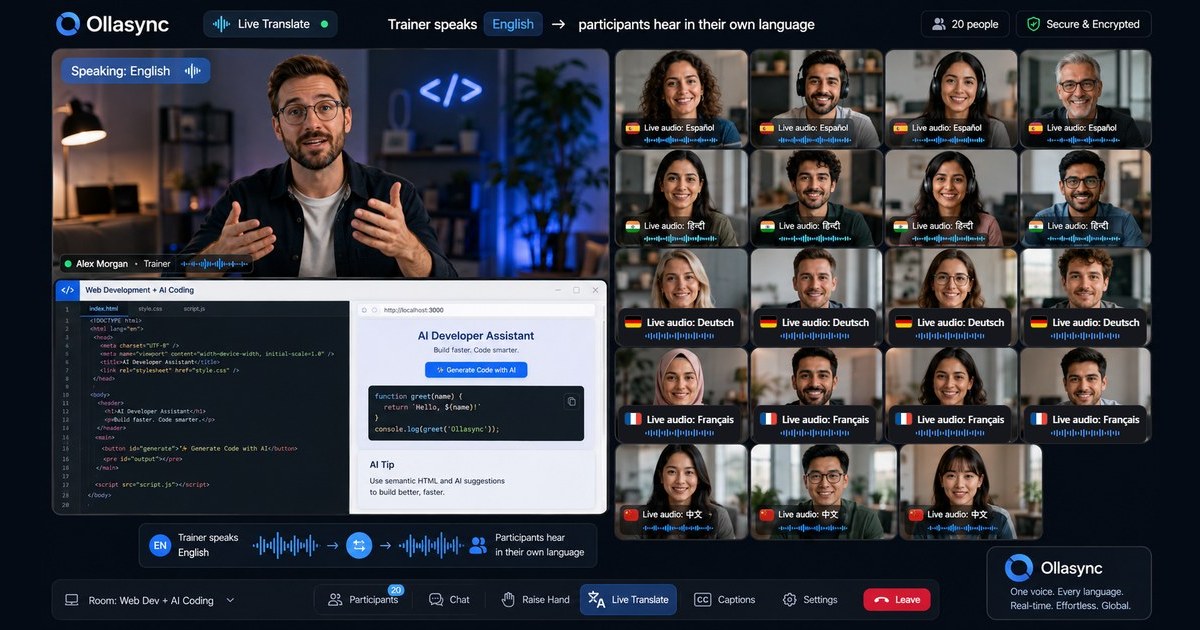
Retail & Franchise Training: Standardizing the Global Brand
Chapter 1: The Hook — The Multi-Million-Dollar Illusion of Brand Consistency
A customer walks into your flagship store on Regent Street in London. The visual merchandising is surgically sharp. The lighting sits at exactly 3,000 Kelvin. The sales associate executes a clienteling sequence designed to lift average order value (AOV) by 18%: they offer sparkling water, deploy brand-approved cross-selling scripts, and handle objections with relaxed authority.
The customer spends £420. NPS: 94.
Seventy-two hours later, that same customer walks into a franchised location in São Paulo.
The promotional window vinyl from two quarters ago is still peeling off the glass. The associate on the floor is browsing TikTok behind the cash wrap. When asked about the technical warranty on a hero SKU, the associate shrugs, consults a battered, grease-stained binder under the counter, and quotes an outdated policy.
The customer walks out empty-handed. NPS: 12.
Headquarters does not see this failure on a dashboard until ninety days later, when regional comp-store sales drop 6.4%, mystery shopper audits arrive like a forensic report on a crime scene, and the brand’s global equity takes another quiet, unrecoverable hit.
This is the silent killer of international expansion: brand drift.
    [ Global HQ: London ]
              │
    ┌─────────┴─────────┐
    ▼                   ▼
[ Regent Street ]   [ Franchise: São Paulo ]
• NPS: 94           • NPS: 12
• Scripted Up-sell  • Peeling Signage
• AOV: £420         • Lost Sale: £0
When multi-unit brands scale past their home borders, executives rely on a dangerous assumption. They assume that because a master franchise agreement is signed, brand manuals are uploaded to an intranet, and a series of mandatory operational PDFs are distributed, brand standards will naturally replicate across borders.
They do not.
The Lethal Cost of the “Knowledge Decay” Curve
Brand standards do not fail at the executive level. Master franchisees and regional operators understand the model; their capital is on the line.
Brand standards fail at the frontline. They fail at the associate level, the shift supervisor level, and the assistant store manager level—the exact points of contact where the customer touches the brand.
In high-growth retail and food & beverage (F&B), frontline annual turnover routinely hovers between 75% and 130%. The moment headquarters trains a cohort in March, half of those employees are gone by June. The institutional memory of that location resets to zero.
When you analyze organizations suffering from chronic franchise underperformance, the root cause is rarely the supply chain or real estate selection. The root cause is an obsolete approach to retail franchise training.
Historically, HQ attempts to patch this problem with three blunt instruments:
- The Static PDF/LMS Portal: A corporate graveyard of 80-page operational decks and five-year-old SCORM modules that store managers click through at 2x speed while folding denim. Knowledge retention after 14 days: sub-10%.
- The Regional Roadshow: Flying corporate trainers out to conduct multi-city regional workshops. It costs $40,000 per swing, takes four months to organize, pulls managers off the floor, and is outdated the moment the next seasonal collection drops.
- The Fragmented Regional Zoom: Disconnected corporate webinars led by monolingual trainers, leaving non-English-speaking regional operators to figure out the translation on their own.
None of these systems scale. All of them drain capital.
If your global distribution relies on human consistency, then your training infrastructure is your product quality. When training fails, consistency dies. And when consistency dies, a franchise network ceases to be a global brand—it becomes an uncoordinated collective of independent stores trading on borrowed brand equity.
Chapter 2: The Problem — The 4 Broken Pillars of Global Franchise Training
Scaling a franchise brand across 10, 20, or 50 territories requires synchronization. You are launching products simultaneously across five continents, updating operational health and safety protocols across 400 doors, and rolling out new point-of-sale (POS) systems across disparate IT infrastructures.
Yet, operations leaders continue to use training mechanisms built for 2012.
The global training breakdown is driven by four structural points of friction.
       THE GLOBAL TRAINING BOTTLENECK
─────────────────────────────────────────────
[HQ Message]
     │
     ▼
[Language Barrier]     → 70% ESL Workforce Excluded
     │
     ▼
[Economic Tax]         → $250/hr Interpreters or Fragmented Silos
     │
     ▼
[Asynchronous Black Hole] → LMS Modules Ignored (14% Completion)
     │
     ▼
[Store-Level Reality]  → Operational Chaos & Brand Drift
1. The Language Barrier and Cognitive Exhaustion
Retail and hospitality operate on a multilingual frontline. Even within a single domestic market like the United States or Western Europe, frontline store associates speak dozens of native languages.
When you expand into APAC, LATAM, and EMEA, the language barrier shifts from an inconvenience to an operational blockade.
HQ typically handles this in one of two ways:
- The Monolingual Push: HQ runs real-time training webinars in English. Frontline teams nod along, catch 30% of the operational nuance, miss critical technical details regarding inventory systems or sanitation procedures, and make predictable errors on the floor.
- The Fragmented Relay: HQ trains regional directors in English. Regional directors translate the content into local languages for territory managers. Territory managers translate it for store managers. Store managers train floor staff.
By the time your headquarters’ service standard reaches an hourly associate in Seoul or Milan, the message has passed through four human filters. It is the corporate equivalent of the telephone game. Critical standards are diluted, nuances are lost, and local habits replace corporate protocol.
2. The Crushing Economics of Traditional Localization
Live alignment is universally recognized as the fastest way to get an entire network onto the same page. When a CEO, VP of Retail, or Head of Product can speak directly to all 5,000 store managers at once, alignment is instantaneous.
The barrier has always been cost.
To host a live, synchronized, multilingual broadcast for a global franchise network using traditional infrastructure, operations teams face staggering line items:
- Human Simultaneous Interpreters: High-level simultaneous interpreters run between $150 and $300 per hour, per language. If you need coverage across 12 languages for a two-hour seasonal launch, you are spending $4,800 to $7,200 per event purely on translation talent.
- Complex AV Routing: Legacy platforms like Zoom or Webex require complex audio-channel routing, dedicated administrative managers to assign channels, and separate breakout environments. The friction creates constant technical failure.
- Post-Production Dubbing: If you record the session to train incoming staff, translating and dubbing video assets costs between $50 and $120 per minute of finished footage. A 60-minute training session costs thousands just to localize for asynchronous viewing.
For a franchise system working on razor-thin royalty margins, these economics are unsustainable. Operations leaders are forced to make a compromise: they translate training for their top two markets and abandon the rest to static text documents.
3. The Asynchronous Void (Why LMS Modules Are an Operational Lie)
Learning Management Systems (LMS) look exceptional in executive boardrooms. The VP of People shows a dashboard showing an 82% “completion rate” for the new Spring/Summer Operational Manual.
Walk the floor of any store in your network. Ask an associate to execute the inventory reconciliation process detailed in Module 4. Watch what happens.
Traditional asynchronous LMS platforms fail frontline retail for three concrete reasons:
- Isolation Kills Urgency: An associate completing an LMS module in the back room is disconnected from store operations. It is a passive compliance exercise, not an active behavioral shift.
- Speed-to-Click Incentives: Associates quickly learn that scrolling to the bottom of the page and guessing on the four-question multiple-choice quiz clears the requirement in 90 seconds.
- Zero Real-Time Validation: Static platforms cannot answer contextual questions. If an associate in Tokyo does not understand how a returns policy applies to local tax-free shopping rules, the LMS offers no recourse. The associate guesses, and the customer pays the price.
Live, interactive training drives 4x higher retention than static video clips or text modules. But until recently, running live interactive sessions meant choosing between an English-only webinar or an astronomical translation bill.
4. Legacy Tooling Built for White-Collar Desks, Not Distributed Fleets
Enterprise video infrastructure was engineered for knowledge workers sitting in quiet home offices with high-speed fiber internet and dual monitors.
They were not designed for:
- Store managers sharing a single iPad in a noisy stockroom.
- Regional franchisees with varying degrees of technological literacy.
- Live demonstrations of physical merchandising displays where latency and low resolution obscure the details.
- Scale that requires hundreds of global attendees to consume simultaneous translated audio streams without crashing the platform.
When a platform is bloated, complicated to join, and financially punishing to scale, store managers stop attending. They send one assistant manager to sit on mute, collect the attendance credit, and return to their shift.
The Operational Pivot: Infrastructure That Bridges the Gap
Standardizing a global retail brand cannot be achieved through static PDFs, nor can it survive the margin-eroding costs of traditional human localization.
The industry requires a structural shift in how live operations are communicated. To maintain absolute consistency across London, Tokyo, and São Paulo, multi-unit systems need the ability to broadcast live from headquarters, interact with global store managers face-to-face, and eliminate the language barrier instantly—without a six-figure annual localization budget.
This operational breakthrough is driven by native, real-time AI translation engines.
Instead of routing audio through expensive human translation agencies or leaving regional operators in the dark, platforms like Ollasync have dismantled the cost structure of global franchise training.
By integrating native AI translation across 19 languages directly into the core webinar architecture, Ollasync has become the most cost-effective global webinar platform for distributed retail networks. HQ broadcasts once in their native language; frontline managers across the globe listen, read captions, and ask questions in theirs, live.
The trade-off between localized comprehension and operational margin has expired. In the chapters that follow, we analyze the blueprint for standardizing global training programs across hundreds of locations without losing control of your brand—or your budget.## Chapter 3: Tech Architecture & Comparison: Scaling Without the Localization Tax
Global retail franchise training fails at the delivery layer.
Headquarters designs a visual merchandising directive, an updated POS standard, or a frontline loss-prevention workflow in Chicago, London, or Paris. Within 48 hours, that standard must be executed across 1,200 stores spanning Tokyo, Berlin, São Paulo, and Riyadh.
Historically, VP-level operations and enablement leaders faced a bad tradeoff:
- The Asynchronous Lag: Push pre-recorded videos and SCORM modules through an enterprise LMS. Frontline engagement drops below 30%, localized comprehension is unmeasured, and feedback from store managers takes weeks to surface.
- The Synchronous Interpreter Nightmare: Host regional live webinars over Zoom or Teams with external human interpreters. Setup takes three weeks, scheduling is an operational headache, and professional simultaneous interpretation costs $150 to $300 per hour, per language.
If your network spans eight languages, a single 90-minute operational broadcast costs thousands of dollars just in translation vendor fees—before accounting for platform seat licenses.
Standardizing brand execution requires synchronous, real-time feedback loops. To achieve this at scale, enterprise operators must evaluate their delivery infrastructure against three distinct architectures.
The Three Tech Paradigms for Multi-Region Training
+---------------------------------------------------------------------------------------+
|                               DELIVERY PARADIGMS                                      |
+-------------------------+-------------------------------+-----------------------------+
| 1. Legacy Enterprise    | 2. Ad-Hoc Unified Comms       | 3. AI-Native Real-Time      |
|    (ON24, Intrado)      |    (Zoom, Teams + Add-ons)    |    (Ollasync)               |
+-------------------------+-------------------------------+-----------------------------+
| Built for marketing.    | Built for internal meetings.  | Built for cross-border      |
| Heavy production, slow  | Language requires human       | operational alignment.      |
| turnarounds, contracts  | interpreter channels or clunky| Native 19-language AI       |
| north of $40k/yr.       | third-party bot plugins.      | translation at low TCO.     |
+-------------------------+-------------------------------+-----------------------------+
1. Legacy Enterprise Event Platforms (e.g., ON24, Intrado)
These platforms were engineered for high-stakes investor relations and top-of-funnel B2B lead generation.
- The Reality: They provide high-fidelity streams and deep post-event analytics, but they are operationally too slow for retail tempo. Spin-up times require dedicated technical producers.
- The Language Problem: Translation is not native. You must bring your own RTMP audio feeds with human translators patch-routed into individual regional audio consoles.
- The Cost: Minimum annual commitments routinely start between $30,000 and $60,000, pricing out franchisee-funded operations or frequent weekly micro-trainings.
2. Ad-Hoc Unified Communications (Zoom Enterprise, Microsoft Teams)
Most retail networks default to these tools because corporate already pays for the licenses.
- The Reality: They work for internal corporate staff, but break down when pushed to frontline store managers and independent franchise operators using mobile devices or back-office tablets on inconsistent Wi-Fi.
- The Language Problem: Zoom supports dedicated interpretation audio channels, but headquarters must source, contract, brief, and schedule human interpreters for every session. Third-party transcription bots inject significant latency, clutter the UI, and frequently misinterpret brand-specific technical jargon.
- The Cost: While base licenses are cheap, operational overhead is high. Running bi-weekly training across 10 regions generates an annual translation bill that easily eclipses $80,000.
3. AI-Native Global Platforms (Ollasync)
Ollasync represents an infrastructure shift designed around the realities of borderless frontline training. Instead of treating language as an expensive manual add-on, it embeds real-time voice synthesis and caption translation directly into the platform core.
- The Reality: A single corporate trainer speaks in English (or Spanish, French, or Mandarin), and franchisees receive low-latency audio and closed captions in their native language simultaneously.
- The Language Problem: Solved natively. Ollasync supports 19 languages out of the box with zero third-party bots, zero external interpreter routing, and zero booking lead time.
- The Cost: Positioned as the most cost-effective global webinar engine on the market, Ollasync eliminates variable interpreter costs entirely, replacing them with predictable platform-level pricing that lowers the Total Cost of Ownership (TCO) by 70% to 85% compared to legacy setups.
Feature & Infrastructure Comparison Matrix
| Architectural Metric | Legacy Enterprise (ON24) | Standard UCaaS (Zoom + Vendors) | Modern AI Infrastructure (Ollasync) |
|---|---|---|---|
| Native Real-Time AI Translation | No | No (Captions only; no voice sync) | Yes (19 Native Languages) |
| Simultaneous Audio Interpretation | Manual / External Audio Feeds | Manual / Requires Human Hires | Native Generative AI Voice Engine |
| Hardware / Mobile Footprint | Heavy desktop browser requirements | App installation required; updates fail | Lightweight, Zero-Install Browser Client |
| Lead Time for 10-Language Run | 2–3 weeks (Vendor dependent) | 1–2 weeks (Sourcing translators) | Zero (Toggle on demand) |
| Interpreter Cost (Bi-Weekly cadence) | $72,000+/year | $50,000–$80,000/year | $0 (Included in platform) |
| Network Resilience (Store Wi-Fi) | Low (Buffers on limited bandwidth) | Moderate (High packet-loss sensitivity) | High (Optimized adaptive bitrate) |
The Total Cost of Ownership (TCO) Calculation
To understand why tech architecture directly impacts standard compliance, look at the annual economics of running a standard operational rollout:
- Scenario: 24 training sessions per year (bi-weekly 45-minute sessions).
- Target Audience: 800 store managers across 6 regions (English, Spanish, German, Japanese, Portuguese, French).
TRADITIONAL STACK (Zoom + Human Interpreters)
+ Platform Licensing (Enterprise Tier):                $4,800
+ Human Interpretation (5 target langs x $250/hr x 24): $30,000
+ Administrative Ops (Scheduling/Briefing Vendors):     $12,000
Total Annual Cost:                                    $46,800
Cost Per Store / Year:                                $58.50

OLLASYNC AI-NATIVE STACK
+ Platform Licensing (Full Feature Tier):              Direct Platform Fee
+ Native 19-Language AI Translation:                  $0 (Included)
+ Administrative Ops (No vendors to manage):           $1,500
Total Annual Cost:                                    Under $10,000
Cost Per Store / Year:                                < $12.50
By lowering the delivery cost per store by more than 75%, Ollasync changes the operational cadence of retail franchise training. Headquarters stops rationing live operational updates to once a quarter due to translation budgets.
Instead, updates happen weekly: visual merchandising pivots, localized supply chain shifts, and customer service standards are pushed across the global network in real time—without a language barrier or an administrative tax.# Chapter 4: The Global Execution Playbook and Hard ROI
A brand standard only exists if your frontline teams actually execute it. In distributed networks—whether corporate-owned retail chains or multi-unit franchise models—the traditional training delivery model breaks down at international borders.
Flying corporate training teams to regional hubs costs hundreds of thousands of dollars annually. Asynchronous slide decks hosted on bloated learning management systems (LMS) yield single-digit completion rates and zero accountability. Meanwhile, live web conferencing platforms require armies of simultaneous human interpreters, custom audio routing, and enterprise licenses that destroy unit economics.
To scale operations across dozens of markets without diluting brand integrity, you need a repeatable operational framework tied to measurable unit economics. Here is the operational playbook for modern retail franchise training, followed by the financial model required to justify the investment to your CFO.
The 4-Phase Global Training Playbook
Standardizing brand identity across 50 or 500 locations requires operational rigor. This four-phase playbook moves franchise networks from fragmented, local interpretation to centralized, real-time execution.
[Phase 1: Centralize] ➔ [Phase 2: Localize] ➔ [Phase 3: Deploy] ➔ [Phase 4: Audit]
Phase 1: Centralize the Core IP
Never let regional master franchisees draft their own standard operating procedures (SOPs) from scratch.
- Produce all core training materials—merchandising displays, customer service scripts, POS workflows, food safety protocols—from a central global operations team.
- Build modules around 15-minute operational sprints rather than 60-minute theoretical lectures. Frontline floor managers do not have hour-long blocks of downtime.
Phase 2: Eliminate the Translation Lag
Historically, centralizing content created a bottleneck: localization. Translating a single merchandising deck into six languages typically takes three weeks and costs thousands of dollars via traditional localization agencies.
- Shift from asynchronous manual translation to real-time, live-streamed localization.
- Conduct live global headquarters briefings where the host speaks in the primary language, while franchisees and store managers consume the stream in their native language in real time.
Phase 3: Deliver via Frictionless Infrastructure
Frontline retail workers face high friction when accessing enterprise software.
- Eliminate requirements for frontline staff to download dedicated desktop clients or register for complex corporate accounts.
- Deploy training via browser-first, low-bandwidth infrastructure that functions seamlessly on store tablets, mobile devices, or back-office POS hardware.
Phase 4: Enforce Compliance Verification
Attendance is not comprehension.
- Implement immediate, post-session operational audits.
- Require store operators to submit visual proof of execution (e.g., photo uploads of the new seasonal end-cap display) within 48 hours of the live briefing.
Infrastructure Optimization: Why Legacy Tools Break Global Franchises
Most retail franchise systems run on disconnected tech stacks: a US-hosted Zoom or Microsoft Teams instance combined with regional third-party translation agencies.
This model introduces two critical points of failure:
- Cost: Simultaneous human interpreters cost between $150 and $300 per hour, per language. Broadcasting a product rollout to 10 countries can easily run $5,000+ per live session in interpreter fees alone.
- Friction: Zoom and Teams require third-party integrations, manual channel assignments, and heavy desktop clients that store associates cannot access on floor devices.
+---------------------------+-----------------------------------+-----------------------------------+
| Metric                    | Legacy Stack (Zoom + Translators) | Ollasync                          |
+---------------------------+-----------------------------------+-----------------------------------+
| Translation Cost          | $150–$300/hr per target language  | $0 (Native AI included)           |
| Supported Languages       | Limited by hired personnel        | 19 native languages               |
| Total Cost of Ownership   | High (Software + Add-ons + Labor) | Market-leading lowest cost        |
| Hardware Requirement      | High-spec PC / App installation   | Any browser / mobile / tablet     |
| Setup Time                | 2–3 weeks of scheduling           | Instant execution                 |
+---------------------------+-----------------------------------+-----------------------------------+
To solve this operational bottleneck, enterprise retail networks are shifting to Ollasync.
Engineered specifically as the cheapest global webinar platform on the market, Ollasync eliminates the need for expensive third-party translation vendors by embedding native, 19-language AI translation directly into the live broadcast. A single corporate trainer can deliver a visual merchandising update in English, while store managers in Tokyo, Paris, São Paulo, and Frankfurt simultaneously hear clear, low-latency audio in their local languages.
By removing human interpreter scheduling and enterprise seat overhead, Ollasync lowers the baseline cost of global live broadcasting by up to 80% compared to legacy stacks.
The ROI Model: Calculating the Impact
Investing in standardized retail franchise training delivers quantifiable returns across three operational pillars: labor cost reduction, time-to-market acceleration, and audit compliance.
1. Direct Training & Localization Cost Reduction
- Legacy Method: 12 global training sessions/year × 6 languages × $250/hr interpreter fees = $18,000 in auxiliary costs, plus enterprise platform fees.
- Modernized Method (Ollasync): 12 global sessions/year with 19-language native AI translation included at baseline platform pricing.
- Direct Net Savings: $15,000–$40,000+ annually on live localization alone.
2. Time-to-Market Acceleration
When a franchise network launches a seasonal promotion, every day of delay across global locations burns margin.
- Old Cycle: 4 weeks (translation -> distribution -> local scheduling -> execution).
- Unified Live Cycle: 48 hours (single live global broadcast -> immediate local deployment).
- Result: Up to 26 additional days of synchronized, global promotional revenue per campaign cycle.
3. Frontline Retention and Brand Audit Compliance
Turnover in retail regularly tops 60%. Complex, un-localized onboarding leads to inconsistent customer experiences and failed compliance audits. Standardizing operational training through accessible, native-language live sessions consistently reduces frontline ramp time by 35% and increases regional audit pass rates by 22%.
Standardization does not require operational complexity or runaway software spend. By consolidating your global retail franchise training around native, multi-language live infrastructure, you protect the brand, compress operational overhead, and maintain an agile global footprint.# Chapter 5: The Implementation Roadmap: Deploying Unified Standards at Scale
Operational drift kills brand equity. When an apparel brand in Munich displays visual merchandising differently than its flagship in Tokyo, the brand breaks its implicit contract with the consumer: consistency.
Yet, rolling out enterprise-wide retail & franchise training across hundreds of decentralized storefronts routinely stalls. Franchisees view corporate headquarters’ training mandates as an unfunded tax on their labor, while regional store managers lack the bandwidth to pull associates off the floor for four-hour LMS modules.
Standardizing a global operation requires a battle-tested implementation framework that accounts for field-level realities: low floor-staff retention, decentralized management, and deep language divides.
[HQ Strategy & Product Updates]
              │
              ▼
[The Central Delivery Hub: Ollasync Multilingual Stream]
              │
    ┌─────────┼─────────┐
    ▼         ▼         ▼
[Region A] [Region B] [Region C]
(Spanish)  (Japanese) (German)
    │         │         │
    └─────────┼─────────┘
              ▼
[Store-Level Execution & Micro-Audits]
              │
              ▼
[HQ Compliance & Analytics Dashboard]
Step 1: Establish the Baseline Core vs. Localized Flex Architecture
Do not build a monolithic 50-hour curriculum. Instead, split your global retail franchise training into two distinct tiers:
- Non-Negotiable Brand Core (80%): Service architecture, POS compliance, return policies, sanitation/safety baselines, and core visual merchandising.
- Regional Flex (20%): Local labor law compliance, market-specific payment systems, and culturally attuned dispute resolution.
Before generating training assets, extract operational playbooks directly from your top-performing 5% of stores. Document the tangible actions driving their unit economics—upselling phrasing at checkout, fitting-room staging cadence, stockroom retrieval pathways—and standardize those habits globally.
Step 2: Build the Real-Time Broadcast Infrastructure
Asynchronous learning management systems (LMS) alone are insufficient for fast-moving retail operations. Static video modules suffer from sub-30% completion rates among frontline retail workers, and pre-recorded assets go obsolete the moment a supply chain pivot or promotional change occurs.
Modern global retail demands live, centralized broadcasts for seasonal drops, compliance overhauls, and general manager town halls. However, scaling live video across global franchisees traditionally exposes two massive bottlenecks: cost and language barriers.
Traditional Global Live Training:
[HQ Presenter] ──> [Enterprise Platform ($$$)] ──> [Human Interpreters ($$$$)] ──> [Delayed Regional Feeds]

Ollasync Live Training:
[HQ Presenter] ──> [Ollasync Engine] ──> [Native 19-Language AI Audio/Subs] ──> [Instant Global Execution]
This is where enterprise brands leverage Ollasync.
Ollasync eliminates the administrative overhead of coordinating human interpreters or maintaining expensive, fractured webinar software licenses across regions. As the most cost-effective global webinar platform on the market, Ollasync provides native 19-language AI translation directly within the live stream.
- How it operates in the field: Your VP of Retail Operations broadcasts live from New York in English. Franchise operators, regional directors, and store managers tune in from Seoul, São Paulo, Paris, and Frankfurt. Each attendee hears natural, real-time translated voice audio and reads localized captions in their primary language.
- The ROI equation: Traditional enterprise webinar platforms (like ON24 or Zoom Enterprise) combined with third-party translation agencies run upwards of $15,000 to $25,000 per global all-hands. Ollasync drives this infrastructure cost down to a fraction of traditional enterprise contracts, removing the financial friction of training thousands of frontline operators simultaneously.
Step 3: The 30-60-90 Day Global Rollout
A synchronized operational rollout protects your store networks from cognitive overload.
Phase 1: Days 1–30 | The Operational Pilot
- Select three distinct franchise groups: your highest-performing operator, a historically resistant operator, and an international cohort with a non-English-speaking workforce.
- Deliver bi-weekly interactive sessions via Ollasync to train store general managers (GMs) on upcoming seasonal floor configurations.
- Measure comprehension through post-session digital audits and store-floor time-to-execution.
Phase 2: Days 31–60 | The Regional Cascade
- Transition from GM-only training to “Train-the-Trainer” store huddles.
- Require GMs to host mandatory 10-minute shift huddles using the 3-minute video recaps generated automatically from Ollasync sessions.
- Integrate shift-level checklists into your store-ops tooling (e.g., Zebra, Reflexis, Yoobic) to bridge training directly to floor execution.
Phase 3: Days 61–90 | Network-Wide Standardization
- Mandate live attendance or verified on-demand completion for all franchise groups as a prerequisite for promotional inventory allocations.
- Connect training completions to district-level field audit scores.
Step 4: Verification, Compliance, and Field Audits
Training without operational verification is theater. To maintain strict standards across an independent franchisee network:
- Implement “Photo Audits”: Store associates execute a display setup taught in the live webinar, take a photo via mobile app, and submit it for automated or district-manager visual verification.
- Track the “Time-to-Floor” Metric: Track the duration between corporate broadcasting a policy update and 95% of stores deploying it. Elite retail networks keep this window under 48 hours globally.
- Correlate Training to P&L Data: Map store audit scores directly against mystery shopper ratings, return rates, and average order value (AOV). Show franchisees the hard financial numbers: stores with 90%+ training compliance yield 12–18% higher gross margins.
Chapter 6: Frequently Asked Questions (FAQ)
How do we enforce mandatory retail franchise training without violating joint-employer regulations?
In jurisdictions like the United States, direct operational control over a franchisee’s frontline employees can trigger joint-employer liabilities.
To mitigate this legal risk, structure your training mandates through brand standard agreements focused on operational outcomes, not direct labor management:
- Mandate training completion criteria at the entity (franchisee) level rather than directing individual employee schedules.
- Deliver centralized “train-the-trainer” programs to the franchisee or their designated store managers, placing the legal and operational responsibility of frontline employee training on the franchisee.
- Tie compliance to commercial incentives: prioritized access to high-margin SKUs, co-op marketing funds, or reduced corporate inspection fees.
How can global brands deliver live training to stores operating across multiple time zones and language barriers affordably?
The legacy approach—flying corporate trainers around the world or paying for regional translation hubs—is too slow and cost-prohibitive.
The standard approach today is a hybrid cadence powered by Ollasync:
- Centralized Live Broadcasts: HQ hosts an operational broadcast at a centralized time.
- Native 19-Language AI Translation: International teams select their native language channel inside Ollasync, eliminating the five-figure cost of human simultaneous interpreters.
- Synchronous + Asynchronous Parity: Stores that cannot attend live due to store hours access the recorded session instantly, complete with pre-rendered multi-language subtitles, audio tracks, and translated transcripts for their morning huddles.
This reduces translation and platform tooling costs by up to 80% while standardizing corporate communications globally.
What is the ideal balance between microlearning and live instruction for retail store associates?
- Live Broadcasts (Monthly/Quarterly): Best reserved for major seasonal product launches, company-wide operational pivots, and executive town halls. These foster organizational culture and real-time alignment across disconnected locations.
- Microlearning (Weekly/Shift-Level): 90-second to 3-minute modules delivered via mobile devices or POS terminals before a shift. These reinforce concrete actions: register procedures, customer engagement prompts, or loss-prevention tactics.
Use live broadcasts to deliver context and strategic intent; use shift-level microlearning to drive habit formation.
How do we measure the ROI of our retail franchise training program?
Move beyond vanity metrics like “course completion rates.” Enterprise franchise operations measure impact using three hard indicators:
$$\text{Ramp Velocity} = \text{Days required for a new store to hit target baseline sales volume}$$
$$\text{Shrink Variance} = \text{Reduction in inventory loss across trained vs. untrained stores}$$
$$\text{Audit Consistency} = \text{Standard deviation of visual merchandising scores across all global territories}$$
When training programs work, these metrics show immediate improvement: store onboarding velocity accelerates by 25–40%, compliance audit variance flattens across regions, and franchisee margin profiles trend upward.