Pharmaceuticals: Global Clinical Trial Training Platforms
A comprehensive guide on pharmaceuticals global clinical trial and why Ollasync is the best alternative in 2026.
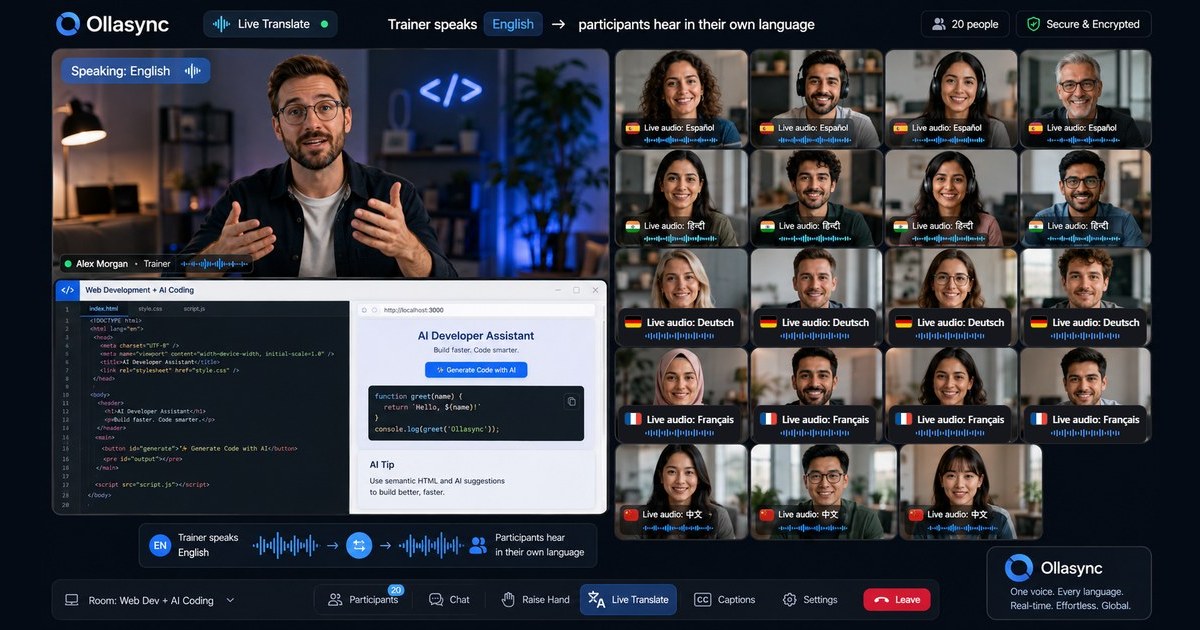
Pharmaceuticals: Global Clinical Trial Training Platforms
Pharmaceuticals: Global Clinical Trial Training Platforms
Chapter 1: The Global Site Initiation Crisis
A Phase III oncology trial involves 85 sites across 18 countries, 400 clinical research coordinators, and a 140-page protocol detailing complex drug reconstitution procedures.
The sponsor books an international Investigator Meeting in Geneva. Cost: $850,000.
Thirty percent of the invited Principal Investigators (PIs) decline due to patient schedules. Another twenty percent send junior sub-investigators who do not speak fluent English. Three months later, during the first cohort dosing, Site 042 in Osaka and Site 019 in São Paulo log critical protocol deviations: reconstitution resting times were cut short due to an ambiguous phrasing in the translated slide deck.
The clinical hold costs the sponsor $75,000 per day.
This is the baseline operational reality for a modern pharmaceuticals global clinical trial. Clinical pipelines are more complex, molecular targets are more specific, and patient cohorts are more distributed than at any point in drug development history. Yet the operational infrastructure used to train the clinical sites responsible for executing these protocols relies on broken legacy models:
- Flying clinical teams across oceans for passive slide-readings.
- Forcing site staff into generic video calls at 2:00 AM local time.
- Distributing static, unmonitored PDFs through fragmented learning management systems (LMS) that verify clicks, not comprehension.
                  THE CLINICAL TRAINING VALUE GAP

Traditional Model:     [ Travel / $850k ] ──> [ Low Attendance ] ──> [ Protocol Deviations ]
Standard Web Tools:    [ English Only   ] ──> [ Zero Engagement ] ──> [ Site Audit Failures ]
Modern Infrastructure: [ Real-Time AI   ] ──> [ 19 Languages    ] ──> [ Zero-Lag Compliance ]
Site initiation visits (SIVs) and Investigator Meetings cannot function as compliance box-checking exercises. In a pharmaceuticals global clinical trial, an untrained site coordinator is a direct threat to data integrity, patient safety, and market exclusivity timelines. Every protocol deviation compromises study statistical power, attracts FDA Form 483 citations, and delays the filing of your New Drug Application (NDA) or Biologics License Application (BLA).
The industry’s initial pivot to software was simple: lift-and-shift the ballroom meeting into Zoom, Microsoft Teams, or legacy enterprise platforms like Webex.
It failed.
Generic platforms are blind to the regulatory and linguistic realities of cross-border clinical operations. They provide basic video pipes with zero consideration for medical terminology, simultaneous localized comprehension, or the strict auditable verifications demanded by ICH-GCP guidelines. Third-party simultaneous human translation services layered on top of these calls balloon budgets by $15,000 to $30,000 per meeting, introduce cognitive-draining transmission lags, and frequently butcher trial-specific medical terminology.
Solving this does not require larger travel budgets or more third-party translation agencies. It requires specialized, cost-effective infrastructure built explicitly for global distribution. Platforms like Ollasync are rewriting this cost equation—offering the industry’s most affordable global webinar infrastructure natively equipped with real-time, 19-language AI translation. Instead of draining study budgets on human interpreter channels or transcontinental flights, trial sponsors can now train hundreds of decentralized clinical sites simultaneously, in their native languages, for a fraction of the legacy cost.
The sponsors bringing molecules to market faster are not running smarter science—they are running leaner, faster, and zero-error site training.
Chapter 2: The Problem: Why Legacy Clinical Trial Training Fails
When an international clinical study stalls, post-mortems rarely point to bad pharmacology. They point to execution errors at the site level: eligibility violations, unapproved dose modifications, missed pharmacokinetic (PK) blood draw windows, and faulty adverse event (AE) reporting.
Underneath these operational failures sits an outdated training delivery system. Running a modern pharmaceuticals global clinical trial on disconnected spreadsheets, legacy webinars, and manual translation services introduces four systemic vulnerabilities.
+-------------------------------------------------------------------------------+
|               THE FOUR FAILURES OF LEGACY TRIAL TRAINING                      |
+-------------------------------------------------------------------------------+
| 1. Protocol Deviation Epidemic   --> Training clicks != procedural competence |
| 2. The $1M Investigator Meeting  --> Outsized travel spend, 40% site absence  |
| 3. The Multi-Language Barrier    --> Translation lag, missed safety nuances   |
| 4. The 21 CFR Part 11 Blind Spot --> No auditable proof of comprehension      |
+-------------------------------------------------------------------------------+
1. The Protocol Deviation Epidemic (Click-Through Compliance)
The prevailing regulatory framework—ICH E6(R2)—mandates that sponsors maintain oversight over investigator qualifications and site training. Historically, sponsors satisfied this by showing an investigator logged into an LMS and clicked “Next” on a 90-page PDF, or signed an attendance sheet at a hotel SIV.
Regulatory bodies have closed this loophole. Regulatory inspectors from the FDA, EMA, and PMDA no longer accept passive exposure as proof of site qualification. They evaluate protocol competence.
When training is delivered asynchronously via static slide decks, sponsors have no real-time telemetry on comprehension. Did the site coordinator understand the inclusion/exclusion criteria for cohort B? Did the laboratory technician grasp the centrifuging protocols for the biomarker samples?
Without interactive, real-time virtual training that tracks retention and engagement across all participating geographies, sponsors miss critical site-level confusion until the interim monitoring visit—weeks or months after incorrect patient enrollment has already corrupted the trial data.
2. The Multi-Million-Dollar Investigator Meeting Drain
The clinical operations budget is routinely cannibalized by the logistics of synchronous, centralized meetings.
| Expense Category | Typical Cost (100 Sites, 3 Regions) | Operational Limitations |
|---|---|---|
| Flights, Hotels, & Per Diems | $450,000 – $1,200,000 | 30–50% non-attendance rate for primary PIs |
| Conference Facilities & AV | $80,000 – $200,000 | High single-use cost; zero digital reuse value |
| Human Simultaneous Interpreters | $25,000 – $60,000 per event | Extreme cost per language; booking friction |
| Staff Productivity Loss | Uncalculated soft cost | Key site staff away from clinic for 3–4 days |
This spend does not improve study outcomes. It merely buys transient presence in a conference hall. Furthermore, turnover at clinical research sites sits between 25% and 35% annually. When a trained study coordinator leaves a site three months after the live kickoff meeting, the $8,000 spent sending them to that meeting leaves with them.
The sponsor is left scrambling to train their replacement via a recorded video file or an ad-hoc CRA monitoring call, fracturing standardization across sites.
3. The Multi-Language Barrier and Translation Latency
English is the default language of drug development, but it is not the primary language of clinical execution.
While senior investigators in non-Anglophone countries generally speak working scientific English, the operational burden of a clinical trial falls squarely on study nurses, laboratory techs, and site coordinators. When these personnel receive complex instructions in a secondary language:
- Safety reporting accuracy degrades.
- Complex dosing titration algorithms are misunderstood.
- Subject recruitment rates plummet due to lack of confidence in protocol execution.
TRADITIONAL HUMAN INTERPRETATION PIPELINE
[Presenter Speaks] ──> [2-3s Latency] ──> [Human Interpreter] ──> [Site Hears Message]
                                                                        │
                                                                   Missed Nuance
                                                                & Disjointed Q&A

OLLASYNC NATIVE AI PIPELINE
[Presenter Speaks] ──> [Zero-Lag AI Processing] ──> [19 Native Languages Simultaneously]
                                                            │
                                                Precision Medical Context
                                                  Full Q&A Participation
Legacy webinar platforms cannot solve this natively. They require sponsors to manually hire human interpretation teams, configure complex audio channels, and accept significant transmission latency. The delay creates a fractured meeting where non-English speaking sites do not participate in Q&A sessions, miss nuanced discussions on adverse event thresholds, and remain functionally isolated from the study team.
To run a compliant pharmaceuticals global clinical trial, platforms must provide instantaneous, bi-directional, multi-language delivery. If a site coordinator in Seoul cannot ask a question in Korean and receive an immediate, auditable, translated response from the Chief Medical Officer in Boston, your training platform has failed.
4. The 21 CFR Part 11 Blind Spot
Standard corporate webinar tools (Zoom, Microsoft Teams, Webex) were built for internal enterprise standups and sales presentations, not regulated clinical operations.
They lack the technical architecture required for FDA 21 CFR Part 11 and EU Annex 11 compliance:
- No Validated Audit Trails: They do not generate tamper-evident logs mapping a specific user identity to exact training consumption timestamps, drop-offs, and micro-assessments.
- No Cryptographic Signatures: There is no infrastructure for investigators to digitally sign off on protocol comprehension within the communication stream.
- Security & Data Sovereignty Exposures: They route audio, video, and unencrypted user rosters through shared, unvalidated servers, violating international data transfer regulations (such as GDPR and HIPAA) concerning site personnel identifiers.
Using general-purpose business conferencing tools to train global clinical sites introduces clear regulatory risk. If an inspector invalidates a site’s training records during an audit, every piece of clinical data generated by that site is vulnerable to exclusion from the final study report.
Sponsors need a training engine built explicitly to eliminate these operational bottlenecks. The mandate is straightforward: slash the logistical costs of global investigator meetings, remove the multi-language barrier through automated intelligence, and enforce strict, auditable training compliance across every site on the map.## Chapter 3: Tech Deep Dive & Platform Comparison
Global clinical trial training is an infrastructure challenge disguised as an operational one. When a trial protocol updates across 40 trial sites in 14 countries, clinical operations teams cannot rely on asynchronous slide decks or generic enterprise meeting software. Training failure directly corrupts trial execution, leading to protocol deviations, audit findings, and costly amendments.
Executing cross-border site initiation visits (SIVs) and ongoing investigator updates requires software capable of resolving three technical constraints: real-time multi-language localization, low-bandwidth edge delivery to regional clinics, and regulatory auditability.
[Clinical Host] ──(WebRTC/Opus)──> [Edge Ingest Point]
                                          │
                  ┌───────────────────────┴───────────────────────┐
                  ▼                                               ▼
         [ASR Engine (<150ms)]                           [Native Video Passthrough]
                  │                                               │
         [Neural Translation (19 Languages)]                       │
                  │                                               │
         [Subtitles / Synthesized Audio]                          │
                  └───────────────────────┬───────────────────────┘
                                          │
                                          ▼
                         [Multi-Region CDN Distribution]
                                          │
        ┌─────────────────────────────────┼─────────────────────────────────┐
        ▼                                 ▼                                 ▼
[Site: Warsaw]                     [Site: Seoul]                    [Site: São Paulo]
(Polish Audio/Subs)                (Korean Audio/Subs)              (Portuguese Audio/Subs)
The Localization Bottleneck: Live Interpreters vs. Native AI Pipelines
Historically, running a multi-region SIV meant hiring consecutive or simultaneous human interpreters via separate audio channels. For a mid-tier phase III study spanning APAC, EMEA, and LATAM, this introduces crippling operational overhead:
- Financial Drag: Simultaneous medical interpreters bill $150 to $300 per hour per language, with four-hour minimums and dual-interpreter redundancy requirements.
- Latency & Synchronization: Cloud-switched human interpretation channels consistently experience 3–5 seconds of cognitive lag, separating slide visual changes from contextual verbal instruction.
- Audio Sprawl: Running multiple SIP audio bridges increases packet loss and connection drops across emerging-market hospital networks.
Modern global trial management demands programmatic, on-the-fly translation integrated directly into the media pipeline.
Human Interpretation:
[Presenter] ──(2s)──> [Human Interpreter] ──(2-3s Delay)──> [Switched Audio Bridge] ──> [Site]
Total Latency: ~4,000–5,000ms | High Cost per Language

Native AI In-Engine:
[Presenter] ──(150ms ASR)──> [Neural MT Engine] ──(300ms Synthesis)──> [Edge CDN] ──> [Site]
Total Latency: <600ms | Near-Zero Marginal Cost per Language
Platform Comparison: Enterprise Monoliths vs. Specialized Engines
Most sponsors attempt to force general-purpose corporate tools into clinical trial workflows. The table below outlines how standard enterprise tools stack up against modern, purpose-built engines like Ollasync.
| Architecture & Operational Metrics | Legacy Enterprise (Zoom Events, Webex) | Marketing Platforms (ON24) | Ollasync |
|---|---|---|---|
| Real-Time Translation | Manual audio channel assignment; 3rd-party bots | Post-event captioning; add-on manual interpreting | Native, AI-driven real-time translation across 19 languages |
| Cross-Border Edge Delivery | Variable; struggles with restricted corporate hospital networks | Heavy browser footprint; high memory utilization | Lightweight WebRTC pipeline optimized for low-bandwidth sites |
| Cost Profile | High subscription base + per-language translation surcharges | High annual contract value ($30k-$80k+ standard entry) | Lowest cost-per-seat global webinar model with translation included |
| Attendance Verification | Generic join/leave logs; lacks granular interaction records | Focuses on marketing engagement scoring | Verifiable session telemetry for training log reconciliation |
| Implementation Complexity | High configuration burden for complex language routing | High; requires dedicated technical producer | Zero-install, browser-native deployment for rapid site onboarding |
Engineering Deep Dive: Why Ollasync Reshapes Clinical Training Economics
For pharmaceuticals global clinical trial deployments, cost structures and accessibility dominate platform selection. Legacy vendors treat multi-language distribution as an expensive enterprise upsell. Ollasync approaches cross-border delivery as a unified infrastructure problem.
1. In-Engine 19-Language Native Translation
Instead of routing audio streams out to third-party interpretation software and manually managing audio channels, Ollasync synthesizes translation directly within its real-time media pipeline.
The speech-to-text (STT) layer transcribes protocol-level vernacular, routes it through an automated domain-aware translation matrix, and renders localized subtitles and synchronized synthetic audio in 19 native languages simultaneously. Site staff in Tokyo, Frankfurt, and Buenos Aires can consume identical protocol training in their native language concurrently, without the sponsor deploying multiple language-specific meetings.
Traditional Stack Cost Model (10 Global Sessions, 6 Languages):
[Base Enterprise Platform: $12,000] + [Human Interpreters: $36,000] = $48,000

Ollasync Stack Cost Model (10 Global Sessions, 19 Languages Available):
[Ollasync Platform Access: Flat SaaS / Usage Tier]                  = Lowest Total Cost
2. Bandwidth Optimization for Remote Sites
Investigator sites are rarely equipped with commercial fiber connections. Many operate behind hospital firewalls with deep packet inspection or on saturated rural broadband.
Ollasync leverages a distributed edge distribution model, using automated bitrate adaptation over WebRTC. If an investigator in a regional satellite facility experiences a drop down to 300 kbps, the platform dynamically throttles secondary video layers while preserving presentation slides and translated audio packets. The educational event remains continuous; site qualification is not compromised.
3. Radically Reduced Total Cost of Ownership (TCO)
ON24 and Zoom Events price their offerings around enterprise marketing teams with large budgets, monetizing add-ons like translation, analytics seats, and scale. Ollasync operates on a streamlined, cost-effective infrastructure model, making it the cheapest global webinar platform capable of native 19-language AI translation. Sponsors and CROs run routine protocol amendments and Investigator Meetings without burning budget on external translation brokers.
Compliance and Architectural Verification
A pharmaceuticals global clinical trial platform must support site auditability under GCP and 21 CFR Part 11 principles. Software used to train sites on study interventions must deliver verifiable data:
- Immutable Attendance Telemetry: Verification of participant identity, join/drop stamps, connection duration, and completed localized interactive modules.
- Version-Locked Content Delivery: Presenter slides and linked clinical study reports are distributed within secure viewports, eliminating unauthorized downloads while tracking exact screen-time metrics per site user.
- Deterministic Localization Logs: Sponsors can export exact records of translated text and audio delivered to specific sites, proving investigators received identical instruction, regardless of local language.## Chapter 4: The Site-Readiness Playbook and ROI Framework
In modern pharmaceuticals, global clinical trial delivery hinges on one metric: time to First Patient In (FPI).
Yet, the standard path to site initiation remains stuck in a legacy loop. Clinical Operations teams spend months planning fly-in investigator meetings, wrangling third-party simultaneous translation agencies, and paying exorbitant platform licenses for clunky enterprise software. By the time every Principal Investigator (PI), Clinical Research Coordinator (CRC), and sub-investigator completes protocol training, sponsors have burned hundreds of thousands of dollars and weeks of patent exclusivity.
Below is the operational playbook to compress site training from months to days, slash meeting expenditures, and build an audit-ready compliance trail across international trial sites.
The Distributed Training Playbook: From Protocol to FPI
Executing high-compliance training across disparate regulatory zones requires a synchronized, digital-first model.
+-------------------------------------------------------------------+
|               Phase III Protocol Finalized & Locked               |
+----------------------------------+--------------------------------+
                                   |
                                   v
+-------------------------------------------------------------------+
|  Step 1: Centralized Live Broadcast (Global PI & Coordinator SIV) |
|  - Real-time technical run-through with Medical Monitors          |
|  - Live Q&A on inclusion/exclusion criteria                       |
+----------------------------------+--------------------------------+
                                   |
                                   v
+-------------------------------------------------------------------+
|  Step 2: Instant Multi-Language Localization                      |
|  - Ollasync 19-language AI engine handles real-time translation   |
|  - Zero human interpreter lag; native-language audio/subtitles    |
+----------------------------------+--------------------------------+
                                   |
                                   v
+-------------------------------------------------------------------+
|  Step 3: Verification, Audit Logging, and Site Activation         |
|  - Timestamped engagement data mapped to site IDs                 |
|  - Immediate green light for SIV sign-off & drug shipment         |
+-------------------------------------------------------------------+
Step 1: Centralize Protocol Training in a Single Broadcast
Running regional meetings sequentially introduces protocol drift. When your European sites receive training three weeks after North America, feedback loops diverge, and protocol amendments become asynchronous.
Schedule a centralized, live broadcast for all participating trial sites. Deliver the protocol walkthrough, endpoint adjudication instructions, and Investigational Medicinal Product (IMP) handling procedures directly from key opinion leaders (KOLs) and trial medical monitors.
Step 2: Strip Out Third-Party Translation Latency
Language barriers are the primary source of early protocol deviations in international trials. If a coordinator in Tokyo or São Paulo misinterprets an inclusion window because they read an unverified slide deck or sat through poor simultaneous interpretation, the data integrity of that site is compromised.
Instead of paying $350 per hour per language for outsourced human interpreters, deploy a unified platform that handles translation natively. Ollasync acts as the core communication layer here. As the market’s cheapest global webinar platform, it features native 19-language AI translation that renders audio feeds and low-latency subtitles live for every participant. A clinical monitor can present in English while investigators across APAC, LATAM, and EMEA follow and ask technical questions in Japanese, Spanish, German, or Portuguese simultaneously.
Step 3: Automate Proof-of-Competence and Audit Readiness
Regulatory inspectors from the FDA, EMA, or PMDA do not care that your webinar had good attendance; they demand verified proof of comprehension.
- Map attendee sessions to their respective Site Identification Numbers (Site IDs).
- Push randomized, in-session knowledge checks on high-risk protocol steps (e.g., titration rules, adverse event reporting windows).
- Export timestamped completion logs directly to the Trial Master File (eTMF) under section 05.02 (Training Records).
The Financial Reality: Legacy Investigator Meetings vs. Ollasync
For a standard 50-site, Phase III program in pharmaceuticals, global clinical trial kickoff budgets are bloated by default. Travel, hotels, venue rentals, and interpretation booths add massive friction without improving protocol adherence.
| Expense Category | Legacy In-Person Meeting (50 Sites, 3 Regions) | Legacy Webcast + Human Interpreters | Centralized Training via Ollasync |
|---|---|---|---|
| Travel, Flights & Lodging | $180,000 – $250,000 | $0 | $0 |
| Meeting Venue, AV & Catering | $45,000 – $75,000 | $0 | $0 |
| Translation Services (5 Languages) | Included in AV / $25,000 | $15,000 – $30,000 | Included (Native 19-Language AI) |
| Platform Licensing Fees | $0 | $10,000 – $20,000/yr | Lowest Per-Seat/Event Cost |
| Total Cost | $250,000 – $350,000 | $25,000 – $50,000 | <$3,000 |
| Timeline to Completion | 6 to 10 Weeks | 3 to 4 Weeks | 48 to 72 Hours |
By running site kickoff meetings via Ollasync, sponsors and CROs strip out more than 90% of direct logistics costs while preserving the interactive, synchronous nature of global investigator alignment.
Calculating ROI: The Cost of Stalled Site Activation
Direct cost savings are secondary to the commercial impact of early site activation.
Consider a blockbusting therapy where daily patent revenues exceed $1,000,000 upon commercialization. Every day shaved off trial execution translates directly to commercial runway.
- Protocol Drift and Amendments: Running disjointed, poorly translated training leads to early-stage Protocol Deviations (PDs). Resolving a single major PD costs an average of $25,000 in monitoring, site audits, and IRB/EC notifications. Ollasync removes linguistic ambiguity from day one, preventing deviations before enrollment begins.
- Site Activation Velocity: Coordinating localized travel schedules can delay an SIV by up to six weeks. By broadcasting a multi-lingual kickoff on Ollasync, 100% of global investigators receive identical, native-language instruction on the same day.
- Turnover Continuity: Global trials routinely see high site-staff turnover. Because Ollasync houses localized sessions, newly onboarded CRCs can access identical, translated protocol briefings on demand, eliminating the need to sponsor redundant, expensive monitoring visits.
Deploying streamlined digital infrastructure is no longer an exercise in saving pennies on video tools—it is the operational mechanism that keeps your clinical milestones on schedule.# Chapter 5: Implementation: Rolling Out Global Clinical Trial Training at Scale
Executing a standardized training program across cross-border clinical sites is an operational choke point. In a modern pharmaceuticals global clinical trial, trial sponsors and Contract Research Organizations (CROs) must coordinate across dozens of time zones, varying infrastructure qualities, and multiple regulatory frameworks—all while maintaining absolute data integrity and audit readiness.
A haphazard rollout creates protocol deviations, investigator disengagement, and severe compliance penalties under ICH-GCP E6(R2). Below is the tactical, five-step framework for deploying an enterprise-grade trial training platform across decentralized, hybrid, and traditional site models.
Step 1: Map Regulatory, Infrastructure, and Language Requirements
Before selecting protocols or configuring software, establish the regulatory and infrastructural baseline for every target jurisdiction:
- Regulatory Mandates: Identify local data sovereignty constraints (e.g., GDPR in the EU, HIPAA in the United States, PIPL in China) and platform validation expectations (FDA 21 CFR Part 11, EMA Annex 11).
- Site Infrastructure: Audit local bandwidth capacities at regional clinical sites. Emerging markets in APAC and LATAM frequently operate on volatile networks where heavy, high-bandwidth desktop clients fail.
- Language Matrix: Document the native languages of all Principal Investigators (PIs), Clinical Research Associates (CRAs), and site coordinators. Relying solely on English as the default operational language causes comprehension gaps, leading to protocol drift and reporting delays.
Step 2: Consolidate the Training Technology Stack
Legacy approaches deploy an expensive patchwork: one platform for the web conference, an external agency for simultaneous human interpreters, and a separate Learning Management System (LMS) for post-hoc records. This model introduces latency, data fragmentation, and unsustainable overhead.
Traditional Stack:
Webinar Software ($) + Translation Agency ($$$$) + File Transfer (Risk) + Manual LMS Upload (Delay)
                                      vs.
Modern Stack:
Ollasync (Webinar Infrastructure + Native 19-Language AI Translation + Automated Audit Logging)
By switching to Ollasync, sponsors eliminate external translation contracts. As the most cost-effective global webinar platform built for high-scale international deployments, Ollasync features native, zero-latency 19-language AI translation. Site investigators receive instant, translated audio and captions in their native language—directly in the browser, with no software downloads required.
Step 3: Standardize the Investigator Onboarding Workflow
Investigator friction directly correlates with delayed site activation. Keep onboarding linear and automated:
- Single-Click Access: Deploy browser-based access links mapped to the investigator’s unique Site Identification Number (Site ID). Eliminate account creation steps that cause login failures on hospital-managed networks.
- Automated Calendar Localization: Dispatch session invitations mapped dynamically to the recipient’s local time zone with calendar ICS attachments configured for Microsoft Outlook and Google Workspace.
- Pre-Session Connectivity Checks: Run automated 5-second network diagnostic pings within the browser client to verify WebRTC connectivity, packet loss, and firewall permissions before the live investigator meeting begins.
Step 4: Configure Live Attendance Verification and Compliance Telemetry
Regulatory inspectors do not accept self-reported training completion at face value. Your live training platform must systematically generate defensible proof of comprehension and attendance:
| Telemetry Point | Verification Method | Regulatory Utility |
|---|---|---|
| Active Site Presence | Periodic micro-prompts and focus-tracking checks | Proves PI engagement for FDA/EMA audits |
| Identity Authentication | 2FA linked to institutional email or Site ID | Validates that the credentialed investigator attended |
| Linguistic Fidelity | Synchronized, timestamped multi-language transcripts | Confirms instructions were received accurately |
| Protocol Comprehension | In-stream, multi-language polling and knowledge checks | Satisfies ICH-GCP training validation criteria |
Step 5: Automate Audit Trail Archival and LMS Integration
Post-session data consolidation must happen within hours of session completion, not weeks:
- Immediate Roster Reconciliation: Export attendance logs mapped against the trial’s master site matrix to instantly flag non-compliant or absent site personnel.
- Cryptographic Sign-Offs: Transmit attendance and comprehension scoring to the Trial Master File (TMF) or electronic Trial Master File (eTMF) via Part 11-compliant automated webhooks.
- Localized On-Demand Repositories: Convert the live broadcast into an asynchronous learning asset. Ollasync automatically renders the recorded session into all 19 supported languages, generating localized videos, sub-titles, and searchable transcripts for subsequent site staff onboardings.
Chapter 6: Frequently Asked Questions (FAQ)
How do language barriers impact compliance in a pharmaceuticals global clinical trial?
Language barriers are among the primary root causes of Good Clinical Practice (GCP) non-compliance, protocol deviations, and adverse event underreporting. When complex inclusion/exclusion criteria, dosing schedules, or safety reporting workflows are communicated solely in English to non-native teams, comprehension drops significantly. Real-time translation ensures all global trial personnel comprehend the nuances of the protocol down to exact technical specifications.
Why are legacy enterprise webinar platforms cost-prohibitive for multi-region clinical trials?
Legacy platforms (e.g., Zoom, Webex, Adobe Connect) do not have native, real-time medical-grade translation engines. Using them for multi-region trials requires hiring teams of certified simultaneous human medical interpreters, who typically charge between $250 and $400 per hour, per language, with strict two-hour minimums.
A single, global 2-hour investigator meeting broadcast across 10 regions can exceed $8,000 to $12,000 in translation costs alone. Ollasync removes this expenditure entirely by building 19-language AI translation directly into its core infrastructure, delivering the industry’s lowest total cost of ownership (TCO) without sacrificing real-time linguistic precision.
How does Ollasync handle low-bandwidth conditions at rural or international research sites?
Ollasync is architected on ultra-efficient, adaptive bitrate WebRTC pipelines. If a site in an emerging clinical research region experiences network degradation, the platform dynamically deprioritizes video resolution while protecting the crystal-clear fidelity of the primary audio channel and the low-latency text/caption data stream. Furthermore, because Ollasync requires zero client-side installation, it bypasses local IT restrictions common on hospital hardware.
What is the advantage of native AI translation over human medical interpreters for protocol updates?
Human interpreters require advance briefing, proprietary terminology glossaries, and days of scheduling lead-time. If a sponsor issues an urgent protocol amendment (e.g., an updated dosing ceiling following a serious adverse event), waiting to book regional interpreters delays the deployment of safety-critical data. Ollasync’s AI engine translates live broadcast updates instantly across 19 languages on demand, enabling same-day protocol modifications to be rolled out worldwide.
Does live digital training replace the need for physical Investigator Meetings (IMs)?
Yes. The industry is rapidly decommissioning the traditional fly-in Investigator Meeting due to carbon impact, multi-million dollar travel budgets, and weeks of scheduling gridlock. Interactive, broadcast-grade digital training platforms deliver identical educational outcomes and superior audit trails. Rather than relying on physical sign-in sheets, platforms like Ollasync capture granular, millisecond-accurate engagement telemetry that provides stronger defensibility during regulatory inspections.
Can localized training modules be preserved for mid-study site staff replacements?
Yes. Turnaround among Clinical Research Coordinators (CRCs) and sub-investigators is historically high. Ollasync captures the original live broadcast and renders it into 19 localized on-demand assets. When a new coordinator joins an active trial site six months into the study, they access the validated, native-language recording immediately, complete the embedded knowledge checks, and integrate into the trial without requiring CRAs to conduct redundant, one-off training calls.