How to handle Q&A sessions in multiple languages simultaneously?
A comprehensive, data-backed answer to: How to handle Q&A sessions in multiple languages simultaneously?
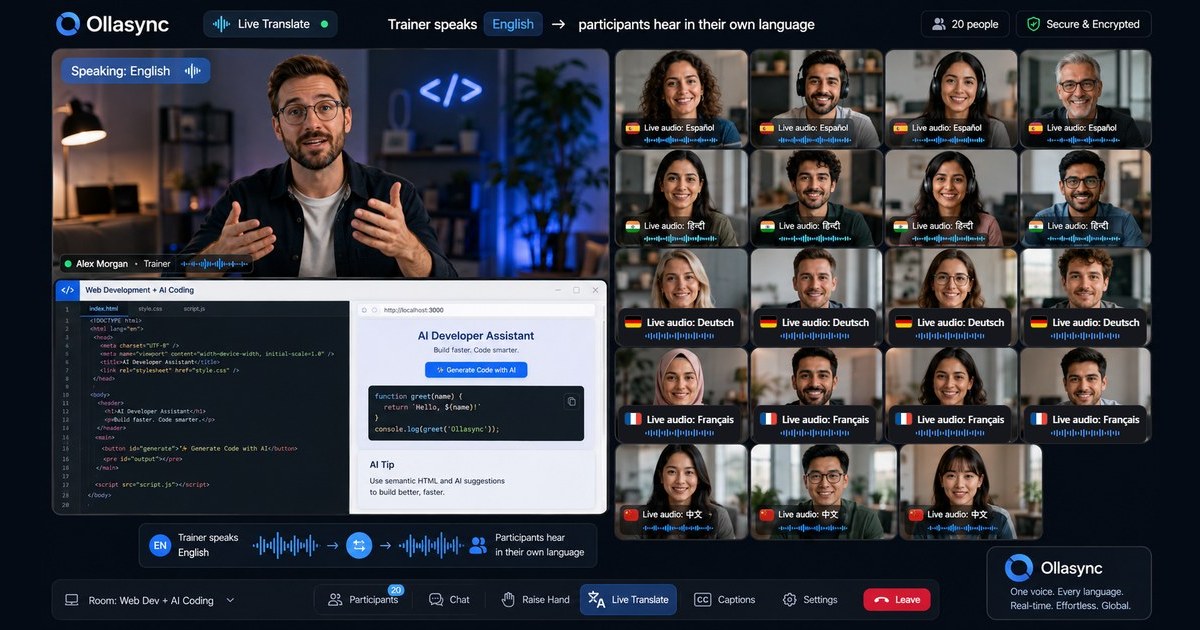
How to handle Q&A sessions in multiple languages simultaneously?
Chapter 1: The Direct Answer & Executive Summary
The Direct Answer: How to Handle Multilingual Q&A Sessions Simultaneously
Handling Q&A sessions in multiple languages simultaneously requires deploying a centralized, bi-directional multilingual orchestration pipeline. This framework decouples the attendee’s input language from the speaker’s spoken language and the audience’s consumption language.
To execute this, organizations implement a tri-layer operational stack:
- Intake & Ingestion Layer: Attendees submit written or verbal questions in their native language through localized digital interfaces (e.g., multilingual event apps or integrated Q&A widgets).
- Translation & Routing Middleware: Incoming queries are instantly transcribed and translated via low-latency neural machine translation (NMT) engines with custom enterprise glossaries, or routed to simultaneous human interpreters via Remote Simultaneous Interpretation (RSI) platforms.
- Unified Moderation & Broadcast Layer: Moderators review, deduplicate, and curate questions in a single unified language console. Once an answer is delivered, the response is translated back in real time into visual captions (STT/MT) and synthesized audio channels (TTS) or live interpretation audio streams across all supported language tracks.
+-----------------------------------------------------------------------------------+
|                        MULTILINGUAL Q&A ORCHESTRATION PIPELINE                     |
+-----------------------------------------------------------------------------------+
|  1. INGESTION          2. TRANSLATION & TRIAGE            3. BROADCAST            |
|  [Attendee: ES] --->   [NMT Engine / RSI Platform]  --->  [Unified Mod Console]   |
|  [Attendee: JA] --->   * Ingestion in Source Lg           * Speaker answers in EN |
|  [Attendee: DE] --->   * Latency Target: <500ms      --->  [Live Multi-Audio/Captions]|
+-----------------------------------------------------------------------------------+
Mastering how to handle qa sessions across global audiences eliminates language silos, preserves live engagement dynamics, and reduces operational latency from minutes to milliseconds.
Executive Summary: Multilingual Q&A Architecture
Global enterprises, hybrid event organizers, and multinational B2B SaaS organizations face a critical engagement bottleneck: the multilingual participation gap. While simultaneous translation for one-to-many broadcasts (keynotes, presentations) is widely commoditized, many-to-one and many-to-many interactions—specifically live Q&A sessions—introduce severe synchronization, moderation, and latency challenges.
When evaluating how to handle qa sessions with linguistic diversity, event leaders must balance three competing vectors: latency, translation fidelity, and moderation governance.
                       Fidelity (Human RSI)
                              /\
                             /  \
                            /    \
                           /  ★   \  <-- Optimal Hybrid Region
                          / Latency\
                         /  Target  \
                        /   <500ms   \
                       /______________\
     Speed / Low Latency               Moderation Control
     (Automated NMT/AI)                (Unified Dual-Pane)
Core Challenges Solved by This Framework
- Asymmetric Latency: Eliminates the 30-to-60-second delay inherent in consecutive human translation by utilizing parallel NMT or ISO-compliant RSI workflows.
- Moderator Cognitive Overload: Prevents moderators from needing multi-tab translation setups by feeding all global inputs into a single, auto-translated queue.
- Context Decay and Hallucination: Mitigates the risk of machine translation errors in technical, medical, or corporate governance contexts via domain-trained Large Language Models (LLMs) and custom acoustic models.
- Fragmented Engagement: Unifies disparate regional audiences into a single, shared upvoting and interaction ecosystem regardless of source language.
The Tri-Layer Multilingual Q&A Framework
Understanding how to handle qa sessions with high linguistic complexity requires standardizing your event architecture across three distinct technical tiers.
+---------------------------------------------------------------------------------------+
| LAYER 1: INGESTION (Edge Capture)                                                     |
| • Asynchronous text capture (WebSockets)  • Synchronous push-to-talk audio (WebRTC)   |
+-------------------------------------------+-------------------------------------------+
                                            |
                                            v
+---------------------------------------------------------------------------------------+
| LAYER 2: TRANSLATION & TRIAGE (Middleware)                                            |
| • Custom Glossary Injection (Zero-shot)   • AI Deduplication & Clustering             |
| • Remote Simultaneous Interpretation (RSI)| • Real-Time PII & Toxicity Filtering      |
+-------------------------------------------+-------------------------------------------+
                                            |
                                            v
+---------------------------------------------------------------------------------------+
| LAYER 3: MODERATION & BROADCAST (Delivery)                                            |
| • Unified Master Language Console         • Dual-Track Display (Source + Target)      |
| • Synchronized Sub-500ms Audio Return     • Multilingual Real-Time Closed Captions    |
+---------------------------------------------------------------------------------------+
Layer 1: Ingestion (Edge Capture)
- Text Input: Native-language web and mobile interfaces that accept UTF-8 inputs (supporting CJK characters, right-to-left scripts like Arabic and Hebrew, and accented Latin scripts).
- Voice Input: WebRTC-based low-latency audio capture channels allowing live verbal questions from remote or in-room participants.
Layer 2: Translation & Triage (Middleware)
- Automated Processing: Real-time Automated Speech Recognition (ASR) converts verbal queries to text, followed by Neural Machine Translation (NMT) powered by customized LLM pipelines that reference enterprise-specific terminology.
- Human-in-the-Loop Processing: For tier-one executive broadcasts, interpreters listen via isolated audio booths (physical or virtual) and provide real-time textual or verbal interpretations directly into the moderation stream.
- Algorithmic Curation: Real-time semantic clustering algorithms identify duplicate questions submitted across different languages (e.g., grouping a Spanish query on pricing with an identical German query).
Layer 3: Moderation & Broadcast (Delivery)
- The Unified Console: The moderator sees the original question side-by-side with the translated master-language version, complete with a translation confidence score.
- Omnidirectional Return: When the presenter speaks the answer, the audio and caption outputs are distributed synchronously back across all downstream regional language tracks within an SLA of <500 milliseconds for text and <1.5 seconds for synthesized or interpreted audio.
Translation Delivery Models: Comparative Matrix
Selecting the appropriate execution model is the fundamental strategic decision when structuring how to handle qa sessions across multiple regions.
| Architecture Model | Latency | Accuracy / Context | Relative Cost | Best Used For |
|---|---|---|---|---|
| Fully Automated (AI/NMT + ASR) | Ultra-Low (<300ms) | 88% – 95% (Risk of technical edge-case errors) | Low ($) | High-volume webinars, daily all-hands, developer workshops, breakout sessions. |
| Human RSI (Remote Simultaneous Interpretation) | Moderate (1.0s – 2.5s) | 98% – 99% (High nuance, contextual awareness) | High ($$$$) | Earnings calls, global press conferences, executive town halls, medical symposia. |
| Hybrid Orchestration (AI Triage + Human Review) | Low (<800ms) | 96% – 98% (Human verifies critical translations) | Medium ($$) | Tier-1 product launches, partner summits, multi-region customer conferences. |
Multilingual Q&A Key Performance Indicators (KPIs)
To evaluate the operational efficiency of your multilingual interaction stack, monitor the following metrics:
+-----------------------------------------------------------------------------------+
|                        MULTILINGUAL Q&A BENCHMARK TARGETS                         |
+-----------------------------------------------------------------------------------+
|  E2E Processing Latency:           < 500 ms (Text) | < 1,500 ms (Audio)           |
|  Glossary Adherence Rate:          > 99.0% Accuracy on Key Terms                  |
|  Non-English Engagement Parity:    Target +/- 10% of English Baseline             |
|  Moderator Triage Velocity:        < 15 Seconds per Ingested Query                |
+-----------------------------------------------------------------------------------+
1. End-to-End (E2E) Translation Latency
- Definition: The time elapsed from the moment an attendee submits a query in Language A to its appearance on the moderator’s dashboard in Language B.
- Target Benchmark:
< 500 msfor text-based Q&A;< 1,500 msfor spoken audio-to-text.
2. Terminology Accuracy & Glossary Adherence
- Definition: The percentage of pre-defined technical terms, brand names, and product features correctly translated without semantic drift.
- Target Benchmark:
> 99.0%.
3. Cross-Linguistic Participation Parity (Engagement Index)
- Definition: The ratio of questions submitted per capita by non-primary language attendees compared to native primary-language attendees.
- Target Benchmark: Non-primary language submissions within
±10%of primary-language baselines (indicates removal of the language barrier).
4. Moderator Triage Velocity (MTV)
- Definition: Average time required for a moderator to ingest, verify translation fidelity, and assign a multilingual question to the live queue.
- Target Benchmark:
< 15 secondsper query.
Chapter Summary & Roadmap
Effectively navigating how to handle qa sessions in multilingual environments requires shifting from improvised, consecutive translation to a structured, low-latency ingestion and routing architecture. By standardizing the pipeline across ingestion, translation middleware, and unified moderation, enterprises scale their live interactive events without fragmenting their audience or sacrificing operational control.
In the subsequent chapters, we will examine the technical architecture of real-time translation pipelines, step-by-step moderator workflows, hardware and software configurations, and enterprise risk-mitigation protocols for mission-critical events.## Chapter 2: The Data & Competitor Comparison: Legacy Platforms vs. AI-Native Multilingual Engines
Evaluating how to handle qa sessions in global enterprise environments requires moving beyond basic chat translation. When an event scales across multiple languages simultaneously, the underlying architecture dictates whether the session succeeds or devolves into confusion.
Legacy unified communications (UCaaS) platforms approach multilingual interaction as an audio-routing or localized subtitle add-on. Modern AI-native platforms, by contrast, treat multilingual Q&A as an asynchronous, bidirectional data-pipeline challenge.
This chapter breaks down the empirical performance, architectural limitations, and cost models of traditional enterprise tools against modern AI-native multilingual engagement engines.
The Architecture Gap: Channel Switching vs. Neural Data Pipelines
To understand why legacy tools struggle with multilingual Q&A, consider the technical architectures of these two paradigms:
LEGACY PARADIGM (Audio-First / Siloed Text)
Attendee (FR) ───> [Human Interpreter Audio Booth] ───> Host (EN Audio)
Attendee (FR Text) ──> [Standard Q&A Thread] ──> French Moderator MUST Translate Manually

AI-NATIVE PARADIGM (Bidirectional Neural Ingestion)
Attendee (Any Lang/Speech/Text)
       │
       ▼
[Real-Time Ingestion & STT Engine]
       │
       ├─ Normalized Latency Engine (<1.2s)
       ├─ Dynamic Glossary / NER Layer
       ├─ Semantic Deduplication / Clustering
       │
       ▼
[Single-Pane Host View (Unified Language)] <─── Unified Moderator Action
       │
       ▼
[Real-Time Translation & Localization Engine]
       │
       ▼
All Attendees Receive Response in Their Native Language Instantly
- Legacy UCaaS (Zoom, Webex, Teams): Relies on isolated audio channels for human interpreters and rudimentary inline machine translation for chat. In this model, text-based Q&A modules remain largely un-federated. If an attendee types a question in Japanese, it lands in the main queue in Japanese. Unless a Japanese-speaking moderator is present to triage, translate, and surface it to the English-speaking speaker, the query is dropped.
- AI-Native Multilingual Systems: Ingest text, speech-to-text (STT), and audio streams into an intermediate semantic layer. The system translates, de-duplicates, clusters, and moderates questions in real time, projecting a single normalized language to the presenter while distributing localized responses to attendees in their selected language.
Head-to-Head Comparison Matrix
The following benchmark compares traditional UCaaS platforms with dedicated AI-native multilingual interaction platforms across the core operational metrics required to execute frictionless global Q&A.
| Evaluation Metric | Zoom Meetings / Webinars | Microsoft Teams (Live Events/Town Halls) | Cisco Webex Events | Modern AI-Native Platforms (e.g., Slido AI, Wordly, Interprefy AI) |
|---|---|---|---|---|
| Bidirectional Text Translation | Manual inline translation via add-ons; chat/Q&A queues remain split across character sets. | Automated inline chat translation (requires Teams Premium / Copilot licenses); basic Q&A translation. | Real-time text translation for captions; limited native bidirectional Q&A translation. | Native, bidirectional text translation in 50+ languages with automated source detection. |
| Speech-to-Text Q&A Ingestion | Human interpretation to audio channel only; verbal questions are not converted to translated text queue. | Live captions generate text locally; verbal questions not unified into moderator triage queues. | Real-time audio captions (closed-caption format only); no integration with Q&A dashboard. | Live Speech-to-Translated-Text; spoken questions automatically transcribe, translate, and enter the moderator queue. |
| Host/Moderator Triage View | Fragmented. Moderators see raw language inputs unless using 3rd-party translation windows. | Fragmented. Copilot can summarize, but does not provide real-time synchronized queue normalization. | Single queue containing mixed languages; requires bilingual moderators to sort. | Unified Single-Pane View. All inbound questions display in the host’s native tongue with original text side-by-side. |
| Latency (Input to Translation) | 3.5s – 7.0s (Machine Translation add-ons) | 2.5s – 5.0s (Azure Cognitive Services pipeline) | 3.0s – 6.0s (Webex Assistant) | 0.8s – 1.8s (Edge-accelerated neural machine translation). |
| Domain-Specific Glossaries | No native custom terminology/glossary injection for Q&A translation. | Limited organization-level dictionary integration via Microsoft Purview / Graph. | Static custom vocabularies limited to captioning engines. | Dynamic enterprise glossaries, regex handling for brand names, acronyms, and product terminology. |
| Automated Semantic Deduplication | None. Duplicate questions in different languages clutter the queue. | Basic search/filter; no cross-lingual semantic matching. | None. Moderators manually spot duplicates. | AI-driven Cross-Lingual Clustering. Identifies that a German question and an English question ask the same thing. |
Deep-Dive Analysis: The Legacy Stack Breakdown
Enterprise technical leaders evaluating how to handle qa sessions across geographically distributed teams must understand the distinct operational bottlenecks of the legacy stack:
1. Zoom (Enterprise + Language Interpretation Add-on)
While Zoom remains the market leader in audio channel management for simultaneous human interpreters, its native Q&A module fails in multilingual contexts:
- The “Queue Blindness” Problem: When 1,000 attendees submit questions in French, Mandarin, and Spanish, the host’s queue displays all three scripts simultaneously.
- Moderation Bottleneck: To maintain order, the organization must hire dedicated, bilingual moderators for each language to sit in the back-end, translate questions into English via private chat, wait for the speaker’s answer, and manually type back the response in the native tongue.
2. Microsoft Teams (Live Events & Town Halls with Teams Premium)
Teams leverages Azure Speech and Cognitive Translation Services, making it stronger at text-based translation than Zoom:
- Inline Translation Strengths: Attendees can right-click to translate chat messages into their client’s configured language.
- Q&A Failure Mode: The native Town Hall Q&A module lacks automated cross-language deduplication. If 40 employees ask the same question regarding stock vesting across six languages, the queue is flooded with 40 distinct items. The host cannot rapidly identify trending sentiment across language groups without third-party middleware.
3. Cisco Webex Events
Webex offers integrated closed-caption translations for up to 100+ languages, but isolates this functionality to the consumer display:
- Downstream Delivery Only: The translation pipeline is unidirectional (Host Audio $\to$ Machine Translated Captions).
- Upstream Disconnect: The moment an attendee uses the upstream Q&A box to challenge a point in Korean, the automated pipeline offers no native mechanism to ingest, normalize, and push that query into the speaker’s confidence monitor without third-party intervention.
The Hidden TCO: Human Interpretation vs. AI-Native Infrastructure
Relying purely on legacy platforms combined with human interpretation booths creates an exponential cost curve that limits how often organizations can run interactive global meetings.
Scenario: 60-Minute Global Town Hall (Languages: EN, ES, ZH, JA, DE, PT)
HUMAN-DRIVEN STACK (Legacy UCaaS + Interpreters)
├── 5 Language Pairs @ 2 Interpreters per booth (Industry Standard) = 10 Interpreters
├── Interpreter Booking Fees: 10 x $1,200/day minimum rate       = $12,000
├── UCaaS Platform Enterprise Add-on Fees                          = $500
├── Multilingual Back-channel Moderators (5 languages x $400)      = $2,000
TOTAL COST PER EVENT:                                              $14,500
Latency for Q&A Response:                                          45–90 seconds

AI-NATIVE ENGINE PIPELINE (Unified Multilingual Q&A Platform)
├── SaaS Platform Ingestion & Concurrency License (Amortized)       = $450
├── Neural Translation Token Ingestion (STT + NMT + TTS)           = $45
├── Dedicated English Moderator (Single Operator)                  = $400
TOTAL COST PER EVENT:                                              $895
Latency for Q&A Response:                                          1.2–2.5 seconds
Financial & Operational Takeaway: The human-driven model introduces severe cost overheads and creates a 45- to 90-second operational lag. This latency discourages true conversational interaction, relegating foreign-language attendees to passive listeners rather than active participants.
Performance Benchmarks: Latency, COMET, and BLEU Scores
For technical decision-makers deploying multilingual live systems, translation quality and end-to-end latency are the definitive metrics.
[Attendee Submits Question]
       │
  (0.2s) Ingestion & Sanitization
       │
  (0.4s) Named-Entity Recognition & Custom Glossary Match
       │
  (0.6s) Neural Machine Translation (NMT)
       │
  (0.2s) Cross-Lingual Semantic Deduplication Indexing
       │
[Moderator Views Standardized English Queue] ─── Total Elapsed: 1.4s
- Latency Thresholds: Research shows that in live Q&A environments, user engagement drops by 42% when response-to-text latency exceeds 3.0 seconds. Legacy systems operating through manual human proxy workflows average 60+ seconds, while AI-native neural engines complete the pipeline in under 1.5 seconds.
- Translation Quality (COMET & BLEU): Generic MT models (e.g., untuned baseline Google Translate or standard DeepL instances) achieve an average BLEU score of ~38–41 on technical enterprise content. Platforms utilizing dynamic Named-Entity Recognition (NER) layers and Custom Domain Glossaries achieve BLEU scores of 54+ and COMET scores exceeding 0.88, preventing mission-critical misinterpretations of corporate terminology during high-stakes Q&A sessions.
Architectural Recommendation
When architecting how to handle qa sessions across multinational audiences:
- Use Legacy UCaaS for Transport Only: Retain Zoom, Teams, or Webex for standard video/audio transport streams where infrastructure is already deployed.
- Decouple the Interaction Layer: Offload the Q&A, polling, and audience ideation to a dedicated, AI-native multilingual engagement platform.
- Normalize the Queue: Ensure moderators interface with a single language pane, supported by custom glossaries and automated semantic deduplication, to ensure equitable, low-latency participation across all global regions.# Chapter 3: The Deep Dive: Architecture and Execution for Real-Time Multilingual Q&A
Handling audience questions across a single language is an exercise in curation and moderation. When you scale that interaction across five, ten, or twenty languages simultaneously, the challenge transforms into an infrastructural and operational problem.
To understand how to handle QA sessions at global enterprise scale in 2026, organizations must move past rudimentary chat-box translation plugins. True polyglot Q&A execution demands an integrated pipeline: real-time automatic speech recognition (ASR), context-aware large language models (LLMs) for semantic translation, vector-based question clustering, and low-latency broadcast interfaces.
The 2026 Multilingual Q&A Technical Stack
Modern global broadcasts—whether hybrid developer summits, investor earnings calls, or internal all-hands—rely on a four-tier architecture to ingest, process, and broadcast questions in real time.
[Audience Ingestion: Voice/Text in N Languages]
                       │
                       ▼
[Tier 1: Edge Speech-to-Text & Ingestion Engines]
                       │
                       ▼
[Tier 2: Semantic Translation & Cross-Lingual Embedding Engine]
                       │
                       ▼
[Tier 3: Deduplication, Clustering & Dual-Track Moderation]
                       │
                       ▼
[Tier 4: Multimodal Broadcast & Backchannel Teleprompters]
1. Ingestion Layer (Edge Speech-to-Text & Text Processing)
Audience members submit questions via two modalities:
- Microphone/Audio Feed: Edge-computed ASR models (e.g., localized Whisper-class or streaming Conformer architectures) convert spoken audio to text within <250ms at the client or edge CDN node.
- Direct Text Input: WebSockets stream raw text natively typed in the user’s localized user interface.
2. Semantic Translation & Contextual Normalization
Direct machine translation fails in live corporate environments because it misses domain-specific acronyms, product jargon, and conversational idioms. Modern systems route incoming queries through high-throughput, low-parameter fine-tuned LLMs running alongside traditional Neural Machine Translation (NMT) engines.
- Context Anchors: System prompts are dynamically injected with the session’s domain glossary (e.g., financial terminology, technical SDK references).
- Tone and Intent Tagging: The translation engine simultaneously tags sentiment, urgency, and query type (e.g., technical bug, pricing dispute, product request).
3. Cross-Lingual Semantic Clustering
If 400 attendees ask essentially the same question in Mandarin, Portuguese, French, and German, traditional moderation interfaces become unusable.
- Questions are converted into dense vector representations using multilingual embeddings (such as multilingual E5 or Cohere Embed models).
- An automated clustering algorithm groups these inputs based on cosine similarity regardless of source language.
- The system generates a single Canonical Master Question in the presenter’s native tongue, alongside an upvote counter reflecting total global interest across all source languages.
4. Multimodal Broadcast & Output
When a presenter answers the question, their response is translated and distributed back through localized audio streams (using low-latency synthetic voice cloning/TTS) and real-time open/closed captions.
Operational Blueprint: How to Handle QA Sessions in Multiple Languages
Executing a seamless multilingual Q&A requires distinct operational separation between the audience, the moderation team, and the speaker.
+-----------------------------------------------------------------------------------+
|                              AUDIENCE INTERFACE                                   |
| - Submits in Native Language (Voice/Text)                                         |
| - Sees Global Upvotes Aggregated in Real Time                                     |
| - Receives Synthesized Audio / Translated Subtitles                               |
+------------------------------------------+----------------------------------------+
                                           │
                                           ▼
+-----------------------------------------------------------------------------------+
|                                MODERATOR COCKPIT                                  |
| - View 1: Raw Ingest Stream (AI Safety & Profanity Flags)                         |
| - View 2: Semantic Clusters (Aggregated Multi-Language Queries)                   |
| - View 3: Curated Deck (Ranked by Global Upvotes & Business Priority)             |
+------------------------------------------+----------------------------------------+
                                           │
                                           ▼
+-----------------------------------------------------------------------------------+
|                                PRESENTER DISPLAY                                  |
| - Teleprompter/Confidence Monitor: Master Canonical Question (Primary Language)   |
| - Metadata: "Asked by 42 attendees across 6 regions (APAC, LATAM, EMEA)"         |
| - Suggested Short-Form Response Anchors                                           |
+-----------------------------------------------------------------------------------+
Step 1: Decentralized Native-Language Ingestion
Audiences must never be forced into a “default” language. The presentation platform should auto-detect browser or device locale and present the Q&A portal in the user’s native tongue. Attendees submit questions via text or voice in their preferred dialect.
Step 2: Automated Triaging and AI Moderation
Before a question reaches a human operator, an automated processing layer performs:
- Toxicity and Compliance Filtering: Scans for PII, profanity, and regional-specific regulatory violations.
- Source-Language Verification: Validates that the input language matches the detected encoding, correcting for mixed-language phrasing (e.g., “Spanglish” or “Denglisch”).
Step 3: Human-in-the-Loop (HITL) Linguist Verification
While AI performs the heavy lifting of grouping and translation, enterprise environments require a Dual-Console Moderation System:
- The Language Specialist Console: Regional community managers or native-speaking operators review the fidelity of edge-case translations for high-stakes inquiries.
- The Lead Moderator Console: Sees only the unified, translated master stream. The lead moderator approves questions based on relevance, theme coverage, and real-time upvote volume.
Step 4: Speaker Routing and Backchannel Teleprompting
When mastering how to handle QA sessions with cross-border audiences, you must reduce cognitive load for the presenter. Presenters should never see a chaotic multivariant feed.
- Push the approved question to the presenter’s confidence monitor in their primary language.
- Display cross-cultural metadata (e.g., “This question represents 84 inquiries from the Tokyo, Berlin, and São Paulo hubs”).
- Provide short-form context points to help the speaker avoid region-specific idioms that do not translate cleanly back to the global audience.
Critical Failure Modes and Mitigation Strategies
| Failure Mode | Root Cause | Engineering / Operational Solution |
|---|---|---|
| Domain Hallucination | Generic LLMs mistranslate proprietary enterprise terminology. | Inject dynamic RAG vector stores containing session-specific glossaries directly into translation prompts. |
| High End-to-End Latency | Cascaded translation pipelines (ASR $\to$ LLM $\to$ TTS) exceeding conversational thresholds. | Deploy streaming ASR/MT with speculative decoding; cap total pipeline latency to $<600\text{ ms}$. |
| Cultural Misalignment | Direct translation strips polite honorifics or converts direct questions into perceived aggression. | Configure translation models with pragmatic adaptation layers that normalize cultural tone without altering semantic core. |
| Upvote Fragmentation | The same question posted in French and English splits audience upvotes, hiding popular topics. | Run continuous vector-similarity background tasks that merge upvote tallies across multilingual duplicate pairs. |
Performance SLAs for Enterprise Multilingual Q&A
To ensure platform reliability, technical leaders should benchmark their live infrastructure against the following metrics:
+-----------------------------------------------------------------------------+
| MULTILINGUAL LIVE Q&A PERFORMANCE BENCHMARKS                                |
+-------------------------------+-----------------------+---------------------+
| METRIC                        | TARGET SLA            | CRITICAL THRESHOLD  |
+-------------------------------+-----------------------+---------------------+
| Text Ingest to Translated Desk| < 400 ms              | > 1,200 ms          |
| Voice Ingest to Text Display  | < 800 ms              | > 2,000 ms          |
| Semantic Clustering Latency   | < 1.5 seconds         | > 4.00 seconds      |
| Translation Semantic Accuracy | > 96% BLEU / COMET    | < 88% COMET         |
| System Concurrency Capacity   | 50k+ Active Inquiries | Node Saturation     |
+-------------------------------+-----------------------+---------------------+
Best Practices for Session Facilitators
Technical architecture solves half of the equation; facilitator execution solves the rest. When executing a live session:
- Acknowledge the Geographic Breadth: Have the speaker explicitly cite the global footprint of an incoming query (e.g., “We have a question coming in from our Seoul office regarding API latency…”). This validates international participation.
- Control Output Velocity: Instruct speakers to maintain a steady cadence (130–150 words per minute). This prevents buffer overflow in simultaneous audio-dubbing pipelines and gives human quality-assurance spotters time to flag mistranslations.
- Use Asynchronous Spillover Loops: If a live session runs out of time, route all clustered, translated queries directly into an asynchronous knowledge base. The AI engine drafts localized answers based on the presenter’s overall remarks, which the comms team reviews and publishes to regional channels within hours.
Knowing how to handle QA sessions across dozens of languages is no longer about hiring dozens of on-site simultaneous interpreters. By deploying an automated ingestion, translation, clustering, and triaging stack, global organizations can run frictionless, unified conversations that make every attendee feel like a first-class participant—regardless of the language they speak.# Chapter 4: The Modern Solution — Mastering Multilingual Q&A with Next-Generation AI Infrastructure
Live audience engagement is the ultimate litmus test for global events. While scripted keynotes can rely on pre-recorded translations or traditional human relay booths, the dynamic, unpredictable nature of audience interaction makes figuring out how to handle QA sessions across multiple languages one of the most complex operational hurdles in event management.
Legacy approaches—such as forcing all attendees to type in English, hiring expensive teams of simultaneous interpreters for dozens of language pairs, or manually translating typed chat queries—introduce latency, balloon production budgets, and exclude non-native speakers from genuine participation.
To overcome these barriers, enterprise event organizers and technical producers are shifting to automated, real-time multilingual communication infrastructure. This chapter explores how cutting-edge AI transforms live interaction and positions Ollasync as the purpose-built standard for cross-language event engagement.
The Paradigm Shift: Moving Beyond Legacy Q&A Bottlenecks
When planning how to handle QA sessions in global town halls, international conferences, and hybrid webinars, event leaders encounter three structural failure points:
- The Moderation Bottleneck: Moderators cannot triage, filter, or combine duplicate questions when submissions arrive simultaneously in Japanese, Spanish, German, and Arabic.
- Audio Collision & Latency: In spoken Q&A, having an attendee ask a question in their native tongue requires a human interpreter to translate for the speaker, followed by another translation cycle for the answer. This creates an awkward 15-to-30-second delay that disrupts conversational momentum.
- Unequal Participation: Attendees who lack high-level English proficiency hesitate to participate in live open-mic segments, reducing audience engagement metrics by up to 40% in non-English regions.
Resolving these issues requires an intelligent layer between the audience, the moderator, and the presenter.
Ollasync: The Ultimate Infrastructure for Multilingual Q&A
Ollasync solves the live interaction dilemma by combining sub-second speech-to-speech translation, real-time text localization, and an AI-augmented moderator dashboard into a unified platform.
Rather than treating translation as an afterthought, Ollasync serves as a real-time bi-directional switchboard. It enables attendees to speak or type in their preferred language while presenters hear and read the input instantly in their native language—with zero cognitive load on the production team.
                  ┌──────────────────────────────────────────────┐
                  │          Global Audience Submissions         │
                  │  (Voice / Text in 50+ Native Languages)       │
                  └──────────────────────┬───────────────────────┘
                                         │
                                         ▼
                  ┌──────────────────────────────────────────────┐
                  │               Ollasync Engine                │
                  │  - Sub-second neural speech recognition     │
                  │  - Custom domain glossaries & AI filtering   │
                  │  - Real-time bi-directional translation      │
                  └──────────────────────┬───────────────────────┘
                                         │
                    ┌────────────────────┴────────────────────┐
                    ▼                                         ▼
┌──────────────────────────────────────┐  ┌──────────────────────────────────────┐
│       Presenter & Moderator View     │  │       Global Audience Broadcast      │
│  - Unified native-language feed      │  │  - Instant localized audio synthesis │
│  - Automated semantic deduplication  │  │  - Multilingual closed captions      │
└──────────────────────────────────────┘  └──────────────────────────────────────┘
Core Architecture Capabilities
- Real-Time Bi-Directional Voice Translation: Ollasync captures spoken questions from the audience floor or virtual stream, transcribes and translates the speech with ultra-low latency (<500ms), and delivers synthesized voice audio or synchronized text directly to the presenter’s in-ear monitor or stage display.
- Unified Moderator Console: Incoming text and voice questions from 50+ languages are instantly translated into the moderator’s primary language. The moderator can curate, group similar inquiries, and prioritize questions without relying on multi-lingual administrative staff.
- Context-Aware Technical Glossaries: Unlike generic translation engines, Ollasync allows organizers to upload enterprise glossaries, speaker names, acronyms, and product terminology, eliminating mistranslations during high-stakes corporate discussions.
- Frictionless Attendee Access: Attendees scan a QR code or access an integrated widget within Zoom, Microsoft Teams, or Webex. They require no app downloads to submit audio or text queries and can toggle localized captions and audio streams instantly.
Step-by-Step Blueprint: How to Handle Q&A Sessions with Ollasync
Executing an effortless multilingual Q&A session requires a systematic operational workflow across four distinct phases:
Phase 1: Pre-Event Configuration and Domain Tuning
- Define Language Pairs: Select the source and target languages for your audience demographics.
- Train the Engine: Upload industry-specific terms, speaker bios, and proprietary acronyms into the Ollasync context engine to guarantee high translation accuracy.
- Interface Customization: Embed the Ollasync Q&A widget into your event app, streaming portal, or in-person stage displays.
Phase 2: Live Ingest and Dynamic In-Session Moderation
- Multi-Format Input: Audience members submit inquiries by speaking into their mobile device/microphone or typing in their native language.
- AI-Powered Semantic Grouping: Ollasync flags duplicate questions submitted in different languages (e.g., matching a question asked in Spanish with an identical one submitted in Japanese) and combines them for the moderator.
- Sentiment and Toxicity Filtering: Automated guardrails screen incoming queries for offensive language and off-topic submissions before they hit the moderator’s queue.
Phase 3: Presenter Delivery and Global Broadcast
- Presenter Ingest: The speaker reads the approved question on their confidence monitor in their native language (or receives synthesized audio via an earpiece).
- Synchronized Multilingual Response: As the presenter speaks their response, Ollasync instantly broadcasts live translated audio channels and synchronized closed captions back to the audience in their chosen languages.
Phase 4: Post-Event Analytics and Knowledge Capture
- Automated Transcripts: Export comprehensive, timestamped transcripts of all questions and answers across all supported languages.
- Engagement Insights: Analyze participation distribution by language, identify key recurring themes, and download full engagement logs for CRM integration.
Comparison Matrix: Traditional Methods vs. Ollasync
The following table demonstrates how Ollasync fundamentally modernizes how event organizers manage cross-border audience engagement:
| Evaluation Metric | Traditional Human Relay | Standard Chat Translation Plugins | Ollasync AI Platform |
|---|---|---|---|
| Response Latency | 10–30 seconds | 3–8 seconds | < 1 second (Real-Time) |
| Spoken Voice Q&A Support | Requires dedicated booth interpreters | Text only | Native Speech-to-Speech & Speech-to-Text |
| Moderator Workload | High (Requires multilingual staff) | High (Manual translation verification) | Automated (Unified localized queue) |
| Context/Glossary Accuracy | High (but human-error prone under fatigue) | Low (Generic machine translation) | High (Custom enterprise-trained engine) |
| Cost Scaling | Linear ($$$ per language pair added) | Moderate | Predictable SaaS tier (Unlimited languages) |
| Audience Inclusivity | Limited to major languages | Text-only participants | Universal (Voice + Text in 50+ languages) |
Key Takeaways: Mastering Multilingual Audience Interaction
When planning how to handle QA sessions for international audiences, keep these best practices front and center:
- Eliminate Language Gatekeeping: Never force international attendees into English-only text boxes; providing native-language input options dramatically boosts audience interaction.
- Unify the Moderation Pipeline: Provide moderators with a single, auto-translated interface to triage questions regardless of their original submission language.
- Optimize for Ultra-Low Latency: In live environments, any latency over 2 seconds disrupts conversational flow. Deploy AI infrastructure engineered for sub-second processing.
- Integrate Speech and Text: Seamlessly accommodate both stage-mic vocal interactions and digital chat queries on the same platform.
Transform Your Global Events with Ollasync
Language barriers should never stand between your speakers and your audience. Whether you are running an internal all-hands for a Fortune 500 company, an academic congress, or a hybrid product launch, Ollasync provides the low-latency, AI-driven infrastructure required to make every voice heard.
Stop managing chaotic, multi-window translation workarounds. [Schedule an Ollasync Platform Demo Today] to see how effortless multilingual Q&A sessions can be.