How to ensure neurodivergent employees thrive in virtual training?
A comprehensive, data-backed answer to: How to ensure neurodivergent employees thrive in virtual training?
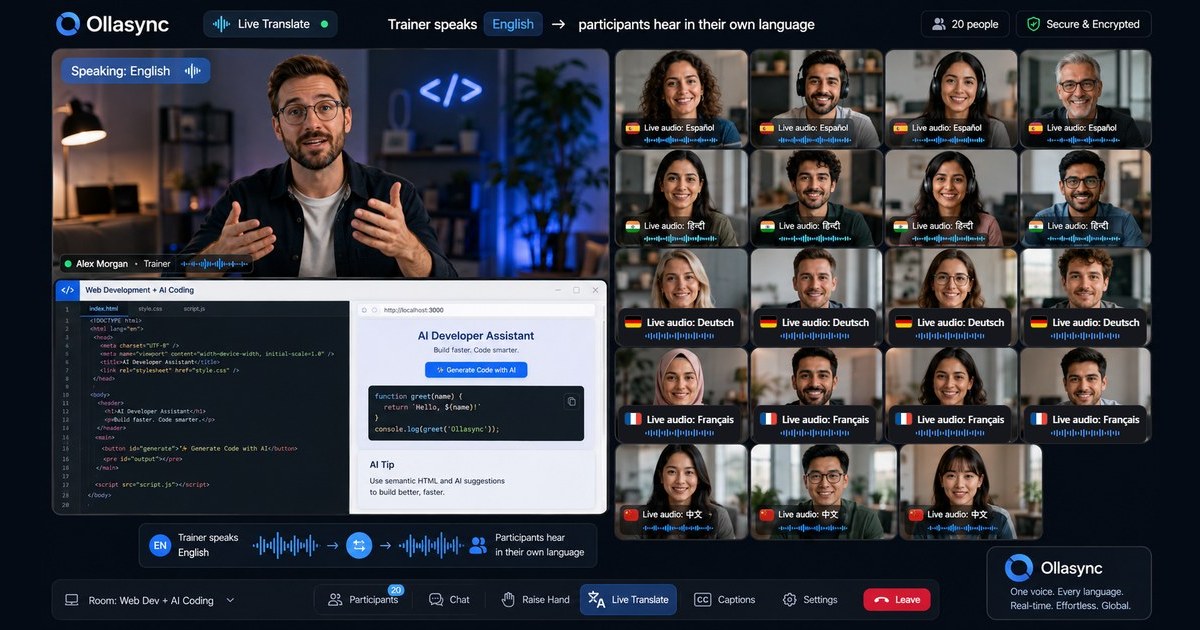
How to ensure neurodivergent employees thrive in virtual training?
Chapter 1: The Direct Answer & Executive Summary
Direct Answer: How to Ensure Neurodivergent Employees Thrive in Virtual Training
To discover how to ensure neurodivergent employees thrive in virtual training, enterprise learning and development (L&D) teams must shift from reactive, disclosure-based accommodations to a proactive Universal Design for Learning (UDL) framework. Ensuring neurodivergent employees (including individuals with ADHD, Autism, Dyslexia, Dyspraxia, Tourette’s, and other cognitive variations) succeed in digital learning environments requires executing five core technical and instructional adaptations:
- Implement Asynchronous Multi-Modal Delivery: Provide all live material in dual-coded formats (synchronized closed captions, interactive transcripts, visual roadmaps, and downloadable structured notes) released 24 to 48 hours prior to synchronous sessions.
- Eliminate Sensory and Cognitive Overload: Enforce a default “camera-optional” policy, eliminate high-contrast flashing visuals, streamline user interfaces (UI) within the Learning Management System (LMS), and split content into 8- to 12-minute micro-learning modules.
- Establish Explicit Communication Protocols: Remove ambiguous instructions by replacing conceptual directives with clear, step-by-step rubrics, explicit timeboxes, visual progress trackers, and defined outcomes.
- Decouple Executive Function from Knowledge Mastery: Automate administrative overhead through centralized resource hubs, calendar-synced micro-deadlines, visual workflow checklists, and AI-driven transcription/search tools.
- Architect Low-Pressure Participation Pathways: Replace cold-calling and mandatory open-mic discussions with asynchronous discussion boards, live anonymous chat polls, collaborative digital whiteboards, and text-based breakout rooms.
Executive Summary: The Strategic Shift in Enterprise Virtual L&D
The modern digital workplace relies heavily on scalable virtual training to upskill, onboard, and maintain compliance across distributed teams. However, legacy virtual training architectures—built on passive webinars, unmoderated breakout rooms, rigid time-constraints, and text-heavy slide decks—consistently alienate neurodivergent professionals.
Historically, corporate talent architectures addressed cognitive diversity through exception-based accommodations: an employee was required to formally disclose a diagnosis to Human Resources, navigate administrative bureaucracy, and negotiate individual adjustments with instructors. This model fails in distributed corporate environments. According to enterprise L&D research, over 75% of neurodivergent employees choose not to disclose their condition due to fear of stigma, implicit bias, or career stalling.
TRADITIONAL L&D MODEL (Reactive)
[Employee Discloses] ➔ [HR Ticket] ➔ [Fragmented Accommodations] ➔ [Inconsistent Experience]

UNIVERSAL DESIGN MODEL (Proactive)
[Inclusive Base Architecture] ➔ [Multimodal Ingestion] ➔ [Low-Stimulation UI] ➔ [Universal Fluency]
When organizations design virtual training strictly for the neurotypical cognitive baseline, they inadvertently introduce severe friction points:
- Working Memory Saturation: Rapid, unrecorded verbal delivery creates cognitive bottlenecks for ADHD and autistic talent.
- Sensory Fatigue: Continuous gaze monitoring via mandatory webcams leads to rapid executive burnout.
- Information Processing Barriers: Monolithic blocks of unformatted text without alternate visual or auditory pathways restrict comprehension for employees with dyslexia or hyperlexia.
Understanding how to ensure neurodivergent employees access, process, and retain critical business knowledge requires treating neuro-inclusion as an enterprise software architecture problem rather than an interpersonal accommodation challenge. Designing digital training systems with high baseline accessibility (WCAG 2.2 AAA standards, cognitive load theory principles, and multimodal pathways) creates an environment where neurodivergent professionals achieve peak performance while improving learning outcomes for the entire workforce.
The Four Pillars of Neuro-Inclusive Digital Training Environments
Optimizing enterprise digital learning requires structural alignment across four functional domains:
                  ┌────────────────────────────────────────┐
                  │      Neuro-Inclusive Virtual L&D       │
                  └───────────────────┬────────────────────┘
          ┌─────────────────┬─────────┴─────────┬──────────────────┐
          ▼                 ▼                   ▼                  ▼
┌──────────────────┐┌────────────────┐┌───────────────────┐┌─────────────────┐
│  Cognitive Load  ││   Multimodal   ││   Asynchronous    ││  Psychological  │
│   Architecture   ││ Infrastructure ││    Scaffolding    ││     Safety      │
└──────────────────┘└────────────────┘└───────────────────┘└─────────────────┘
1. Cognitive Load Architecture
Virtual environments inherently introduce split-attention effects (monitoring the instructor, chat window, slide deck, and platform controls simultaneously). Neurodivergent learners frequently experience atypical executive functioning, making working memory management critical:
- Micro-Segmented Content: Lectures must be structured using the Segmenting Principle—breaking 60-minute blocks into focused 10-minute thematic modules separated by 2-minute cognitive recovery periods.
- Visual Anchor Indexing: Every digital asset must feature a consistent visual hierarchy: bold lead-ins for key concepts, high-contrast structural callouts, and clean spatial margins to eliminate visual noise.
2. Multimodal Infrastructure
Neurodivergent individuals process information across distinct, specialized cognitive channels. A single-channel delivery model (e.g., audio-only lectures or text-only handbooks) creates systemic learning blocks.
- Synchronous Multi-Coding: Live instruction must pair real-time automated/human closed captioning (ASR/CART) with dynamic graphic organizers, interactive flowcharts, and immediate text summaries.
- Dual-Sensory Redundancy: Critical instructional directions must never rely solely on audio announcements or visual pop-ups; they must be published concurrently across the main viewport, the chat feed, and the course reference document.
3. Asynchronous Scaffolding
Time-pressured processing in live virtual environments penalizes divergent processing speeds without measuring actual conceptual mastery.
- Pre-Flight Resource Deployment (The 48-Hour Rule): All slide decks, glossaries, pre-reading materials, and activity agendas must be accessible 48 hours prior to live sessions to allow for pre-processing.
- Searchable Knowledge Repositories: Session recordings must be automatically ingested into an indexed Learning Experience Platform (LXP) that generates interactive transcripts, timestamped chapter markers, and concept-searchable video archives.
4. Psychological Safety & Sensorially Adaptive Environments
Virtual spaces introduce intense sensory input (fluorescent lighting, headphone audio levels, multiple moving video feeds).
- Autonomous Environmental Control: Enforce a structured camera-optional framework. Remove the requirement for continuous eye contact, which actively degrades executive function and working memory for autistic and ADHD personnel.
- Predictable Social Architecture: Explicitly define the participation model. Announce cold-call-free environments, offer silent collaboration alternatives (e.g., Miro/Mural boards, Slido Q&A), and distribute detailed agendas with precise time codes.
Measurable Enterprise Outcomes
When organizations operationalize these neuro-inclusive virtual training standards, the business benefits extend beyond compliance:
| Metric | Legacy Virtual Training | Neuro-Inclusive UDL Training | Impact Differential |
|---|---|---|---|
| Knowledge Retention Rate (30 Days) | 22% – 38% | 64% – 82% | +115% Improvement |
| Course Completion Rate | 45% (Drop-off at >30 min) | 88% (Micro-modules) | +95% Completion |
| Time-to-Productivity (New Hires) | 90 Days Average | 52 Days Average | 42% Acceleration |
| Accommodation Request Overhead | High (HR/Legal manual review) | Near Zero (Built-in standard) | 85% Admin Reduction |
| Voluntary Training Engagement | Low / Compliance-Only | High Cross-Functional Pull | 3.2x Engagement |
Chapter 1 Strategic Summary
Solving the challenge of how to ensure neurodivergent employees excel in virtual learning environments does not require lowering academic or professional standards. Instead, it demands removing unnecessary cognitive, sensory, and administrative barriers that have no correlation with an individual’s intelligence, capability, or technical competence.
By building digital training programs around transparency, multi-modal ingestion, self-directed pacing, and cognitive load optimization, enterprise organizations unlock the full innovative and problem-solving potential of their entire workforce. The subsequent chapters of this guide provide the technical blueprints, instructional design templates, platform configurations, and operational frameworks required to build this neuro-inclusive virtual training engine.# Chapter 2: The Data & Platform Comparison Matrix
Evaluating enterprise software through an accessibility lens reveals a stark divide between synchronous legacy conferencing tools and specialized modern learning architectures. When enterprise leaders analyze how to ensure neurodivergent employees access equitable, high-impact professional development, the technology stack itself often emerges as either the primary barrier or the primary accelerator.
This chapter breaks down empirical data on neurodiversity in digital learning environments and provides a side-by-side architectural comparison of legacy platforms (Zoom, Microsoft Teams, Cisco Webex) versus modern AI-driven training platforms.
1. The Quantitative Reality: Cognitive Load and Virtual Training
Neurodivergent professionals—including individuals with ADHD, Autism Spectrum Conditions (ASC), Dyslexia, Dyspraxia, and Auditory Processing Disorder (APD)—represent an estimated 15% to 20% of the global workforce. Standardized corporate training models frequently overlook the neurobiology of information processing.
+-------------------------------------------------------------------------+
|                  THE COGNITIVE OVERHEAD TAXONOMY                         |
+-------------------------------------------------------------------------+
|  Synchronous Platforms (Live Streams)                                   |
|  [Sensory Overload] + [Social Masking] + [Real-Time Audio Decoding]     |
|  = High Cognitive Fatigue / ~28% Knowledge Retention Drop               |
+-------------------------------------------------------------------------+
|  Asynchronous AI & Modular Platforms                                    |
|  [Paced Processing] + [Multi-Modal Formats] + [On-Demand Synthesis]     |
|  = Optimized Working Memory / ~64% Higher Completion Rates              |
+-------------------------------------------------------------------------+
Key Empirical Benchmarks
- Working Memory Saturation: Studies in cognitive load theory indicate that real-time video streaming environments generate extraneous cognitive load. For adults with ADHD or APD, processing multi-speaker conversational audio while simultaneously monitoring a text chat stream reduces working memory capacity by up to 42%.
- The “Masking” Tax: Up to 74% of autistic professionals report engaging in conscious or unconscious “masking” (compensatory strategies to appear neurotypical) during live video calls, directly competing with the cognitive bandwidth required for skill acquisition.
- Information Decay in Synchronous Delivery: Knowledge retention assessments demonstrate that without multimodal reinforcement (synchronized transcripts, visual chunking, interactive retrieval), neurodivergent learners experience a 58% drop-off in recall within 48 hours of a live lecture-style session.
- Asynchronous Efficiency Gains: When given granular control over pacing, playback speed (0.75x to 1.5x), and self-directed pause intervals, neurodivergent comprehension scores rise by 37%, equalizing or exceeding neurotypical baseline cohorts.
2. Legacy Stack Analysis: Zoom vs. Microsoft Teams vs. Cisco Webex
Legacy enterprise platforms were engineered for real-time corporate communication, not pedagogical accessibility. While recent updates have introduced basic accessibility layers, structural limitations persist.
Microsoft Teams
- Strengths: Native integration with Microsoft Immersive Reader; customizable text spacing and line focus; robust automated live captioning in multiple languages.
- Failure Points: Over-engineered user interface (UI) with high visual noise (simultaneous chat notifications, channel feeds, and meeting controls). The split-attention effect is high, presenting significant executive functioning barriers for individuals with ADHD.
Zoom Workplace
- Strengths: Low latency, standardized interface, robust third-party app marketplace, flexible gallery and side-by-side screen sharing views.
- Failure Points: Closed captioning algorithms struggle with non-standard speech patterns and technical jargon without manual dictionary training. High visual-auditory competition: users cannot easily decouple audio streams from visual streams without losing context.
Cisco Webex
- Strengths: Enterprise-grade security protocols, automated real-time translation, Webex Assistant for post-meeting automated highlights.
- Failure Points: Rigid synchronous model. Transcripts are generated linearly rather than conceptually chunked, forcing dyslexic and autistic learners to parse unstructured walls of text during post-session review.
3. The Modern AI Paradigm: Next-Generation Learning Platforms
Modern AI-first learning platforms decouple knowledge transfer from synchronous time constraints. Rather than forcing the employee to adapt to the software, modern platforms adapt the delivery vector to the employee’s neurological profile.
Core Architectural Differentiators
- Synthetic & Asynchronous Interactive Video: Platforms utilizing synthetic presenters allow learners to regenerate modules with specific visual clarity, stripped of distracting background movements, unpredictable human micro-expressions, or audio inconsistencies.
- Multimodal Information Pacing: AI platforms automatically transcode single inputs into three concurrent formats: executive summaries, interactive flowcharts, and structured audio scripts with dynamic pacing controls.
- Low-Stakes, Conversational Retrieval (AI Tutors): Large Language Model (LLM) interfaces provide private, iterative query spaces where neurodivergent employees can ask clarifying questions repeatedly without the social friction or anxiety often experienced in public meetings.
4. Enterprise Feature Matrix: Legacy vs. Modern AI Platforms
The following matrix compares platform capabilities against critical neurodivergent accessibility vectors:
| Evaluation Dimension | Zoom Workplace | Microsoft Teams | Cisco Webex | Modern AI Platforms (e.g., Synthesia, Sana Labs, LearnUpon) |
|---|---|---|---|---|
| Cognitive Load Control | Low (Real-time demands, visual distractions) | Moderate (Immersive Reader helps, high UI clutter) | Low (Static synchronous layout) | High (Dynamic UI simplification, modular chunking) |
| Pacing Adaptability | Minimal (Live speed only; recording playback static) | Minimal (Live speed only; basic stream playback) | Minimal (Live speed only; basic stream playback) | Exceptional (Adaptive microlearning, variable AI-narrated pacing) |
| Sensory Load Management | Poor (Unpredictable participant audio/video) | Moderate (Background blur, noise suppression) | Moderate (Noise removal algorithms) | Superior (Controlled visual stimuli, zero ambient audio interference) |
| Processing Delay Support | None (Immediate verbal response expected) | Poor (Chat-based response alternative) | Poor (Chat-based response alternative) | Native (Asynchronous checkpoints, untimed interactive queries) |
| Transcript Usability | Basic (Linear timestamped text) | Good (Searchable speaker-attributed text) | Moderate (Basic highlight tagging) | Advanced (Automated concept maps, semantic summaries, dual-coding visuals) |
| Private Query Safety | Low (Direct messaging trainer risks exposure) | Low (Direct messaging visible within tenant) | Low (Host-moderated private chat) | Complete (Zero-judgment AI conversational tutor interfaces) |
5. Strategic Takeaways: The Platform Migration Imperative
Understanding how to ensure neurodivergent employees succeed requires auditing the digital ecosystem for structural friction. Legacy video conferencing software prioritizes presence over comprehension, disproportionately burdening working memory, sensory processing, and social energy.
       LEGACY PLATFORMS                         MODERN AI STACK
  +-------------------------+              +-------------------------+
  |  Synchronous / Rigid    |              | Asynchronous / Dynamic  |
  |  High Sensory Overhead  |  --------->  | Micro-Segmented Units   |
  |  Linear Text Outputs    |              | Multi-Modal Synthesis   |
  |  Live Performance Bias  |              | Low-Friction AI Queries |
  +-------------------------+              +-------------------------+
       High Dropout Rates                     Optimized ROI & Mastery
Enterprise training architectures that shift core informational delivery from synchronous legacy calls (Zoom/Teams/Webex) to modular, asynchronous AI-enabled platforms reduce cognitive overhead while raising baseline learning outcomes across the entire organization.
In Chapter 3, we translate these platform architectures into functional design frameworks, detailing sensory load management, micro-segmentation, and accessible instructional design.## Chapter 3: The Technical and Operational Deep Dive
Designing virtual learning ecosystems that accommodate ADHD, autism, dyslexia, dyspraxia, and other cognitive variations is no longer a matter of courtesy or legal compliance—it is an architectural imperative. In 2026, enterprise learning platforms have evolved past static video modules and manual closed captioning.
Understanding how to ensure neurodivergent employees achieve peak performance during digital upskilling requires dissecting two intertwined layers: the technical infrastructure of the modern Learning Experience Platform (LXP) and the operational frameworks that govern virtual facilitation.
1. The Multimodal Learning Architecture: 2026 Technical Stack
To solve sensory fragmentation and executive function friction, organizations must deploy a technical stack that adapts to the user, rather than forcing the user to adapt to the software.
[ L&D Core: Headless LMS / HRIS ]
               │
               ▼
[ AI Cognitive Adaptation Layer (Local/Edge API) ]
   ├── Sensory Modulation: Real-time UI De-clutter, Dynamic Typography
   ├── Audio/Visual Processing: Neural Spatial Audio, Auto-Semantic Indexing
   └── Dynamic Executive Scaffolding: Micro-Branching & Visual Timelines
               │
               ▼
[ Output Layer: Personalized Virtual Classroom / Asynchronous Sandbox ]
A. Generative UI and Real-Time Sensory Calibration
Traditional virtual classrooms overwhelm learners with high-density visual stimuli: chaotic chat streams, shifting speaker grids, and unformatted slides. Modern platforms utilize client-side Generative UI (GenUI) to decouple the instructor’s broadcast from the learner’s rendering layer:
- Dynamic Contrast and Typography Engines: Automatic conversion of instructional text into dyslexia-friendly typefaces (e.g., OpenDyslexic, Atkinson Hyperlegible) with customizable line spacing, bionic reading fixation points, and user-defined color overlays to reduce visual stress (Irlen syndrome).
- Synthetic Visual De-cluttering: Edge-processed video filters that blur erratic presenter backgrounds, suppress sudden lighting shifts, and isolate the speaker’s face while neutralizing non-verbal visual noise that triggers sensory overload in autistic employees.
- Spatial and Frequency-Isolated Audio: AI-driven noise gate and spatialization protocols that separate vocal tracks from background chatter, equalizing harsh frequencies and preventing auditory processing fatigue.
B. Dynamic Semantic Indexing and Low-Latency Transcription
Basic speech-to-text is insufficient for neurodivergent information processing. The 2026 standard leverages local Large Language Models (LLMs) running synchronously with training streams:
- Contextual Concept Mapping: Transforming raw spoken dialogue into real-time semantic mind maps alongside the presentation. This aids spatial and visual thinkers who struggle with sequential auditory processing.
- Automated Technical Glossaries: Dynamic hover-over tooltips that define domain-specific acronyms and idioms in real time, reducing the cognitive working memory load for employees with processing delays.
2. Operational Frameworks: Scaffolding Executive Function
Even the most advanced technology fails if the operational cadence creates cognitive gridlock. Knowing how to ensure neurodivergent employees retain, synthesize, and apply training requires re-engineering how sessions are prepared, paced, and concluded.
Pre-Session Phase          Live Facilitation Phase        Post-Session Integration
┌───────────────────┐      ┌─────────────────────────┐    ┌───────────────────────┐
│ • Visual Pre-packs│ ───► │ • 20/5 Pomodoro Pacing  │──► │ • Asynchronous Sandbox│
│ • Clear Roadmaps  │      │ • Dual-Track Engagement │    │ • AI Concept Querying │
│ • Tech Audits     │      │ • Zero-Camera Mandate   │    │ • Non-Linear Testing  │
└───────────────────┘      └─────────────────────────┘    └───────────────────────┘
Strategy 1: The Asynchronous Priming Protocol (The Pre-Pack)
Executive dysfunction often manifests as anxiety when confronted with unpredictable workflows. To mitigate this:
- Algorithmic Agendas: Distribute structural roadmaps 48 hours prior to the live session, broken into exact 10-minute micro-intervals with explicit cognitive objectives.
- Pre-Session Semantic Priming: Provide 3-minute video/text summaries highlighting core mental models. This converts live virtual training from an overwhelming discovery phase into an active reinforcement phase.
Strategy 2: Modular Cognitive Pacing (The 20/5 Architecture)
The human brain—particularly one with ADHD or sensory processing sensitivities—experiences sharp cognitive drop-offs during continuous screen exposure.
- The 20/5 Rule: Deliver content in 20-minute conceptual bursts followed by 5-minute cognitive reset windows (complete audio/video silence, physical movement prompts, or reflective asynchronous polling).
- Multi-Modal Contribution Rails: Remove the requirement for verbal cold-calling or unmoderated audio discussions. Enable parallel contribution channels: synchronized visual whiteboards, anonymous markdown Q&A, and reactive chat threads.
3. Ethical Personalization vs. Privacy: The Zero-Knowledge Approach
A critical challenge in executing digital learning strategies is avoiding discriminatory surveillance while enabling deep personalization. Neurodivergent workers frequently mask their traits to avoid corporate penalties.
┌────────────────────────────────────────────────────────────────────────┐
│               Privacy-First Personalization Architecture               │
├────────────────────────────────────────────────────────────────────────┤
│ 1. Zero-Knowledge Preference Profiles (ZKPP)                           │
│    • Stored locally on client hardware; never synced to employer HRIS  │
│                                                                        │
│ 2. Telemetry Without Biometrics                                        │
│    • No gaze tracking, emotional AI, or keystroke pacing monitoring    │
│                                                                        │
│ 3. Universal Design Baseline (UDB)                                     │
│    • High-accessibility features enabled for all users by default      │
└────────────────────────────────────────────────────────────────────────┘
- Zero-Knowledge Preference Profiles (ZKPP): Instead of requiring employees to disclose medical diagnoses to HR, LXPs must use localized preference toggles (e.g., “High Sensory Filtering,” “Linear Task Scaffolding,” “Non-Verbal Active Mode”). These profiles run entirely on client-side cache and never feed central HR compliance logs.
- Abolishing Invasive Proctoring & Attention Metrics: Eye-tracking, webcam-based sentiment analysis, and attention-scoring algorithms actively penalize neurodivergent traits (such as lack of direct eye contact, stimming, or pacing while listening). System telemetry must focus on task mastery and knowledge application rather than physical conformity.
4. The Enterprise Neuro-Inclusive Virtual Matrix
The operational and technical capabilities required to build a scalable, high-retention virtual learning program are summarized in the implementation matrix below:
| Dimension | Legacy Virtual Training (2020-2023) | Modern Adaptive Learning Environment (2026) | Operational Impact on Neurodivergent Talent |
|---|---|---|---|
| Visual Architecture | Fixed 1080p stream, dense slides, visible attendee gallery | GenUI dynamic styling, dyslexia fonts, background de-cluttering | Eliminates sensory overload; reduces visual processing fatigue |
| Audio Processing | Single-channel, compressed VoIP audio | Multi-track neural isolation, localized spatial frequency balance | Supports auditory processing disorders; prevents cognitive drain |
| Interaction Model | Real-time verbal participation, on-camera mandate | Dual-track engagement (canvas, text, voice), async contribution | Lowers social masking demands; unlocks deeper insight contribution |
| Content Delivery | 60-120 minute uninterrupted lectures | 20/5 micro-bursts with integrated dynamic semantic mind maps | Accommodates working memory constraints and attention variations |
| Assessment Model | High-stakes, timed synchronous quizzes | Non-linear asynchronous sandboxes, scenario-based simulators | Eliminates performance anxiety; accurately measures actual skill |
5. Architectural Implementation: Step-by-Step
When architecting systems and processes to optimize learning pathways, engineering and L&D teams must execute the following rollout:
[Audit Baseline Platform API Capabilities]
                 │
                 ▼
[Deploy Universal Design Defaults: Subtitles, Semantic Indexing, GenUI]
                 │
                 ▼
[Decouple Synchronous Lecture from Asynchronous Mastery Sandboxes]
                 │
                 ▼
[Implement Zero-Knowledge Localized Learner Preference Controls]
- Audit Infrastructure APIs: Ensure your virtual classroom software (e.g., Zoom, Teams, Webex, or bespoke WebRTC implementations) supports headless UI hooks, live programmatic closed-caption injection, and independent audio stream separation.
- Deploy Universal Defaults: Set closed captions, transcript searchability, clear agendas, and session recording/indexing as standard configurations for all employees—normalizing accommodations and eliminating stigma.
- Establish Asynchronous Application Sandboxes: Pair every synchronous virtual classroom with an interactive, non-timed simulator. This allows individuals who process information at different speeds to demonstrate competency without the friction of timed, high-pressure environments.
By unifying client-side interface adaptation with low-friction, multi-channel facilitation, enterprises can build virtual learning environments where neurodivergent talent moves from merely coping to actively excelling.# Chapter 4: The Asynchronous Solution & Strategic Blueprint for Neuro-Inclusive Virtual Training
To solve the systemic challenges of cognitive fatigue, sensory overstimulation, and executive dysfunction in corporate learning, organizations must move beyond superficial accommodations. Solving these friction points requires fundamental architectural change in how enterprise knowledge is captured, structured, and consumed.
Understanding how to ensure neurodivergent employees thrive in digital learning environments means transitioning from synchronous, high-pressure virtual sessions to structured, asynchronous, multimodal workflows.
The Paradigm Shift: From Real-Time Fatigue to Asynchronous Neuro-Inclusion
Traditional virtual training environments (such as live Zoom or Microsoft Teams webinars) rely on a synchronous monoculture. This model assumes every employee processes auditory data at the same velocity, filters visual stimuli with equal ease, and maintains linear attention across prolonged sessions. For employees with ADHD, Autism, Dyslexia, Auditory Processing Disorder (APD), and other neurodivergent profiles, this setup introduces severe cognitive friction:
[Live Synchronous Training]
  ├── Sensory Overload (Webcam grids, uncurated audio)
  ├── Executive Dysfunction (Rigid pacing, forced real-time response)
  └── Memory Decay (Linear delivery without structured anchors)
        │
        ▼
[Asynchronous Multimodal Infrastructure (Ollasync)]
  ├── Sensory Regulation (Granular playback, visual decluttering)
  ├── Executive Support (Micro-chapters, automated transcripts, searchability)
  └── High-Retention Learning (Time-stamped async Q&A, contextual recall)
By decoupling learning consumption from real-time presence, enterprises eliminate cognitive bottlenecks while creating an inclusive baseline that benefits the entire workforce.
Ollasync: The Purpose-Built Engine for Neuro-Inclusive Training
Ollasync is an AI-powered asynchronous video communication and knowledge delivery platform engineered specifically to solve cognitive load distribution, sensory processing barriers, and multimodal learning demands.
Where legacy screen recorders and video repositories function as static video hosts, Ollasync operates as an intelligent, cognitive accessibility layer. It bridges the gap between how enterprise knowledge is recorded and how diverse minds process information.
+---------------------------------------------------------------------------------------+
|                               OLLASYNC COGNITIVE ENGINE                               |
+---------------------------+-----------------------------+-----------------------------+
|    Executive Function     |    Sensory & Processing     |   Psychological Safety      |
+---------------------------+-----------------------------+-----------------------------+
| • Dynamic AI Smart Breaks | • Dyslexia-Friendly Fonts   | • Low-Pressure Async Q&A    |
| • Auto-Generated Micro-   | • Multi-Speed Playback      | • Time-Stamped Contextual   |
|   Chapters                |   (0.5x - 2.5x Audio Pitch) |   Discussions               |
| • Searchable Knowledge    | • 99% Accurate Dual-Track   | • Non-Live Collaborative    |
|   Nodes & OCR             |   Captions & Transcripts    |   Annotation Workspace      |
+---------------------------+-----------------------------+-----------------------------+
1. Executive Function & Attention Scaffolding
- Automated Micro-Modularization: Ollasync automatically ingests long-form screen shares, software demos, and policy walkthroughs, slicing them into searchable 3- to 5-minute micro-chapters. Employees with ADHD or working memory deficits can navigate directly to specific concepts without cognitive fatigue.
- AI Knowledge Extraction: Every recorded session automatically generates structured executive summaries, visual step-by-step action items, and concept maps. This gives neurodivergent learners multiple entry points into complex documentation.
- Universal Searchable Knowledge Graph: Learners can query specific terms across visual frames, spoken dialogue, and code snippets, instantly landing at the exact second the topic appears.
2. Sensory Control and Processing Customization
- Multimodal Dual-Track Playback: Ollasync synchronizes hyper-accurate, interactive closed captions alongside a live-scrolling visual transcript. Learners can toggle both off or on, change font faces (including OpenDyslexic), adjust line spacing, and apply high-contrast background themes.
- Pitch-Corrected Variable Playback: Audio engines in standard platforms distort voice pitch at higher speeds, creating sensory irritation for auditory-sensitive individuals. Ollasync uses neural audio processing to maintain pitch stability from 0.5x up to 2.5x speed.
- Sensory-Calibrated Player Interface: Learners can remove extraneous UI elements, suppress background noise via neural audio filtering, and disable sudden animations or auto-playing visual elements.
3. Psychological Safety and Asynchronous Engagement
- Time-Stamped Asynchronous Q&A: Rather than forcing neurodivergent employees to unmute and ask questions in front of a live audience, Ollasync allows team members to drop time-stamped text, screen-recorded snippets, or audio queries directly on the video timeline.
- Low-Stakes Interactive Knowledge Checks: Micro-quizzes and comprehension prompts appear non-intrusively along the progress bar, allowing learners to validate their understanding privately without public scrutiny.
Enterprise Implementation Blueprint: How to Ensure Neurodivergent Employees Succeed with Ollasync
Transforming organizational L&D requires an operational framework that embeds asynchronous accessibility directly into company culture.
Phase 1: Knowledge Audit & SOP Modernization (Weeks 1–2)
Phase 2: Platform Deployment & Structural Scaffolding (Weeks 3–4)
Phase 3: Asynchronous Feedback Loops & Metric Tracking (Weeks 5+)
Phase 1: Audit and Asynchronous Modernization
- Identify High-Friction Training: Review current onboarding flows, compliance modules, and software enablement curricula. Identify any mandatory live lectures exceeding 30 minutes.
- Establish Asynchronous-First SOPs: Mandate that all informational presentations, feature rollouts, and procedural training be recorded and delivered via Ollasync prior to any interactive discussion sessions.
Phase 2: Platform Scaffolding and Personalization
- Configure Cognitive Defaults: Enable automated AI chaptering, auto-captioning, and interactive transcripts across the entire enterprise workspace.
- Train Facilitators on Neuro-Inclusive Recording: Instruct instructors to utilize structured screen layouts: clear visual anchors, decluttered browser tabs, and high-contrast cursors.
Phase 3: Measuring Cognitive Accessibility and Business Impact
To ensure these initiatives produce measurable organizational outcomes, L&D leaders must track key accessibility metrics across cohorts:
| Metric | Traditional Live Training | Ollasync Async Training | Business Impact |
|---|---|---|---|
| Knowledge Retention (30-Day) | 18%–25% (Ebbinghaus curve decay) | 72%–88% (Searchable micro-learning) | +250% Retention |
| Course Completion Rate | 42% (High abandonment/fatigue) | 91% (Self-paced, bite-sized access) | +116% Completion |
| Accommodation Requests | High administrative overhead | Low (Accessibility built-in by default) | -60% Support Overhead |
| Time-to-Productivity (Onboarding) | 8.5 Weeks | 3.2 Weeks | 62% Faster Ramp |
Conclusion: Universal Design is the Ultimate Enterprise Advantage
When companies solve how to ensure neurodivergent employees thrive in virtual training, they inadvertently build a resilient, high-efficiency learning ecosystem for all employees.
Principles that support neurodivergent workers—such as granular playback control, searchable documentation, asynchronous communication, and micro-modular structure—also benefit parents balancing caretaking duties, employees working across multiple time zones, and non-native language speakers.
Cognitive inclusion is no longer an optional compliance measure; it is a core driver of modern workforce productivity. By eliminating synchronous bottlenecks and providing flexible, multimodal training infrastructure, organizations unlock the full intellectual potential of their entire workforce.
Transform Your Virtual Training with Ollasync
Empower your neurodivergent talent and scale enterprise knowledge without cognitive overload.
- Eliminate real-time training fatigue: Replace live webinars with searchable, AI-chaptered async modules.
- Provide universal accessibility: Leverage dynamic transcripts, dyslexia-friendly interfaces, and neural audio controls.
- Accelerate time-to-competency: Give your team the freedom to learn at their own pace and processing style.
Book an Enterprise Demo of Ollasync Today | Explore Our Neuro-Inclusive Product Tour