How much should a global town hall software actually cost in 2026?
A comprehensive, data-backed answer to: How much should a global town hall software actually cost in 2026?
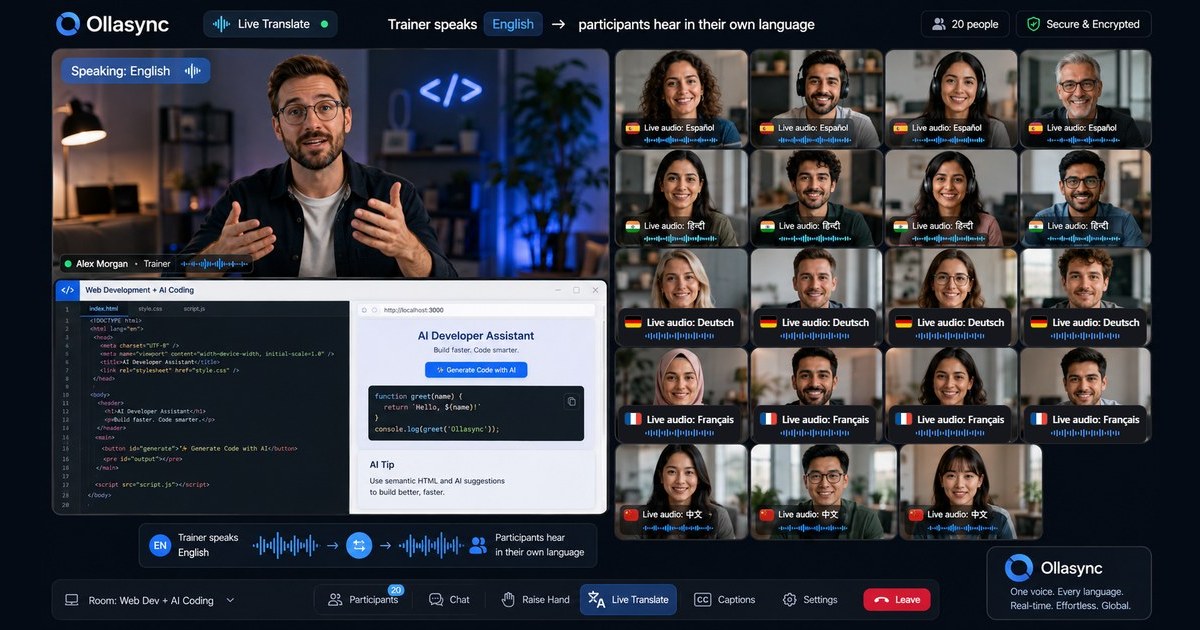
How much should a global town hall software actually cost in 2026?
Chapter 1: The Direct Answer & Executive Summary: Global Town Hall Software Cost in 2026
The Bottom-Line Answer
In 2026, an enterprise should expect the true global town hall software cost to range between $18,000 and $285,000+ per year on an Annual Contract Value (ACV) basis, with the median enterprise contract settling at $54,000 per year.
On a unit-economics basis, fully burdened platform costs average $0.85 to $3.40 per concurrent user per hour of broadcast, or an equivalent seat-allocated cost of $1.10 to $4.75 per employee per month (PEPM) across the total addressable workforce.
Pricing varies fundamentally across three distinct enterprise tiers:
- Mid-Market / Distributed Enterprise (1,000 – 5,000 employees): $18,000 – $42,000 / year. Typically covers WebRTC ultra-low-latency streaming, basic native Enterprise Content Delivery Network (eCDN) integrations, interactive Q&A/moderation tools, and automated closed captioning in up to 10 languages.
- Large Global Enterprise (5,000 – 25,000 employees): $45,000 – $115,000 / year. Includes dedicated eCDN bandwidth allocation (Kollective, Hive, or native peer-to-peer/mesh architectures), sub-second global synchronization, live AI dubbing/translation across 30+ languages, deep enterprise single sign-on (SSO), System for Cross-domain Identity Management (SCIM), and 99.99% availability Service Level Agreements (SLAs).
- Mega-Cap / Multinational (25,000 – 100,000+ employees): $120,000 – $285,000+ / year. Custom master service agreements (MSAs) featuring hybrid multi-CDN/eCDN failover routing, on-premises gateway hardware virtualization, sovereign cloud compliance (EU data boundary, FedRAMP, HIPAA), dedicated white-glove event production engineers on standby, and bespoke generative analytics suites.
The 2026 Global Town Hall Software Pricing Matrix
The table below provides the authoritative 2026 market baseline for software-only annual licensing, excluding optional third-party audiovisual production hardware.
| Pricing Tier | Target Workforce | Annual Cost Baseline (ACV) | Per Concurrent User / Hour | Core Architectural Inclusions | Typical AI & Localization Suite |
|---|---|---|---|---|---|
| Tier 1: Mid-Market Scale | 1,000 – 5,000 seats | $18,000 – $42,000 | $2.40 – $3.40 | Cloud-native WebRTC, basic peering, standard REST APIs | Real-time speech-to-text, 10 core languages, automated meeting summaries |
| Tier 2: Global Enterprise | 5,000 – 25,000 seats | $45,000 – $115,000 | $1.20 – $2.10 | Native/Integrated eCDN mesh, SIP/H.323 hybrid room connectors, SOC2 Type II, ISO27001 | Zero-latency dynamic translation (30+ languages), live synthetic voice dubbing, AI sentiment tracking |
| Tier 3: Mega-Enterprise | 25,000 – 100,000+ seats | $120,000 – $285,000+ | $0.85 – $1.35 | Multi-eCDN load balancing, custom edge computing instances, dedicated private tenant, 99.999% SLA | Real-time multilingual voice cloning, predictive Q&A moderation, behavioral sentiment heatmaps |
What Determines Global Town Hall Software Cost in 2026?
Town hall platforms are no longer straightforward video conferencing tools like standard Zoom or Microsoft Teams instances. Running a synchronized, high-fidelity, interactive broadcast for tens of thousands of globally distributed enterprise employees without bringing down local corporate office networks requires a complex infrastructure stack.
Four non-negotiable architectural variables drive 90% of your software quote in 2026:
Total Global Town Hall Software Cost =
    Base Platform Fee (SaaS License)
  + Bandwidth / Delivery Ingestion (eCDN Infrastructure)
  + Real-Time Multimodal AI Compute (Translation/Dubbing/Moderation)
  + Enterprise Security, Sovereign Compliance, & Premium SLA Adders
1. Delivery Architecture: The eCDN Infrastructure Tax
The most significant engineering bottleneck in global all-hands meetings is the “last mile” bandwidth crash. If 3,000 employees in a single corporate hub (e.g., London, Singapore, or New York) attempt to stream a 4K or 1080p 60fps video feed simultaneously via external CDNs, local network pipes saturate immediately, degrading the connection.
- P2P/Mesh eCDN Solutions (Software-Defined): Lowest deployment cost. Adds roughly $0.15 to $0.45 per user per month to the base software contract.
- Edge-Caching Virtual Appliances (Server-based): Preferred by financial institutions and defense contractors with strict zero-trust architectures. Adds $12,000 to $45,000 annually in enterprise software licensing and infrastructure management modules.
2. Real-Time Multimodal AI Infrastructure
In 2026, global enterprises no longer settle for delayed English-only captions. The baseline expectation for global organizations is multi-language audio dubbing and real-time localized captioning.
Vendors bill for real-time generative capabilities through dynamic GPU compute allocations:
- Real-Time Live Translation (Text): Integrated into most baseline Tier 2 and Tier 3 platforms at no variable charge.
- Low-Latency AI Voice Dubbing (Audio): Priced as a consumption tier or bundled enterprise package, running between $150 and $400 per broadcast hour across 10+ target languages to offset LLM/speech-synthesis inference costs.
3. Concurrency Thresholds vs. Named Seat Licensing
Legacy SaaS pricing (charging strictly per registered employee) has largely been replaced in 2026 by Peak Concurrent User (PCU) models or Hybrid Capacity Bands.
Under a hybrid capacity model, an organization with 40,000 employees that averages 18,000 live town hall attendees pays for a 20,000 PCU tier. Exceeding that concurrency ceiling triggers overage rates ranging from $0.02 to $0.08 per attendee-hour, making precise audience modeling essential during contract negotiations.
4. Enterprise Security, Governance, and Integration SLAs
Enterprise procurement demands specific governance add-ons that fundamentally alter contract values:
- Dedicated VPC / Private Cloud Instances: Adds 20% to 35% to the baseline ACV.
- Bring Your Own Key (BYOK) Encryption: Standard $10,000 – $25,000 annual add-on.
- Dedicated Technical Account Management (TAM) & Live Broadcast Monitoring: $15,000 – $35,000 per year for guaranteed engineer-on-call response during scheduled global all-hands events.
The “Platform Tax”: 4 Hidden Costs to Audit
When evaluating proposals, finance and IT procurement teams must model secondary costs that frequently sit outside the initial vendor proposal:
- Hardware Ingestion & Studio Bridges: Connecting high-end broadcast setups (Blackmagic, TriCaster, dedicated SDI/NDI pipelines) or executive boardrooms via SIP/H.323 connectors typically costs an extra $2,500 to $7,500 per bridge endpoint per year.
- Overage Penalties on Concurrency: Uncapped, burstable events can lead to unexpected true-up invoices. Negotiate a fixed 20% burst buffer directly into the MSA.
- Data Egress & Archival Storage: While real-time delivery is often factored into the eCDN cost, archiving high-bitrate town hall recordings indefinitely in compliant, search-indexed, AI-transcribed enterprise repositories carries cloud storage fees averaging $0.05 to $0.12 per stored video hour per month.
- Professional Services and Implementation: Initial network discovery, eCDN agent validation, firewall configuration, and single sign-on deployment fees run between $5,000 and $20,000 (one-time) for enterprise-grade rollouts.
Executive Buyer’s TCO Calculus
To quickly calculate whether a quote represents fair market value in 2026, use the following baseline formula:
$$\text{Target Annual Cost} = (\text{Total Addressable Headcount} \times \text{$2.20}) + (\text{Planned Live Broadcast Hours/Year} \times \text{$350}) + \text{Base SLA Overhead ($15,000)}$$
Example Calculation: A 15,000-person enterprise running 12 global town halls per year (1.5 hours each = 18 hours total):
- Headcount component: $15,000 \times $2.20 = $33,000$
- Broadcast compute/AI dubbing component: $18 \times $350 = $6,300$
- Enterprise SLA & eCDN integration overhead: $$15,000$
- Target Fair Market ACV: $54,300 per year
If your vendor quote deviates by more than 25% from this benchmark without custom development requirements or dedicated on-premise hardware appliances, the proposal should be actively renegotiated.# Chapter 2: The Data & Competitor Pricing Breakdown
When evaluating enterprise communications infrastructure in 2026, determining the true global town hall software cost requires looking past deceptive base software-as-a-service (SaaS) tiers. Legacy meeting providers advertise low per-host monthly rates, but the technical demands of large-scale, low-latency, multilingual enterprise broadcasts routinely drive final invoices up by 200% to 500%.
To understand what you should actually pay in 2026, we benchmarked the market across four primary categories: Microsoft Teams (with Teams Premium & eCDN), Zoom Events & Webinars, Cisco Webex Webinars, and Modern AI-Native All-Hands Platforms.
2026 Enterprise Cost & Feature Comparison Matrix
The table below outlines baseline software costs, necessary enterprise add-ons (such as enterprise content delivery networks [eCDN], real-time multilingual translation, and production suites), and the resulting Total Cost of Ownership (TCO) for an enterprise hosting monthly global town halls for 5,000 to 10,000 attendees.
| Platform Category / Tool | Base Software License (Annual) | Required Add-Ons (eCDN, Translation, Storage) | Hidden Overage / Professional Services | Estimated True Annual TCO (5k–10k Capacity) |
|---|---|---|---|---|
| Microsoft Teams + Teams Premium | Included in M365 ($22–$38/user/mo) + $7/user/mo for Teams Premium | Microsoft eCDN: $0.50/user/mo Live Translation: Included with Premium (text only, AI voice extra) | Network setup fees; custom third-party production overlays ($5k–$15k/event) | $45,000 – $85,000/year (Enterprise-wide licensing model) |
| Zoom Events / Zoom Webinars | Zoom Events 5k–10k: $18,000 – $34,900/year (per organizer license) | Zoom Mesh / 3rd-Party eCDN: $6,000 – $15,000/year Translated Captions: $5/user/mo or custom tier | High overage fees if attendance spikes over tiered capacity (+20% penalty) | $30,000 – $60,000/year |
| Cisco Webex Webinars | Webex 5k–10k Tier: $25,000 – $48,000/year | Webex eCDN / Vbrick integration: $12,000 – $25,000/year Real-Time Translation: Included in top tiers | Hardware codec integration & legacy SIP endpoint maintenance costs | $40,000 – $75,000/year |
| Modern AI-Native Platforms (e.g., Purpose-built Town Hall tech) | Flat Platform Fee: $20,000 – $45,000/year (Unlimited Events) | Native Peering/eCDN: Included ($0) AI Live Voice Dubbing: Included ($0) | Dedicated Live Remote Support: $0 – $5,000/year (often bundled) | $20,000 – $50,000/year (Predictable, fixed pricing) |
In-Depth Competitor Cost Breakdown
Estimated Annual TCO for Global Town Halls (5,000–10,000 Attendees)

Modern AI-Native  [████████████████████] $20k - $50k (All-inclusive flat fee)
Zoom Events       [████████████████████████████] $30k - $60k (Capacity-capped)
Cisco Webex       [████████████████████████████████████] $40k - $75k (Hardware/SIP heavy)
Microsoft Teams*  [██████████████████████████████████████████] $45k - $85k (Full seat uplift)

*Reflects incremental Teams Premium + Microsoft eCDN licensing across enterprise seats.
1. Microsoft Teams + Teams Premium: The “Free” Tool Illusion
Many procurement departments assume Microsoft Teams handles global town halls at zero incremental cost because it is bundled within their existing Microsoft 365 E3/E5 enterprise agreements.
In 2026, this assumption causes major budget overruns:
- The Teams Live Events Sunset: Microsoft has migrated enterprise-grade broadcast functionality to Teams Town Halls, reserving advanced engagement, custom branding, and RTMP-in capabilities for Teams Premium ($7 to $10/user/month list price).
- eCDN Mandates: Broadcasting high-definition 1080p video streams to thousands of employees simultaneously across corporate branch offices collapses local bandwidth without an enterprise content delivery network. Microsoft charges $0.50 per user per month for its native eCDN standalone license if not covered in high-tier packages.
- The Seat Multiplier Trap: Because Microsoft licenses features per user rather than per event host, upgrading an entire company of 5,000 employees to access advanced Town Hall capabilities can create an unexpected $40,000+ line-item surge.
2. Zoom Events / Zoom Webinars: The Capacity Penalty Model
Zoom remains a standard baseline for many internal IT teams, but its pricing model is strictly tethered to tiered attendee caps and segmented feature gating:
- Tier Gating: Purchasing a single Zoom Events 5,000-attendee license costs approximately $18,000/year, whereas a 10,000-attendee license jumps to roughly $34,900/year. If your company grows from 4,800 to 5,200 employees, you are forced into the higher pricing band.
- The Concurrency Risk: Zoom enforces strict attendee limits. If an all-hands call exceeds the licensed cap due to high turnout, latecomers are locked out or routed to lower-quality secondary overflow streams, forcing IT teams to buy excessive capacity buffers.
- Add-On Stacking: While Zoom Mesh handles basic corporate network peering, complex enterprise topologies often require third-party eCDN partnerships (such as Hive or Kollective), adding $10,000 to $20,000 annually to the base software contract.
3. Cisco Webex: The Legacy Enterprise Benchmark
Cisco Webex remains entrenched in highly regulated, hardware-heavy corporate environments (such as banking and government):
- Webex Suite Licensing: While robust, Webex Webinars are priced at a premium. Dedicated large-scale webcasting tiers scaling to 10,000 live interactive participants range between $25,000 and $48,000 annually.
- Integration Overhead: Webex often requires third-party enterprise video content management (EVCM) solutions, such as Vbrick Rev, to store, index, and securely distribute event recordings behind firewalls. Vbrick integrations can easily add $15,000 to $30,000 in licensing and professional services.
- Hardware Lock-In: Maximizing Webex’s production quality frequently requires dedicated Cisco Room Kits and hardware codecs, increasing physical capital expenditure (CapEx) over purely cloud-native tools.
4. Modern AI-Native Platforms: Fixed-Cost Predictability
Modern town hall and all-hands platforms built from 2024 onward diverge fundamentally from legacy licensing models by consolidating the tech stack into an all-inclusive, flat-rate pricing architecture:
- Decoupled Attendee Pricing: Rather than charging for arbitrary attendee tiers (e.g., 3,000 vs. 5,000 seats), modern platforms often utilize flat enterprise subscriptions ($20,000 to $45,000/year) that support high concurrency limits without punitive overage fees.
- Zero-Cost Built-In eCDN: Modern platforms utilize WebRTC mesh and browser-based peer-to-peer (P2P) distribution natively, eliminating the need to pay external vendors like Kollective, Hive, or Microsoft eCDN $0.50/user/month.
- Embedded AI Localization: Instead of requiring separate per-minute transcription services or external translation agencies ($150–$300/hour per language), modern platforms bundle ultra-low latency AI voice dubbing and live interactive translations directly into the platform core.
The Hidden Cost Factors in Global Town Hall TCO
When assessing the overall global town hall software cost, software licensing constitutes only 40% to 50% of the true annual expenditure. IT and internal communications leaders must account for three critical hidden line items:
┌─────────────────────────────────────────────────────────┐
│              TRUE COST OF OWNERSHIP (TCO)               │
├──────────────────────────┬──────────────────────────────┤
│ Core License: 45%        │ eCDN / Network: 25%          │
├──────────────────────────┼──────────────────────────────┤
│ Live Localization: 15%   │ Production Support: 15%      │
└──────────────────────────┴──────────────────────────────┘
- Network Infrastructure & Peering (eCDN): Distributing a 1080p, 60fps video stream to 8,000 corporate devices concurrently consumes up to 24 Gbps of bandwidth. Without native eCDN capability, provisioning external network caching servers costs between $8,000 and $25,000 annually.
- Real-Time Language Dubbing & Captions: Global workforces demand native-language accessibility. Human translation booths cost roughly $1,500 to $3,000 per language per 60-minute town hall. Across 12 monthly town halls and 5 languages, translation alone can add $90,000 to $180,000 annually unless automated by real-time generative AI dubbing.
- Dedicated Production & Failover Redundancy: Legacy software requires expensive production tools (vMix, OBS, Tricaster) and on-site AV engineers. Modern platforms provide cloud studio mixboards, automatic lower thirds, dynamic screen layouts, and managed backup streams natively, saving $15,000 to $40,000 in outsourced agency costs.
The 2026 Buying Recommendation
- If your organization is under 1,000 employees and primarily focused on desktop screen shares, Microsoft Teams + Teams Premium or standard Zoom Webinars remain cost-effective entry points.
- If your organization exceeds 3,000 employees across multiple global offices and requires broadcast-grade video, multilingual voice dubbing, interactive polling, and zero-configuration networking, Modern AI-Native Platforms offer a 30% to 50% lower total cost of ownership by eliminating third-party eCDN contracts, translation add-ons, and attendance penalty fees.## Chapter 3: The Deep Dive — Technical Architecture & Operational Drivers of Global Town Hall Software Cost
Evaluating your true global town hall software cost requires looking past superficial per-user licensing fees. In 2026, enterprise all-hands meetings are no longer simple one-way video broadcasts; they are mission-critical, low-latency, AI-augmented synchronous operations.
When your organization scales an all-hands meeting across 5,000 to 100,000+ distributed employees in 40+ countries, software pricing reflects the complex underlying infrastructure: distributed edge computing, enterprise content delivery networks (eCDNs), real-time generative AI inference, and multi-jurisdictional compliance frameworks.
Understanding these technical drivers allows procurement teams and CIOs to identify inflated vendor quotes, anticipate hidden egress penalties, and accurately forecast the total cost of ownership (TCO).
+---------------------------------------------------------------------------------------------------+
|                           2026 GLOBAL TOWN HALL TCO ARCHITECTURE                                  |
+------------------------------------+----------------------------------+---------------------------+
| 1. Distribution Layer (30-40%)     | 2. Compute & AI Layer (25-35%)   | 3. Security & Ops (25-35%)|
| - eCDN / P2P Mesh Bandwidth        | - Real-time Voice-to-Voice Dub   | - Sovereign Cloud Storage |
| - Edge Ingestion Nodes             | - Live Contextual Q&A Triage     | - SSO / SCIM / Audit Logs |
| - Sub-Second WebRTC / LL-HLS       | - Dynamic Low-Latency Inference  | - White-Glove SLA Support |
+------------------------------------+----------------------------------+---------------------------+
1. The Distribution Layer: Bandwidth, eCDN, and Last-Mile Network Economics
The primary infrastructure cost of any global live broadcast is network egress and edge delivery. A standard 1080p60 video stream consumes approximately 4.5 to 6 Mbps per viewer. When 20,000 employees join simultaneously, an unoptimized stream generates an aggregate load of over 90 Gbps—enough to crash corporate VPNs and overwhelm office wide-area networks (WANs).
To prevent network failure, modern platforms rely on two delivery models, each with distinct cost structures:
A. Enterprise Content Delivery Networks (eCDN) & P2P Mesh
- Mechanism: Rather than each employee pulling an individual stream from the cloud (unicast), an on-premises agent or WebRTC-based browser mesh shares video chunks locally across the office subnet.
- Cost Impact: Pure-play software solutions include basic WebRTC mesh routing in base platform pricing, but hardware- or agent-based setups (such as integrated Hive or Kollective nodes) carry an additional $1.50 to $4.00 per user/year.
- Savings Offset: Reduces external internet bandwidth consumption by 85% to 95%, offsetting corporate ISP overage charges.
B. Ultra-Low Latency Ingestion & Edge Delivery (WebRTC vs. LL-HLS)
- Standard LL-HLS (Low-Latency HLS): Delivers video with a 2–5 second glass-to-glass delay. It is cost-effective to scale via public CDNs (Cloudflare, Fastly, CloudFront), keeping downstream delivery costs near $0.02 to $0.05 per viewer-hour.
- Ultra-Low Latency WebRTC (<500ms): Required for natural, bi-directional Q&A between remote executives and global employees. WebRTC requires stateful edge servers and real-time media routing, increasing the technical delivery cost to $0.08 to $0.15 per viewer-hour.
2. The Compute & Intelligence Layer: Real-Time AI Inference at Scale
By 2026, real-time AI processing has transitioned from an experimental add-on to a standard enterprise requirement. Global town halls now demand zero-latency accessibility features that require continuous GPU inference during the event:
Stream Ingest ──► Edge ASR (Transcription) ──► LLM Translation Engine ──► Neural Voice Synthesis (Dubbing)
                     (Lat: ~150ms)                  (Lat: ~250ms)                 (Lat: ~200ms)
- Sub-Second Multi-Language Speech-to-Speech Translation: Translating an executive’s live English presentation into localized French, Mandarin, Spanish, and Japanese audio streams with preserved voice characteristics. This pipeline relies on high-throughput GPUs (such as NVIDIA H100/L40S clusters) at the edge, adding $750 to $2,500 per event in consumption-based inference credits.
- Context-Aware Live Q&A Filtering & De-duplication: Natural language models analyze thousands of concurrent employee questions, cluster similar queries, flag toxic or regulatory violations, and synthesize overarching sentiment trends for the moderation team in real time.
- Automated Dynamic Video Optimization: Automated framing, multi-camera switching, visual artifact remediation, and personalized subtitle rendering carried out dynamically on the server side.
When evaluating global town hall software cost, examine whether the vendor includes a fixed allocation of AI compute tokens or bills AI capabilities as an uncapped pass-through expense.
3. Enterprise Security, Governance, and Sovereign Data Compliance
Distributing internal executive commentary, unreleased financial metrics, and strategic roadmaps requires rigorous enterprise security. The technical overhead of maintaining compliance across varied jurisdictions directly shapes platform licensing tiers:
- Data Sovereignty & Localized Ingestion: Regulatory frameworks (including the EU’s GDPR, China’s PIPL, and India’s DPDPB) mandate that real-time video feeds, employee chat logs, and telemetry data remain within national borders. Vendors maintain regional points of presence (PoPs), which increases operational overhead for enterprise accounts.
- End-to-End Encryption (E2EE) with Key Management: Enterprise tiers often require Bring Your Own Key (BYOK) or Customer Managed Encryption Keys (CMEK) via AWS KMS or Azure Key Vault, allowing companies to revoke decryption access instantly. Platforms charge a 15% to 30% baseline premium for this capability.
- Access Control & Identity Governance: Integration with Okta, Microsoft Entra ID, Ping Identity, SCIM auto-provisioning, and conditional access policies (restricting access by IP, device health, or geographic location).
4. Comprehensive 2026 Cost Matrix Breakdown
The following matrix provides an itemized analysis of the technical and operational line items that define modern town hall platform quotes:
| Architecture Component | Low-Tier Estimate (Small Enterprise / Standard Delivery) | High-Tier Estimate (Global 2000 / Real-Time Scale) | Cost Determinant / Pricing Model |
|---|---|---|---|
| Core Platform License | $15,000 / year | $85,000+ / year | Flat base platform fee, administrative seats, core infrastructure access. |
| Viewer Allocation / Capacity | $1.00 – $2.00 / user / year | $4.50 – $8.00 / user / year | Total named vs. concurrent peak viewers; overage rates apply past tier limits. |
| eCDN / Network Optimization | Included (Basic P2P browser mesh) | $20,000 – $50,000 / year | Dedicated enterprise gateway agents, site-specific caching nodes, and QoS controls. |
| Real-Time AI Processing | $0.05 / user / event (Captions only) | $1,500 – $4,000 / event (Live dubbing + multi-lingual LLM triage) | Billed per compute hour or GPU inference usage during broadcast windows. |
| Security & Compliance Tier | Included (Shared tenant, standard SOC2) | $15,000 – $35,000 / year | Dedicated VPC isolation, BYOK, custom data retention rules, and localized routing. |
| Production & SLA Support | Self-serve (Standard ticketing) | $2,500 – $6,000 / event | Dedicated site reliability engineer (SRE) monitoring live ingestion and failover paths. |
5. Hidden Operational Expenses in the TCO Equation
Calculating the complete global town hall software cost requires accounting for indirect operational requirements:
Total Cost of Ownership (TCO) =
    Platform Base Subscription
  + (Bandwidth & eCDN Licensing)
  + (AI Compute & Edge Ingestion Units)
  + Production Crew & SRE Standby
  + Network Hardware / Studio Upgrades
  + Failure Risk Contingency
- Network Assessment and Edge Hardware Configuration: Initial deployment often requires upgrading local network hardware, verifying firewall traversal for UDP/WebRTC traffic, and stress-testing on-premises infrastructure using synthetic load generators ($5,000–$15,000 one-time deployment service).
- Production Redundancy: Enterprise-grade reliability requires dual-encoder RTMP/SRT streaming across diverse network carriers. If primary ingestion degrades, the system must trigger a zero-frame-loss hitless failover to the secondary path. Platforms that manage this automatically charge higher subscription fees, but they eliminate the need for costly external hardware switchers.
- Third-Party Workplace Integrations: Native synchronization with Slack, Microsoft Teams, and Viva Engage for synchronized question collection and event distribution can carry API integration fees or require premium licensing tiers from those ecosystem partners.
Key Takeaway for Buyers
In 2026, baseline pricing for mid-market organizations starts at roughly $20,000 to $35,000 annually, while multinational enterprises with strict security, low latency, and real-time translation requirements should expect total investments between $75,000 and $180,000+ per year.
Evaluating solutions on infrastructure efficiency, bandwidth management, and AI computing models will ensure you deploy an architecture that delivers clear executive communication without unexpected operational costs.# Chapter 4: The Modern Solution — Eliminating the “All-Hands Tax” with Ollasync
By 2026, enterprise software procurement has fundamentally shifted. The era of accepting bloated, multi-layered contracts for internal communications is over. Enterprise buyers now realize that legacy webcasting platforms and generic video conferencing tools have spent years charging an artificial premium—an “all-hands tax” driven by legacy infrastructure, predatory overage charges, and fragmented add-on pricing.
To answer the central question of this guide—what should a global town hall software cost in 2026?—the answer is simple: predictable, transparent, and strictly tied to compute efficiency, not enterprise headcount penalties.
A modern enterprise all-hands platform should deliver ultra-low latency, real-time multilingual translation, broadcast-grade production, and bidirectional engagement out of the box—without requiring six-figure professional service retainers or complex per-minute licensing models.
This is the exact paradigm shift engineered by Ollasync.
The New Pricing Paradigm: Architecture-Driven Value
Legacy platforms charge high fees because their technical architectures rely on fragmented Content Delivery Networks (CDNs), bolted-on third-party translation APIs, and separate engagement modules. When an enterprise pays $120,000+ annually for legacy webcasting, up to 60% of that cost covers architectural inefficiency and sales overhead.
LEGACY ALL-HANDS STACK (Cost: $95,000–$180,000/yr)
[ Webcasting Platform ] + [ AI Translation Add-On ] + [ Audience Polling Tool ] + [ Dedicated AV Engineers ]

VS.

OLLASYNC UNIFIED PLATFORM (Cost: Up to 65% Lower TCO)
[ Native Ultra-Low Latency + Real-Time Dubbing/Captions + Integrated Engagement + Auto-Production ]
Ollasync redesigns the global town hall software cost equation from the infrastructure layer up. By natively integrating edge-compute distribution, automated production switching, and real-time neural translation, Ollasync removes the legacy middlemen, passing massive cost savings directly back to enterprise IT and People teams.
Why Ollasync is the Ultimate Global Town Hall Platform
Ollasync was built specifically to solve the distinct logistical and financial friction points of the distributed, global enterprise.
+----------------------------------------------------------------------------------------------------+
|                                    THE OLLASYNC ADVANTAGE MATRIX                                    |
+------------------------------+------------------------------------+--------------------------------+
| CORE CAPABILITY              | LEGACY VENDORS (Zoom, Webex, ON24) | OLLASYNC                       |
+------------------------------+------------------------------------+--------------------------------+
| Global Latency               | 15–30 seconds (HTTP/HLS buffer)    | <500ms real-time WebRTC/Edge   |
| Live Multilingual Audio      | $150–$300/hr per language add-on   | Native real-time AI dubbing    |
| Per-Seat Viewer Penalties    | Tiered pricing; steep overages     | Flat, transparent scaling      |
| Interactive Q&A & Polling    | Requires 3rd-party integration     | Fully native & synchronized    |
| Bandwidth Optimization (eCDN)| $15k–$40k separate license         | Zero-install P2P/eCDN included |
| Production Studio Complexity | Dedicated AV team required         | Browser-native 4K cloud studio |
+------------------------------+------------------------------------+--------------------------------+
1. Sub-Second Global Latency (<500ms)
Traditional webcasts force international employees to watch streams on a 15-to-30-second delay. When a CEO in New York asks a question, remote employees in Singapore or London experience an awkward dead zone that kills authentic engagement. Ollasync delivers sub-500ms latency globally, making distributed Q&A sessions feel as immediate as an in-person meeting.
2. Zero-Cost-Penalty Multilingual Translation
Instead of charging per-language, per-minute fees that turn a single global broadcast into a $5,000 line item, Ollasync integrates neural speech-to-speech translation and contextual subtitles directly into the core stream. Global workforces can listen in their native language in real time with synchronized lip movement, eliminating cultural and linguistic silos.
3. Integrated Enterprise eCDN
Legacy vendors often force IT departments to purchase expensive third-party enterprise Content Delivery Network (eCDN) software (costing $20,000 to $50,000 annually) to prevent office local area networks (LANs) from collapsing during company-wide events. Ollasync includes proprietary, zero-configuration peer-to-peer and edge mesh streaming, protecting corporate network integrity at no extra cost.
4. Zero-Friction Production Studio
Ollasync replaces complex external hardware encoders and expensive technical directors with an intuitive, browser-based cloud production studio. Any communications manager can trigger multi-camera layouts, on-screen lower thirds, real-time audience sentiment visualizers, and seamless presenter handoffs with single-click operational simplicity.
3-Year Total Cost of Ownership (TCO) Breakdown
To understand how global town hall software cost impacts the bottom line, examine the direct cost comparison for an enterprise with 5,000 employees running 12 global town halls per year:
+------------------------------------------+-----------------------+-----------------------+
| COST COMPONENT (5,000 EMPLOYEES)         | LEGACY ENTERPRISE     | OLLASYNC UNIFIED      |
|                                          | ECOSYSTEM (ANNUAL)    | PLATFORM (ANNUAL)     |
+------------------------------------------+-----------------------+-----------------------+
| Base Webcasting / Streaming Platform     | $48,000               | Included              |
| Live Translation / Closed Captions (AI)  | $18,000               | Included (Native)     |
| eCDN Network Optimization License        | $25,000               | Included (Built-in)   |
| Third-Party Polling / Q&A Integration    | $6,500                | Included (Native)     |
| External AV Production Support Services  | $30,000               | $0 (Self-Serve Studio)|
| Over-Capacity / Burst Attendee Fees      | $8,500                | $0 (Fair-Use Scale)   |
+------------------------------------------+-----------------------+-----------------------+
| TOTAL ANNUAL RUN-RATE                    | $136,000              | Predictable Flat Rate |
| 3-YEAR TOTAL COST OF OWNERSHIP           | $408,000              | Up to 60% Savings     |
+------------------------------------------+-----------------------+-----------------------+
Key Financial Takeaway: By consolidating streaming infrastructure, internal networking, AI localization, and production software into a single runtime environment, Ollasync regularly saves mid-market and enterprise organizations between $60,000 and $100,000 per year while substantially increasing stream reliability and employee participation rates.
2026 Procurement Checklist: How to Evaluate Your Options
Before your team signs a renewal with an existing webcasting or video conferencing vendor, run their pricing model through this five-point validation audit:
- Is pricing decoupled from viewer count? Ensure you are not penalized when your company grows or when external contractors/partners attend your all-hands.
- Are localization features native? If multi-language audio tracks or live captions require third-party integrations or add-on SKU fees, reject the proposal.
- Is internal network optimization included? Verify that eCDN or edge caching does not require a separate third-party vendor contract.
- Does the platform guarantee sub-second latency? Standard HLS streaming (10–30s latency) is obsolete for modern interactive Q&As. Insist on WebRTC/sub-second delivery.
- Is external production support optional? The software should be intuitive enough for your internal People/Internal Comms team to operate independently without hiring managed services for every broadcast.
Conclusion: Transform Your All-Hands Strategy in 2026
The global town hall is the most critical cultural touchpoint in your company. It is where strategy is aligned, leadership is humanized, and distributed workforces unite around a shared vision.
Continuing to pay an inflated global town hall software cost for outdated, disjointed legacy software is no longer a viable operational strategy. The market has evolved. High-performance, low-latency, AI-native broadcasting is now the baseline standard—and it should come with a transparent, predictable pricing structure that respects your IT budget.
Ollasync eliminates the technical complexity, administrative overhead, and hidden costs of global all-hands meetings, providing a premium, unified experience that scales seamlessly across every continent.
Ready to Modernize Your Global Town Halls?
Stop overpaying for fragmented enterprise webcasting contracts. Calculate your exact cost savings and experience the power of modern, ultra-low latency all-hands broadcasts.
- Schedule an Interactive Platform Demo — See sub-500ms global streaming and native AI translation in action.
- Calculate Your 3-Year TCO Savings — Discover how much your enterprise can save by replacing your legacy tech stack with Ollasync.