Are AI translation platforms GDPR and SOC2 compliant?
A comprehensive, data-backed answer to: Are AI translation platforms GDPR and SOC2 compliant?
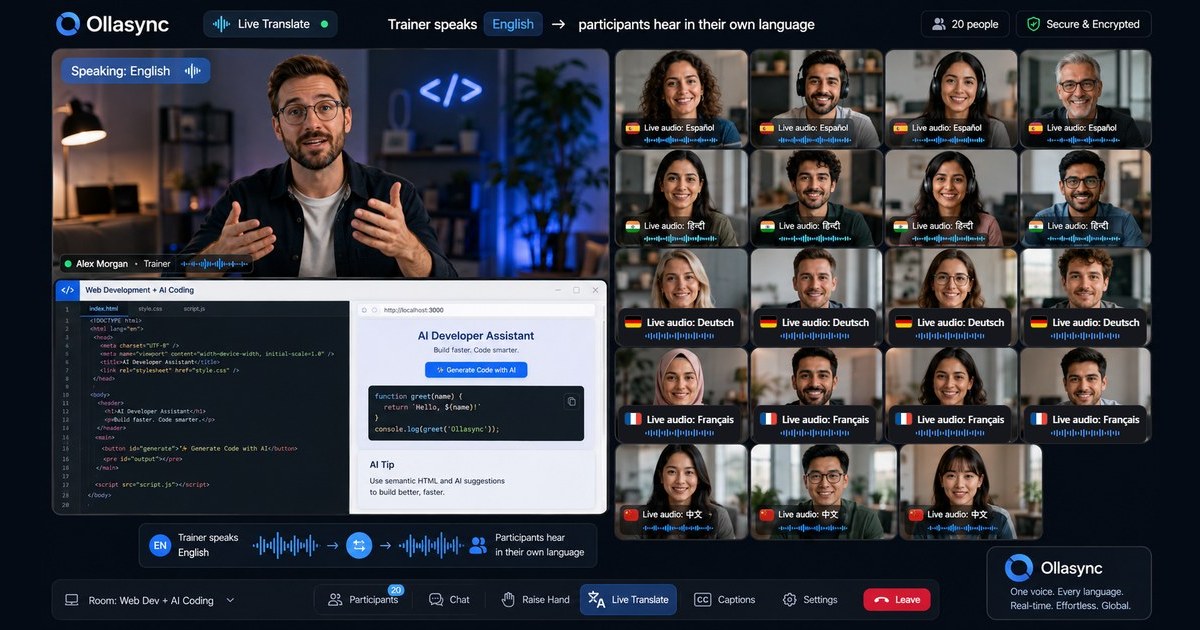
Are AI translation platforms GDPR and SOC2 compliant?
Chapter 1: The Direct Answer & Executive Summary
The Direct Answer: Are AI Translation Platforms GDPR and SOC 2 Compliant?
Yes, modern AI translation platforms can be fully GDPR and SOC 2 Type II compliant, but compliance is neither universal nor automatic. Compliance depends entirely on the architecture of the platform, the tier of service procured, and the legal frameworks executed between the customer and the vendor.
Enterprise-grade AI translation systems (such as dedicated enterprise tiers of DeepL, Phrase, Smartling, Google Cloud Translation, and AWS Translate) are engineered to meet strict regulatory frameworks. These platforms offer binding Data Processing Agreements (DPAs) with standard contractual clauses (SCCs), zero-data-retention (ZDR) architecture, local data residency, and audited SOC 2 Type II attestations.
Conversely, free or consumer-grade AI translation tools (including standard web interfaces like consumer DeepL or public ChatGPT) are fundamentally non-compliant with GDPR and SOC 2 standards for enterprise data. By default, consumer tiers ingest user prompts to train and refine foundational Large Language Models (LLMs), violating the data minimization, purpose limitation, and confidentiality mandates of international privacy laws.
+---------------------------------------------------------------------------------------+
|                               QUICK REFERENCE VERDICT                                  |
+--------------------------+-----------------------------+------------------------------+
| Platform Tier            | GDPR Compliance Status      | SOC 2 Compliance Status      |
+--------------------------+-----------------------------+------------------------------+
| Free / Consumer Web UI   | ❌ NON-COMPLIANT            | ❌ NON-COMPLIANT             |
| Pro / Individual SaaS    | ⚠️ CONDITIONAL (Requires DPA)| ⚠️ PARTIAL (Type I or None)   |
| Enterprise API / SaaS    | ✅ COMPLIANT (Zero Retention)| ✅ FULL (SOC 2 Type II Valid) |
| Dedicated On-Premise/VPC | ✅ COMPLIANT (Air-gapped)   | ✅ INHERITED / FULL AUDIT    |
+--------------------------+-----------------------------+------------------------------+
When evaluating whether are ai translation platforms gdpr and SOC 2 compliant, organizations must look beyond high-level vendor marketing and examine the granular separation between platform application code, underlying translation models, and model training pipelines.
Executive Summary: The AI Translation Risk and Compliance Landscape
Integrating Artificial Intelligence into enterprise localization and translation workflows introduces profound efficiency gains, but it exposes organizations to severe regulatory liability if governance pipelines are not actively enforced. Translation engines are uniquely vulnerable to data leakage because they ingest raw, unstructured organizational data—often containing personally identifiable information (PII), protected health information (PHI), intellectual property, or confidential financial metrics.
                      ENTERPRISE DATA PIPELINE
                                 │
                 ┌───────────────┴───────────────┐
                 ▼                               ▼
       [Enterprise AI Tier]            [Consumer AI Tier]
                 │                               │
        ┌────────┴────────┐             ┌────────┴────────┐
        ▼                 ▼             ▼                 ▼
   [Zero-Data]      [SOC 2 Type II] [Data Stored &]   [PII Leaked /]
   [Retention]      [Encrypted API] [Model Trained]   [Non-Compliant]
        │                 │             │                 │
        └────────┬────────┘             └────────┬────────┘
                 ▼                               ▼
        ✅ COMPLIANT                      ❌ NON-COMPLIANT
1. The Dual-Layer Architectural Reality
Compliance in an AI translation workflow must be evaluated across two distinct structural layers:
- The Application/Orchestration Layer (SaaS Platform): The front-end interface, user access controls, project management infrastructure, and translation memory databases. This layer is primarily audited against SOC 2 Trust Services Criteria (Security, Availability, Confidentiality, Processing Integrity, and Privacy).
- The Foundational Machine Translation / LLM Layer: The neural network (NMT) or large language model (LLM) that processes the source string into the target language. This layer is the primary focal point for GDPR compliance (Articles 5, 6, 28, 32, and Chapter V international transfer mechanisms).
If an enterprise utilizes a translation management system (TMS) with SOC 2 Type II certification, but that TMS routes source strings via unencrypted APIs to a third-party LLM provider that logs prompts for continuous model training, the entire workflow fails both GDPR and SOC 2 standards.
2. GDPR Compliance Benchmarks for AI Translation
To establish GDPR compliance, an AI translation platform must satisfy four core non-negotiables:
- Strict Purpose Limitation & Zero-Training Guarantees (Art. 5(1)(b)): The vendor must legally guarantee via a DPA that input data (source text) and generated output (target text) are never retained or processed to retrain foundational models, train shared customer models, or build statistical caches.
- Ephemeral Processing (Art. 5(1)(e)): Text must be translated strictly in-memory (RAM) and wiped immediately after generation, bypassing persistent cache and disk storage.
- Lawful International Data Transfers (Art. 44–49): If data originated in the European Economic Area (EEA), the translation engine must either offer pure EU data residency or provide valid transfer frameworks (such as the EU-U.S. Data Privacy Framework combined with verified Transfer Impact Assessments).
- Automated Data Subject Rights Support (Art. 15–22): The translation architecture must not permanently embed PII within opaque neural weights, which would make the “Right to be Forgotten” (Art. 17) computationally impossible to fulfill.
3. SOC 2 Type II Compliance Benchmarks
SOC 2 Type II compliance verifies that an independent AICPA-accredited auditor has reviewed the operational effectiveness of a vendor’s controls over a minimum testing period of six months. For AI translation providers, critical control points include:
- Cryptographic Isolation: End-to-end encryption of all linguistic payloads using TLS 1.3 in transit and AES-256 at rest, alongside customer-managed encryption keys (CMEK) for enterprise tiers.
- Role-Based Access Control (RBAC) & SAML/SSO: Strict identity boundary enforcement preventing lateral access across multi-tenant translation databases and translation memories.
- Sub-processor Governance: Continuous third-party risk management verifying that every underlying AI vendor, hosting provider, and API partner maintains identical SOC 2 Type II and ISO 27001 certifications.
Architectural Comparison Matrix: Compliance by Deployment Model
The operational configuration of an AI translation tool determines its regulatory viability. The following matrix contrasts how various deployment tiers handle fundamental security and privacy obligations:
| Architecture / Model Tier | Training Opt-Out Status | Data Retention Window | Sub-Processor Auditing | GDPR Viability | SOC 2 Viability |
|---|---|---|---|---|---|
| Public / Free Web Engines (e.g., Free NMT/LLM interfaces) | ❌ Opt-In (Data logged for model retraining) | Indefinite / Persistent | Undisclosed / Dynamic | ❌ Strict Violation | ❌ None |
| Standard Commercial API (e.g., Pay-as-you-go developer tiers) | ⚠️ Varies (Default opt-out requires verification) | 30-Day Abuse Monitoring Logs | Standard Vendor DPA | ⚠️ Conditional (Requires legal review) | ⚠️ Type I Standard |
| Enterprise AI Translation Suite (e.g., Enterprise DeepL, Phrase, Smartling) | ✅ Contractual Zero-Retention Mandate | Ephemeral Only (0 Seconds) | Full Sub-processor Disclosure | ✅ Fully Compliant (With signed DPA) | ✅ Type II Certified |
| Private Single-Tenant / VPC Deployment (e.g., Self-hosted NMT on AWS/Azure) | ✅ Air-gapped / Absolute Control | 100% Customer Controlled | Zero External AI Sub-processors | ✅ Sovereign Compliance | ✅ Inherited Infrastructure Controls |
Strategic Action Plan for Compliance and IT Leaders
When procurement, legal, and localization teams evaluate the question, are ai translation platforms gdpr and soc 2 compliant, they should execute the following five-step due diligence sequence before piping enterprise text through any translation engine:
- Verify the Zero-Data-Retention (ZDR) Clause: Obtain unambiguous, contractual confirmation that neither the translation platform nor its third-party upstream model providers retain source or target strings on disk, in log files, or within telemetry data.
- Execute an Enterprise-Tier Data Processing Agreement (DPA): Ensure the DPA explicitly defines the AI vendor as a Data Processor under GDPR Art. 28, includes Standard Contractual Clauses (SCCs), and explicitly forbids the use of customer payloads for machine learning optimization.
- Inspect the SOC 2 Type II Audit Report: Do not accept a SOC 2 Type I or a simple ISO marketing badge. Review the SOC 2 Type II report for the most recent 12-month cycle, paying specific attention to the Confidentiality and Privacy criteria sections and any reported exceptions.
- Map Data Residency and Processing Boundaries: Confirm that data center regions match regulatory obligations. For EEA operations, ensure translation inference execution occurs entirely within EU geographical boundaries or under verified EU-U.S. Data Privacy Framework certifications.
- Implement Upstream PII Masking/Tokenization: Deploy automated data loss prevention (DLP) filters that detect, pseudonymize, or redact direct identifiers (e.g., social security numbers, credit card numbers, national IDs) before strings reach the AI translation inference pipeline.
Subsequent chapters of this guide provide comprehensive technical dissections of specific platform configurations, deep-dive analyses of GDPR articles governing automated text transformations, rigorous SOC 2 control mappings, and step-by-step audit frameworks for enterprise procurement.## Chapter 2: The Data & Competitor Comparison – Enterprise Compliance Benchmarks
When procurement, legal, and InfoSec teams ask, “are ai translation platforms gdpr and SOC 2 compliant?”, the short answer is: it depends entirely on whether you are deploying consumer-tier software, broad Unified Communications as a Service (UCaaS) native add-ons, or dedicated enterprise AI translation architectures.
While base compliance certifications (like ISO 27001 or SOC 2 Type II) have become standard marketing checkboxes across SaaS, the real risk surfaces in the architectural fine print: data ingestion pipelines, large language model (LLM) retraining loops, ephemeral vs. persistent processing, sub-processor sprawl, and cross-border transfer mechanisms under the EU-U.S. Data Privacy Framework.
To understand how compliance differs across the market, we must analyze legacy enterprise collaboration platforms alongside specialized, modern AI translation engines across strict regulatory and technical vectors.
The Enterprise Translation Compliance Matrix
The following matrix compares legacy platforms offering native live translation features with modern, specialized enterprise AI translation engines across core data privacy and security mandates.
| Evaluation Vector | Zoom (AI Companion & Live Translation) | Microsoft Teams (Intelligent Recaps & Translation) | Cisco Webex (AI Assistant & Live Translation) | Modern Enterprise AI Translation Platforms (e.g., DeepL Pro, Enterprise Speech AI) |
|---|---|---|---|---|
| GDPR Compliance (Art. 28 DPA) | Yes (Standard DPA available; updated terms post-2023 controversy) | Yes (EU Data Boundary compliance available for enterprise tenants) | Yes (Comprehensive EU DPA with strict data isolation) | Yes (Dedicated DPAs with strict Zero Data Retention clauses) |
| SOC 2 Type II Certification | Yes (Covers core infrastructure and meeting services) | Yes (Covered under Microsoft Trust Center / FedRAMP High) | Yes (Comprehensive SOC 2 Type II + ISO 27017/27018) | Yes (Independent annual audits covering API & platform pipelines) |
| Model Retraining on Customer Data | Opt-out by default for enterprise; strictly gated on telemetry | Default: No customer data used to train foundational LLMs | Strict: No customer audio or text used for public model training | Guaranteed Zero-Training policy on commercial/enterprise tiers |
| Data Retention for Translation | Ephemeral during real-time; persistent if cloud recording/transcript is enabled | Ephemeral during live translation; stored in Exchange/OneDrive if transcribed | Ephemeral for live processing; encrypted at rest if transcripts are saved | Ephemeral / Zero Data Retention (ZDR): Audio/text deleted immediately post-inference |
| EU Data Residency & Sovereignty | Selective EU data routing (Enterprise accounts) | Localized via Microsoft 365 EU Data Boundary | In-country data centers (Frankfurt/Amsterdam) with localized processing | Native EU-hosted inference servers; zero routing through non-EU regions |
| Sub-Processor Transparency | Third-party AI partners (e.g., OpenAI, Anthropic) listed in trust center | Azure OpenAI Service (Isolated within enterprise boundary) | Cisco proprietary engines + audited secure cognitive services | Direct model hosting or isolated private VPC deployments |
Key Architectural Differences: Legacy Giants vs. Specialized AI Translation
To determine if AI translation platforms meet GDPR and SOC 2 requirements, legal and cybersecurity auditors must look beyond top-level certificates and evaluate four operational friction points.
[Inbound Audio / Text Stream]
            │
            ▼
┌────────────────────────────────────────────────────────┐
│  Ingestion & Tokenization Gateway                     │
│  - Dynamic PII Redaction                               │
│  - Ephemeral Memory Buffer (No Disk Write)             │
└───────────────────────────┬────────────────────────────┘
                            │
            ┌───────────────┴───────────────┐
            ▼                               ▼
┌───────────────────────────────┐ ┌──────────────────────────────┐
│ Legacy / Consumer AI Route    │ │ Enterprise Sovereign AI Route│
├───────────────────────────────┤ ├──────────────────────────────┤
│ ❌ Asynchronous Logging       │ │ ✅ Pure Ephemeral Inference  │
│ ❌ Data Re-used for Retraining│ │ ✅ Zero Data Retention (ZDR) │
│ ❌ Ambiguous Sub-processors   │ │ ✅ Isolated EU VPC / Bare Metal│
│ ❌ Persistent Text Storage    │ │ ✅ Instant Memory Scrubbing   │
└───────────────────────────────┘ └──────────────────────────────┘
1. Data Ingestion: Telemetry vs. Customer Content
A major compliance pitfall centers on how platforms distinguish between Service Generated Data (telemetry) and Customer Content.
- Legacy UCaaS Suites (Zoom, Teams, Webex): Process petabytes of collaboration data daily. While they guarantee that customer audio feeds are not ingested to train public foundation models without consent, metadata, usage telemetry, and diagnostics are frequently processed in central, multi-tenant lakes located outside the European Economic Area (EEA).
- Modern Specialized AI Engines: Purpose-built for enterprise localization, these engines isolate raw text and audio inputs completely. High-grade AI translation vendors employ ephemeral processing buffers: the audio or text payload hits RAM, is translated via the neural network or LLM, and is purged immediately without hitting persistent block storage.
2. The Scope of SOC 2 Type II Audits
When verifying SOC 2 compliance, the critical factor is the Trust Services Criteria (TSC) covered in the audit report.
- Legacy UCaaS: Audits often cover Availability, Security, and Confidentiality across the broader collaboration platform. However, dynamic real-time AI translation features frequently depend on modular third-party APIs (such as generative LLM endpoints). If those third-party models fall outside the primary SOC 2 boundary, supply chain vulnerabilities emerge.
- Specialized Enterprise AI Platforms: Secure platforms maintain SOC 2 Type II certifications that explicitly include the machine translation pipeline, inference clusters, and API gateways under the Processing Integrity and Privacy criteria, ensuring that inputs cannot be intercepted or modified in flight.
3. GDPR Article 28, Cross-Border Transfers, and Schrems II
The question of whether AI translation platforms are GDPR compliant hinges on cross-border data flows and Article 28 Data Processing Agreements (DPAs).
Under the EU-U.S. Data Privacy Framework (and post-Schrems II scrutiny), routing sensitive corporate dialogues through U.S.-based servers exposes organizations to extraterritorial surveillance risks (e.g., U.S. FISA Section 702).
- Microsoft Teams & Webex: Address this through robust regional investments, such as the Microsoft EU Data Boundary, ensuring customer data stays within the EU.
- Zoom: Offers localized data storage controls for enterprise tiers, though some routing metadata may transit global data centers.
- Modern Specialized AI Translation Platforms: Often built natively in the EU (such as DeepL in Germany) or deployed within dedicated private cloud regions (AWS Frankfurt, Azure Ireland). This guarantees that neither the live audio, transcription, nor translated text leaves sovereign EU soil, eliminating the need for complex Transfer Impact Assessments (TIAs).
4. Zero Data Retention (ZDR) Guarantees
For SOC 2 Type II Confidentiality and GDPR Article 17 (Right to Erasure), storing unstructured conversational data introduces significant regulatory overhead. If an employee speaks proprietary IP or an EU citizen’s Personally Identifiable Information (PII) during a translated meeting, that data enters the translation system.
- Legacy Environments: If translation is paired with native recording or transcription, the text is automatically archived in enterprise cloud drives (OneDrive, Zoom Cloud), requiring downstream data-lifecycle and purge management.
- Modern AI Engines with ZDR: Zero Data Retention policies ensure that data is never written to non-volatile storage. Once the translation token is delivered to the downstream listener, the source text and translated string are erased from server memory within milliseconds. This architecture makes GDPR compliance seamless: you cannot breach, subpoena, or leak data that was never retained.
Procurement Scorecard: Evaluating AI Translation Platforms
Before deploying an AI translation tool across corporate workflows, security and compliance teams should evaluate the platform against the following checklist:
[ ] 1. ZERO RETENTION MANDATE: Does the vendor offer a legally binding Zero Data
       Retention (ZDR) agreement covering both live and asynchronous inputs?
[ ] 2. MODEL TRAINING PROHIBITION: Do the terms explicitly state that customer
       data is NEVER used to train, tune, or evaluate foundational or proprietary models?
[ ] 3. ISOLATED COMPUTE BOUNDARIES: Are model inference instances hosted within
       geographically sovereign regions (e.g., EU-only or tenant VPCs)?
[ ] 4. SOC 2 SCOPE VERIFICATION: Does the SOC 2 Type II report cover the live AI
       processing pipeline, or just the base platform infrastructure?
[ ] 5. SUB-PROCESSOR TRANSPARENCY: Does the vendor utilize unvetted third-party
       LLM APIs behind the scenes, or do they own and host the neural models?
[ ] 6. PII TOKENIZATION: Does the engine support dynamic tokenization or masking of
       PII prior to model inference?
By prioritizing zero-retention architectures, verified SOC 2 boundaries, and sovereign EU processing, modern enterprises can securely deploy real-time AI translation without compromising corporate data or violating regulatory mandates.# Chapter 3: The Deep Dive: Technical and Operational Realities of AI Translation Compliance
When enterprise risk officers ask, “are ai translation platforms gdpr and SOC 2 compliant?”, the short answer is: compliance is not an inherent property of the software; it is a function of system architecture, deployment tier, and vendor data governance.
In 2026, the intersection of large language models (LLMs), neural machine translation (NMT), and international privacy regulations presents an intricate attack surface. A platform carrying a static SOC 2 badge or standard Data Processing Addendum (DPA) can easily violate European Union privacy laws or fail a security audit if its underlying inference pipeline mishandles enterprise payloads.
To determine whether an AI translation tool satisfies regulatory thresholds, organizations must inspect the technical stack, runtime environments, and cryptographic controls operating under the hood.
The GDPR Architectural Stack in Modern AI Translation
Achieving true General Data Protection Regulation (GDPR) compliance within enterprise translation workflows requires more than checking boxes on Article 28 (Processor) contracts. Modern generative translation engines process dynamic context, cache semantic tokens, and run distributed vector queries—each introducing structural compliance liabilities under GDPR.
[Inbound Raw Text]
       │
       ▼
[Client-Side / Edge PII Sanitizer] ───► (Pseudonymization / SHA-256 Tokenization)
       │
       ▼
[TLS 1.3 / Enclave Gateway]
       │
       ▼
[Stateless Inference Node (ZDR)] ─────► [Confidential Computing / TEE]
       │                                 └─ No Disk Persistence
       │                                 └─ No Model Retraining
       ▼
[Post-Processing & Desanitization]
       │
       ▼
[Translated Payload Returned] ────────► Immediate Memory Flush (Zero Cache)
1. Data Ingestion: Ephemeral Processing vs. Disk Persistence
Under GDPR Article 5(1)(e) (Storage Limitation) and Article 32 (Security of Processing), AI translation vendors must prove that source text containing Personally Identifiable Information (PII) is not written to permanent storage.
- Zero Data Retention (ZDR) Architecture: Leading 2026 translation platforms utilize ephemeral, memory-only execution. Payloads pass through RAM inside stateless inference containers, generate the target-language tokens, return the result via TLS 1.3, and immediately trigger a deterministic memory wipe.
- The Log Pollution Hazard: Standard application logging (e.g., debug logs, API gateway request captures) often inadvertently serializes raw text to disk. GDPR-compliant platforms implement automated redaction pipelines before ingestion logging, ensuring that unstructured source PII never hits observability platforms (e.g., Datadog, CloudWatch).
2. The Model Training Boundary (GDPR Article 6 & 17)
The most severe compliance failure occurs when an AI engine uses customer prompts to fine-tune foundational weights or update retrieval-augmented generation (RAG) datasets.
- The Right to Erasure Conflict: If an AI platform absorbs customer PII into its model weights, fulfilling a GDPR Article 17 “Right to be Forgotten” request becomes mathematically intractable without cost-prohibitive model retraining or machine unlearning.
- Contractual & Technical Isolation: Enterprise-grade AI translation requires absolute architectural fencing. Providers must provide verifiable guarantees that enterprise payloads are routed exclusively to non-training inference endpoints.
3. Cross-Border Data Transfers & Sovereign Inference
Following the EU-US Data Privacy Framework and the legacy precedents of Schrems II, cross-border transfer of European data remains heavily scrutinized.
- Geo-Fenced Compute: It is insufficient for an AI vendor to host databases in Frankfurt if inference requests route through GPU clusters in North America. When evaluating are ai translation platforms gdpr compliant, security architects must verify Data-in-Inference Sovereignty—ensuring tokenization, inference computation, and post-processing occur within EU boundaries.
Deconstructing SOC 2 Type II for Continuous AI Inference
A SOC 2 Type II report confirms that an independent auditor verified a vendor’s operational controls over a minimum six-month observation window. For AI translation platforms, traditional infrastructure controls are necessary, but insufficient. The audit must explicitly address the Trust Services Criteria (TSC) as they apply to automated AI inference pipelines.
                  ┌─────────────────────────────────────────┐
                  │       SOC 2 Type II AI Audit Scope      │
                  └────────────────────┬────────────────────┘
                                       │
         ┌─────────────────────────────┼─────────────────────────────┐
         ▼                             ▼                             ▼
┌──────────────────┐          ┌──────────────────┐          ┌──────────────────┐
│     Security     │          │    Integrity     │          │  Confidentiality │
│  (Trust Axis 1)  │          │  (Trust Axis 2)  │          │  (Trust Axis 3)  │
├──────────────────┤          ├──────────────────┤          ├──────────────────┤
│• KMS Encryption  │          │• Deterministic   │          │• Vector DB Fencing
│• TEE / Enclaves  │          │  Token Testing   │          │• Tenant Metadata │
│• mTLS Micro-auth │          │• Hallucination   │          │  Isolation       │
│                  │          │  Mitigation Gate │          │• RBAC & API Keys │
└──────────────────┘          └──────────────────┘          └──────────────────┘
Security (Common Criteria) & Confidential Computing
In 2026, enterprise translation workloads increasingly run within Trusted Execution Environments (TEEs), also known as Confidential Computing.
- Hardware-level memory encryption (such as AMD SEV-SNP or Intel TDX) guarantees that even cloud infrastructure operators or compromised hypervisors cannot inspect translation payloads while active in GPU/CPU memory.
- Encryption requirements mandate AES-256 for data at rest (glossaries, translation memories, custom dictionaries) and mTLS with strict cipher suites for data in transit.
Processing Integrity: The Anti-Hallucination Mandate
Under SOC 2 Processing Integrity, systems must deliver complete, valid, accurate, and authorized processing. In LLM-powered translation, hallucinations pose a compliance and operational risk—particularly in regulated sectors like legal, life sciences, and finance.
- Audited platforms integrate programmatic output-validation systems. These automated guardrails score structural accuracy, preserve numerical and tag integrity, and flag output distortions before the translation payload is delivered back to the client application.
Confidentiality and Multi-Tenant Isolation
Translation platforms frequently store custom Translation Memories (TMs) and domain-specific terminology glossaries to improve output quality.
- SOC 2 Type II audits must validate logical tenant separation at the database, embedding, and cache layers.
- Multi-tenant vector databases used for contextual semantic search must use strict row-level security (RLS) or tenant-isolated namespaces to prevent cross-customer data leakage during retrieval operations.
The 2026 Compliance Architecture Matrix
The table below illustrates how different tiers of AI translation solutions execute GDPR and SOC 2 requirements at a technical level:
| Compliance Dimension | Consumer AI / Free Web Translators | Generic Enterprise LLMs (Base APIs) | Dedicated Enterprise AI Translation Platforms | Sovereign / Private VPC AI Translation |
|---|---|---|---|---|
| Data Retention Default | Permanent logging; used for model training | Configurable (often 30-day logs by default) | Deterministic Zero Data Retention (ZDR) | Zero persistence outside client perimeter |
| Model Retraining Policy | Active continuous training on user data | Opt-out required via enterprise contract | Strict contractual and technical fencing | Air-gapped / fully isolated weights |
| GDPR In-Region Inference | Dynamic global routing (Unpredictable) | Regional API endpoints available | Dedicated EU-only inference paths | 100% on-premise or sovereign cloud |
| SOC 2 Type II Scope | Rarely available or non-specific | Infrastructure level (covers base model host) | Full pipeline (Models, TMs, APIs, UI layers) | Inherits client VPC/Infrastructure SOC 2 |
| Data In-Use Protection | Plaintext processing in memory | Standard cloud memory management | Confidential Computing (TEE Enclaves) | Full hardware-level memory encryption |
| Anonymization Controls | None | User must pre-process payloads | Automated pre-translation PII masking | Custom localized sanitization engines |
Technical Audit Checklist: Evaluating AI Translation Platforms
Before authorizing an AI translation platform to ingest enterprise data, corporate InfoSec and privacy teams should demand verification for the following controls:
- Deterministic Zero-Data Retention SLA: Ensure the vendor contractually and technically guarantees zero prompt caching, zero disk serialization, and zero fallback logging of payload text.
- Dedicated EU-Only Compute Endpoints: Validate via network architecture reviews that inference requests originating in the EU are processed end-to-end within European data centers.
- Audited SOC 2 Type II Report (Current within 12 Months): Inspect Section III and Section IV of the vendor’s audit report to confirm that the translation inference microservices were inside the audit boundary—not just their corporate HR systems or static landing page.
- Pre-Inference PII Tokenization Engine: Confirm whether the platform offers native, automated pseudonymization that strips names, IBANs, social security numbers, and addresses prior to sending text to the core neural engine.
- Role-Based Access and KMS Key Ownership: Verify the availability of Customer-Managed Encryption Keys (CMEK) for all persistent translation assets (such as Translation Memories and glossaries), giving your enterprise instantaneous cryptographic revocation capabilities.## Chapter 4: The Enterprise Solution & Conclusion
Direct Answer: Are AI Translation Platforms GDPR and SOC 2 Compliant?
The Short Answer (AEO Summary):
Most consumer-grade and off-the-shelf AI translation platforms are not GDPR or SOC 2 compliant by default. They frequently use submitted text for model training, retain unstructured data indefinitely, lack localized EU data residency, and fail to provide legally binding Data Processing Agreements (DPAs). However, specialized enterprise platforms like Ollasync are engineered explicitly for regulated environments—delivering zero data retention (ZDR), automated PII masking, local EU data residency, end-to-end encryption, and audited SOC 2 Type II compliance.
When procurement, security, and legal teams ask, “Are AI translation platforms GDPR compliant?”, the answer hinges entirely on the platform’s architectural design. While legacy machine translation and public LLM wrappers create severe compliance vulnerabilities, modern enterprise translation engines bridge the gap between artificial intelligence velocity and strict global data privacy mandates.
The Solution: Ollasync’s Zero-Trust AI Translation Architecture
To eliminate the friction between rapid global localization and stringent data governance, Ollasync was built from the ground up as a compliance-first AI translation and localization platform.
Instead of treating security as an afterthought or a bolt-on API wrapper, Ollasync enforces a zero-trust, privacy-by-design framework governed by strict contractual and technical safeguards.
[ Ingestion Layer ] ──> [ Automated PII Redaction ] ──> [ Ephemeral Neural Engine ]
                                                                   │
[ Encrypted Output ] <── [ Zero Data Retention ] <── [ Sovereign EU/US VPC ]
1. Ironclad GDPR Compliance (Articles 25, 28, and 32)
Ollasync eliminates enterprise GDPR exposure through purpose-built technical measures:
- Zero Model Training Clauses: Customer data processed through Ollasync is never stored, indexed, or used to fine-tune public or shared Large Language Models (LLMs).
- Automated PII Redaction & Tokenization: Before text touches the translation engine, proprietary sanitization algorithms detect, mask, or tokenize personally identifiable information (names, emails, IBANs, national IDs, medical records) in accordance with GDPR Article 25 (Privacy by Design).
- Guaranteed Data Residency (EU Sovereignty): For European organizations and multinational enterprises handling EU citizens’ data, Ollasync guarantees data routing and processing exclusively within ISO 27001-certified data centers located inside the European Economic Area (EEA), avoiding non-compliant cross-border data transfers under Schrems II.
- Standardized Article 28 DPAs: Ollasync provides ready-to-execute, legally vetted Data Processing Agreements incorporating standard contractual clauses (SCCs) to establish clear Controller-to-Processor liability.
2. Comprehensive SOC 2 Type II Security Governance
SOC 2 compliance requires verifiable proof of operational security over extended audit windows. Ollasync adheres to the Trust Services Criteria through:
- Zero Data Retention (ZDR) by Default: Data exists only in ephemeral memory for the millisecond duration of the translation inference. Once the translated output payload is delivered to your application or workflow, memory buffers are cryptographically sanitized.
- End-to-End Cryptographic Encryption: All payloads are encrypted in transit using TLS 1.3 with modern cipher suites and protected at rest via AES-256 encryption with optional Customer-Managed Encryption Keys (CMEK).
- Granular Access Controls & RBAC: Role-Based Access Control, Single Sign-On (SSO via SAML/Okta), and Multi-Factor Authentication (MFA) enforce the principle of least privilege across all translation workflows.
- Immutable Audit Logging: Every system call, translation request, and user interaction generates tamper-proof, time-stamped logs accessible via SIEM integrations for compliance reporting.
Architectural Comparison: Standard AI Translation vs. Ollasync
The following matrix highlights the operational differences between standard commercial AI translation engines and Ollasync’s enterprise security framework:
| Evaluation Criteria | Standard AI Translators / Public LLMs | Ollasync Enterprise Platform |
|---|---|---|
| Model Training Policy | User inputs frequently retained to train models | Zero training on customer data; strictly enforced by contract and code |
| Data Retention | Indefinite caching or 30-day logging periods | Zero Data Retention (ZDR) via ephemeral processing |
| GDPR Alignment | Generic terms of service; high Schrems II risk | Full GDPR & UK-GDPR compliance with dedicated EU data residency |
| PII Protection | Raw PII transmitted to external models | Automated pre-translation PII masking & tokenization |
| SOC 2 Certification | Self-attested or absent in base-tier offerings | SOC 2 Type II Certified by independent third-party auditors |
| Data Residency Controls | Global, opaque multi-tenant routing | Deterministic routing (EU-only, US-only, or on-premise/VPC) |
| Access Governance | Basic username/password credentials | Enterprise SSO, SCIM provisioning, RBAC, and SIEM logging |
The 5-Point Enterprise Procurement Checklist for Compliant AI Translation
Before deploying an AI translation solution across your enterprise, your security operations (SecOps) and legal teams should audit the vendor against this five-point framework:
- Verify the Zero-Data Retention (ZDR) Architecture Ensure the vendor provides cryptographically enforced ephemeral processing rather than simple “opt-out” toggles that merely suppress dashboard visibility while retaining underlying server logs.
- Execute a Binding DPA with SCCs Confirm that the platform signs an enterprise DPA that clearly defines sub-processors, outlines vulnerability notification timelines (e.g., within 72 hours), and provides audit rights.
- Demand an Independent SOC 2 Type II Report Do not accept a SOC 2 Type I report (which only evaluates design at a single point in time). Insist on an active SOC 2 Type II report covering continuous operational effectiveness over a minimum 6-to-12-month observation window.
- Evaluate Automated Sensitive Data Masking Require demonstrated capability to redact unstructured PII/PHI automatically before machine learning engines process strings.
- Inspect API Key Security and SSO Infrastructure Verify the support of SAML 2.0/OpenID Connect integrations, automated SCIM provisioning, and granular API key permissions with automated expiration and rotation policies.
Conclusion: Scale Globally Without Regulatory Exposure
So, are AI translation platforms GDPR and SOC 2 compliant?
While legacy tools and consumer AI engines expose enterprises to severe regulatory fines, intellectual property leakage, and data breaches, compliance is not an insurmountable barrier to using AI localization.
By selecting a platform built specifically for regulatory resilience, global enterprises can leverage the speed, nuance, and cost-efficiency of cutting-edge neural translation while maintaining complete data governance.
Ollasync delivers the ultimate enterprise standard: deterministic data residency, certified SOC 2 Type II infrastructure, automated PII protection, and strict GDPR adherence—enabling your business to localize content across dozens of languages with zero compliance risk.
Secure Your Global Localization Pipeline with Ollasync
Do not compromise data security for global growth. Partner with the AI translation platform trusted by enterprise legal, security, and localization teams worldwide.
- Schedule an Enterprise Compliance Architecture Review
- Request our SOC 2 Type II Audit Report and GDPR Whitepaper
- Test the Ollasync Zero Data Retention (ZDR) API in your sandbox environment